Early action may curb El Niño inflation
 EM - News Moderator


By Katherine K. Chan, Reporter
EARLY MEASURES to protect agricultural production from what could be the worst El Niño on record could help prevent supply disruptions from fueling inflation, a Bangko Sentral ng Pilipinas (BSP) official said on Monday.
BSP Deputy Governor Zeno Ronald R. Abenoja said supply-side interventions, especially those from the government, should safeguard agricultural production and help cushion the country’s food supply from the looming “Godzilla El Niño.”
“And not only in terms of supply, but this upcoming risk factor to agriculture, the so-called ‘Godzilla El Niño,’” Mr. Abenoja said during the Philippine Economic Briefing in Davao City on Monday.
“That’s something that our government is looking at very carefully and has already started preparations. So, that hopefully can help mitigate the inflation pressures across regions, across the country,” he added.
The Philippine Atmospheric, Geophysical and Astronomical Services Administration said the weak to moderate El Niño conditions in the tropical Pacific could intensify into a strong El Niño in the third quarter. From October until January next year, the Philippines may encounter “very strong” El Niño conditions.
El Niño is expected to strengthen the southwest monsoon and tropical cyclones as well as cause severe dry conditions to parts of the country, which may significantly impact the agriculture sector.
Mr. Abenoja noted that the National Government has already begun active preparations to protect the local agricultural sector and mitigate the looming inflationary pressures from another potential food shock.
“And so, they’re looking at shifting the calendar for planting season, supporting water resources like irrigation. They are looking at drought-tolerant varieties of food, of crops, so that the food industry can maintain its productivity even in these adverse weather conditions,” he said.
The Department of Agriculture earlier said that agricultural output may be slashed by about 20% to 30% once the “Super El Niño” materializes.
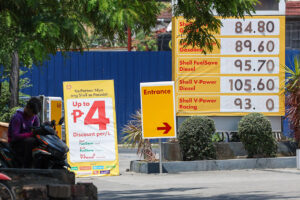
Mr. Abenoja flagged regional inflation disparities, with Mindanao facing heavier price pressures due to logistical inefficiencies amplified by rising fuel costs amid the recent energy shock.
“So, there’s a lot of heterogeneity that we are observing. And what we have observed is that because transportation costs have increased quite dramatically, that has affected some prices for food supply,” Mr. Abenoja said.
“And this is something that the National Government is looking at very carefully, making sure that the supply of food items remains adequate moving forward,” he added.
Pantheon Macroeconomics Chief Emerging Asia Economist Miguel Chanco said El Niño-driven food inflation in the coming months could prompt the BSP to resume monetary tightening later in the year.
“In terms of what would warrant further tightening, I suspect that it would come from food inflation risks, especially if El Niño materializes late this year or early next, affecting crop yields and sending food prices up substantially,” he told BusinessWorld in an e-mail.
“But I think it’s still too early to say that the worst-case scenario on this front is likely to be the main outcome.”
However, Mr. Chanco noted that the National Government could also opt to address potential food price shocks with non-monetary policies “as it has done in recent years.”
In July, inflation for the food and nonalcoholic beverages index, which holds 37.75% or the highest share in the consumer basket, steadied at 5.2%. However, rice inflation hit a two-year high of 17.1%.
Mr. Abenoja earlier said the potential impact of the super El Niño is among the risks the BSP is weighing as they reevaluate their full-year inflation outlook.
The BSP’s latest forecast shows inflation may settle at 6.4% by yearend, although this has yet to account for the projected impact of the upcoming El Niño.
The BSP expects inflation to ease to 4.5% next year before moving closer to its target at 3.1% in 2028.
Meanwhile, in its latest Monetary Policy Report, the central bank noted that potentially costlier rice due to El Niño-driven disruptions could drive the headline print to stay above its 3% target over the medium term.
In the seven months to July, inflation averaged 5%, sharply faster than the 1.7% clip recorded in the same period last year.
On the other hand, Deutsche Bank Research noted that second-order effects are still feeding through the economy, with around 80% of the items in the country’s consumer basket, by weight, recording above-trend inflation since the war broke out in March.
“This suggests that inflationary pressure in the Philippines is still broad-based and that spillover effects are likely still working their way through the economy, in our view,” it said in an Aug. 21 report.
“We see another 25-basis-point (bp) policy rate hike to 5% from the BSP on Aug. 27 as necessary to further dampen the impact of price pressures on consumers and stabilize real incomes,” it said.
Capital Economics said it sees a 25-bp hike on Thursday which would put an end to the central bank’s tightening cycle, as it balances inflation and growth woes.
“All told, we think policymakers will opt for a further 25-bp hike next week to add to the 50 bp of tightening delivered so far in this cycle,” Capital Economics Deputy Chief Emerging Markets Economist Jason Tuvey said in a separate report.
“But, so long as oil prices drop back as we expect, that is likely to mark the end of the tightening cycle as the BSP shifts its attention to supporting the economy,” he added.
The central bank has raised key borrowing costs by a cumulative 50 bps since it began tightening in April, with the benchmark rate now at 4.75%.
Based on a BusinessWorld poll conducted last week, 19 of 24 analysts project another 25-bp rate increase on Thursday, with the remaining five expecting the BSP to pause.
The Monetary Board will hold its fourth rate-setting meeting on Thursday, followed by two more reviews scheduled for Oct. 22 and Dec. 17.

![[B-SIDE Podcast] Where Are We Now in the AI Revolution in Business?](https://bworldonline.com/wp-content/uploads/2026/10/20260916-B-Side_Salesforce-EAE-2-300x300.jpg?#)