Día de los Muertos in San Diego: Where to Celebrate, from Old Town to the Border
 Dante Ulanday - News Moderator


Día de los Muertos Celebrations in San Diego
San Diego shares a loving connection to this sacred yet festive celebration. I’ve been to many destinations in Mexico during Día de Los Muertos and have to say that San Diego’s rendition is among the best.
While traditionally, Día de los Muertos is on November 2, 2026, many places start putting up decorations early and start celebrating the holiday as early as September 1, 2026. Here are all the amazing Día de los Muertos events in San Diego in 2026.
Día de los Muertos Old Town San Diego Celebration
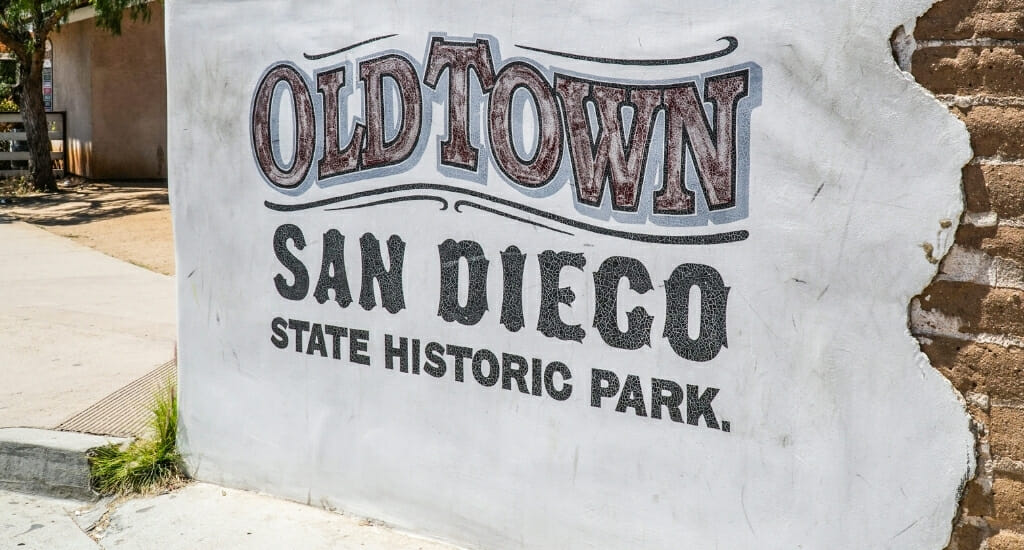
Old Town Historic State Park
When: Mid-October – November 2nd, 2026
Where: Old Town San Diego Historic State Park
Free
Each year, Old Town San Diego State Historic Park hosts one of the biggest celebrations of history, culture, and heritage, paying homage to this very important and festive tradition. Typically, Old Town welcomes 75,000 visitors in two days for this event.
But it doesn’t mean the holiday will be ignored by families who’ve long embraced this family tradition. Boutique shops in Old Town and many other San Diego stores carry decorations, tableware, pottery, and home décor to help families celebrate. And just strolling around Old Town, you’ll feel the vibe and energy of this special holiday even today with its festive decorations.
Fiesta de Reyes – La Experiencia
When: September 1 – November 2, 2026
Where: Fiesta de Reyes Old Town
Website: https://fiestadereyes.com/dia-de-los-muertos/
Free
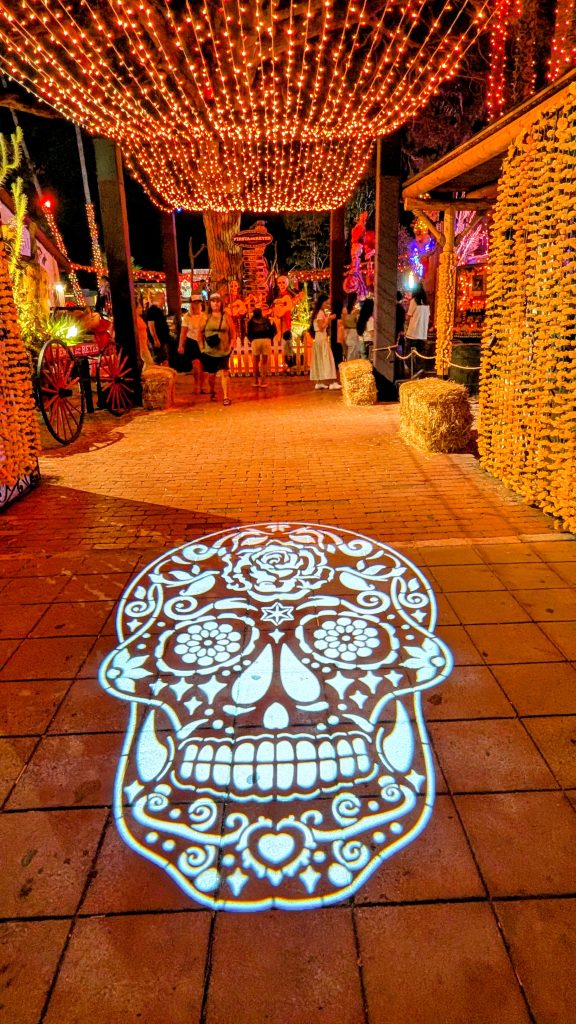
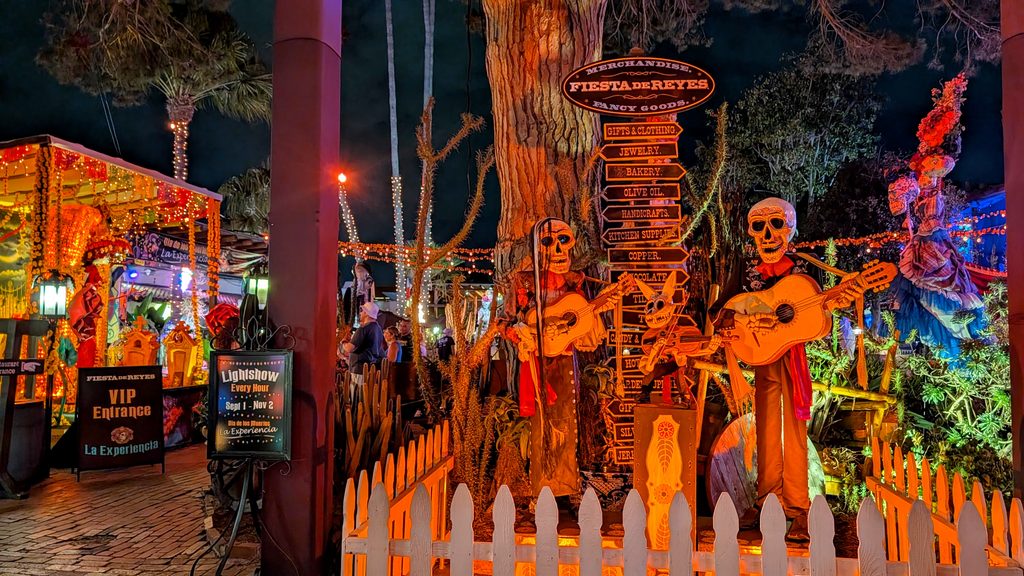
A yellow sea of marigolds, 60 catrinas, sugar skulls, and skeletons make this one of the most stunning and photogenic Día de los Muertos celebrations in San Diego. They also have a stage with frequent live music and dance performances.
La Experiencia is the earliest and longest-lasting Día de los Muertos celebration in San Diego, and I love that you can go earlier in the season and avoid the crowds.
The space is open to the public and free to attend, but I definitely recommend enjoying a little (or big) nibble and a margarita at Fiesta de Reyes. I really like their chicken tamales with the pickled onions, but their tacos (especially the carne asada and shrimp) are really good too.
I recommend coming during the golden hour and staying until it gets dark. The marigolds seem to glow from within during the late afternoon sun, but you can’t miss the beautiful lights and lit-up decorations at night.




Also read:
Old Town Ghost Tour
Ultimate Old Town Guide
The Whaley House Story
Día de los Muertos at the San Diego Automotive Museum
When: Saturday, October 10, 2026 | Daytime 9 AM – 4 PM · Evening show 6 PM – 10 PM
Where: 2080 Pan American Plaza, San Diego, CA 92101 (Balboa Park)
Website: San Diego Automotive Museum
The first Día de los Muertos event on the county calendar, and the only one here with a ticketed evening. Daytime runs on regular museum admission and includes ofrendas through the galleries, a Día de los Muertos photo setup, Catrinas circulating, and lowriders displayed in the museum’s back dirt lot — a pairing of the holiday with San Diego car culture that no other event on this list offers. There’s a public ofrenda where visitors can add a photo of a loved one.
The evening show is separate at $33.85 per person, with DannyV headlining, Vanessa Vindell opening, and a VIP meet-and-greet from 6 to 7 PM. All ages.
Note the timing: three weeks before the holiday itself. Useful if you have October visitors who’ll miss the Día de los Muertos weekend.
Vista’s Inaugural Día de Muertos Festival
When: Sunday, October 11, 2026 | 11 AM – 5 PM
Where: Ascend Coffee Roasters, 802 S Santa Fe Ave, Vista, CA 92084
Website: Vista Día de Muertos Festival
New for 2026 and the only North County event on this list. Six hours along South Santa Fe Avenue, with community altars and remembrance displays, performances and ceremonies, local vendors and artisans, food trucks, an official Catrina contest and family activities. Free, with free parking, but RSVP is required through Eventbrite.
Note: as a first-year event, scale and programming aren’t established yet — check the Eventbrite listing closer to the date for the final lineup.
Sherman Heights Community Center — 32nd Annual Día de los Muertos
When: October 15 – November 2, 2026 — a program of separate events, schedule below
Where: Sherman Heights Community Center, 2258 Island Ave, San Diego, CA 92102
Website: Sherman Heights Community Center
Now in its 32nd year, the longest-running Día de los Muertos observance in San Diego County — and not a single festival but a three-week program built around 25+ community altars installed at the center and throughout the surrounding neighborhood.
The schedule:
- Noche de Mole fundraiser — Thursday, October 15, 6:30–9 PM. Regional mole tastings, drinks, live entertainment and a first look at the altars before they open to the public. 21+ beverage garden. $75 in advance, $125 at the door; tickets required.
- Ofrendas open to the public — October 20–23 and October 27–30, Tuesdays to Fridays, 2–6 PM only. Free, self-guided viewing of the altars at the center and around the neighborhood. Closed October 31.
- Student tours and workshops — same date ranges, 10 AM – 2 PM. Guided bilingual tours paired with hands-on workshops, school groups only, reservations required.
- Muertos Candlelight Procession — Monday, November 2, 4–10 PM. Free and all ages, with danza azteca, copal and drums. Candles are provided.
- Pan de Muerto workshop — date to be announced. A hands-on session with an artisan baker covering the history and shaping the bread from scratch. Bilingual, ticketed, ingredients included, limited space.
- Three further workshops — dates to be announced, covering Día de los Muertos history, incense, and building procession props.
The detail that catches people out: the altars are only open to the public on weekday afternoons, Tuesday through Friday, 2 to 6 PM — and not at all on October 31. If you were planning to wander through on a Saturday, you can’t. Weekend visitors get the procession on Monday November 2 instead, which is the centerpiece anyway.
Día de Muertos ’26 on Logan Avenue
When: Sunday, November 1, 2026
Where: Logan Avenue, Logan Heights — a large section of the street closed to traffic
Website: Logan Avenue Cultural Corridor
A one-day street celebration organized by the Logan Avenue Cultural Corridor, with a long stretch of Logan Avenue closed to traffic for dancing, food, lowriders, entertainment, and a Catrina contest.
The organizers describe it this way: “This is more than a festival. A day that we honor and remember our ancestors through traditions.”
Note: The date is set, but the schedule hasn’t been published. Follow @allforlogan for vendor lineups and timing closer to the day.
Día de los Muertos at the San Diego Museum of Art
When: Sunday, November 1, 2026 | 11 AM – 4 PM
Where: The San Diego Museum of Art, 1450 El Prado, Balboa Park
Website: SDMA
The most substantial artistic programming of the weekend. Visiting artist Betsabeé Romero has created a Día de los Muertos ofrenda in collaboration with local San Diego students, inaugurated at 11 AM on the museum’s front steps. Live performances and family art-making activities run through the afternoon, with artist-designed activities inviting visitors to contribute meaningful objects to the ofrenda.
The event is free, and admission to both SDMA and MOPA@SDMA is free from noon to 5 PM — worth knowing if you were planning a Balboa Park day anyway. A separately ticketed Taco Party offers unlimited street-style tacos, drinks and music.
Timing: the ofrenda inauguration is at 11 AM, at the start of the event rather than partway through.
Día de los Muertos in Downtown Chula Vista
When: Sunday, November 1, 2026 | 3 PM – 7:30 PM
Where: Downtown Chula Vista, Third Avenue
Website: Downtown Chula Vista
The South Bay’s celebration, and the one that runs latest into the evening — the only event here still going at 7:30. Free, with an ofrenda competition, a Catrín and Catrina ensemble contest, live music and dance across four locations, a car show, kids’ crafts, artisan vendors at the Mercado by Las Jefas Market, food, and themed photo opportunities throughout the neighborhood.
Bring a photo: there’s a community altar at Davidson where visitors can pin a picture of someone they’re remembering. Organizers ask for a copy rather than an original.
Day of the Dead Traditions
Celebrated between October 31st and November 2nd, Dia de Los Muertos (Day of the Dead) is a multi-day Mexican holiday featuring a unique blending of Mesoamerican ritual, European religion, and Spanish culture. However, San Diego likes to start things early and you can find some decorations and celebrations starting as early as September 1, and running until November 2, 2026.
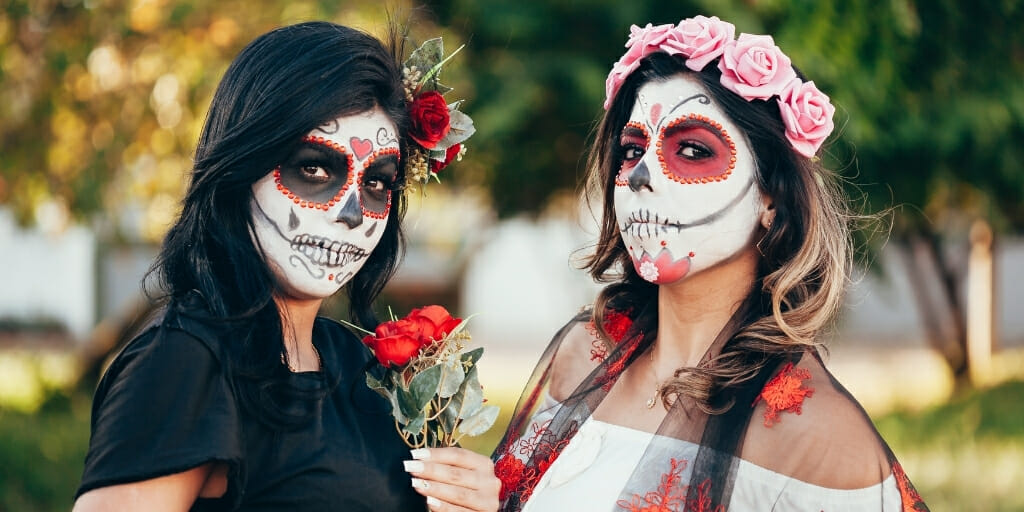
Coinciding with the Catholic holidays All Saints Day and All Souls Day, its origins go back some 3,000 years. The day celebrates generations of family members and friends who died and traveled to Chicunamictlán, the Land of the Dead. Only after getting through nine challenging levels and a journey of several years, does the soul finally reach Mictlán, the final resting place.
Many believe that on this day, the border between the spirit world and the living world dissolves. The souls of the dead (Difuntos), awaken and return to the living world to feast, drink, dance, and play music with their loved ones. But only for 24 hours. Children who have passed come to visit and celebrate as Angelitos.
Day of the Dead Family Traditions
One of the most traditional aspects of the holiday is families building altars in their homes known as ofrendas. These altars include offerings representing earth, water, fire, and wind.
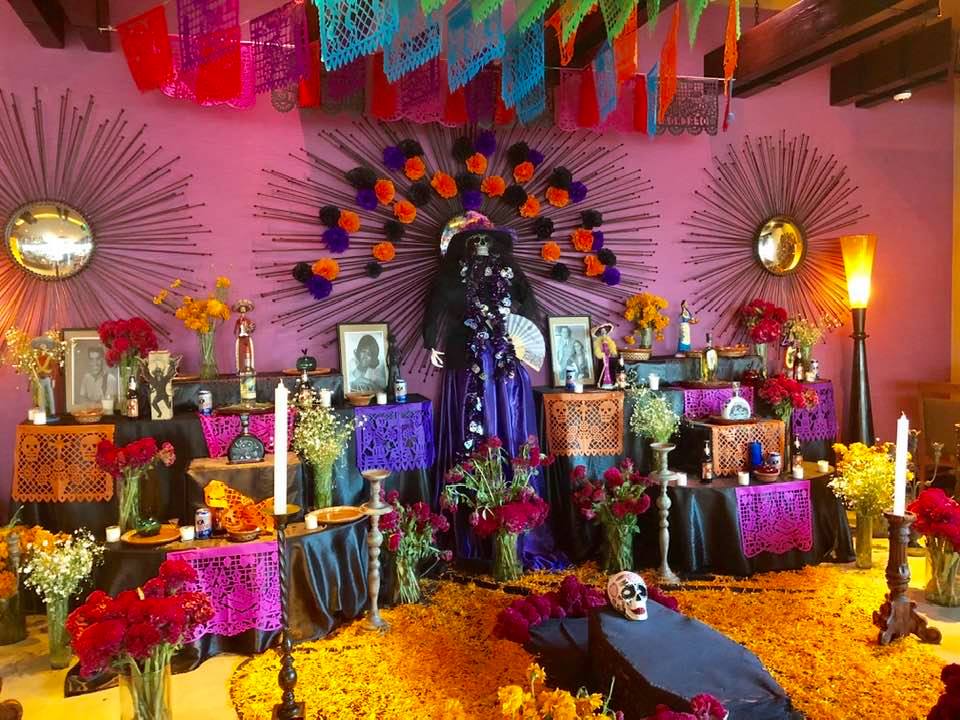
Favorite foods represent the earth. Water, traditionally placed in a clay pitcher reflects the belief that a returning spirit may be thirsty. Candles, incense, and decorative paper represent fire and wind.
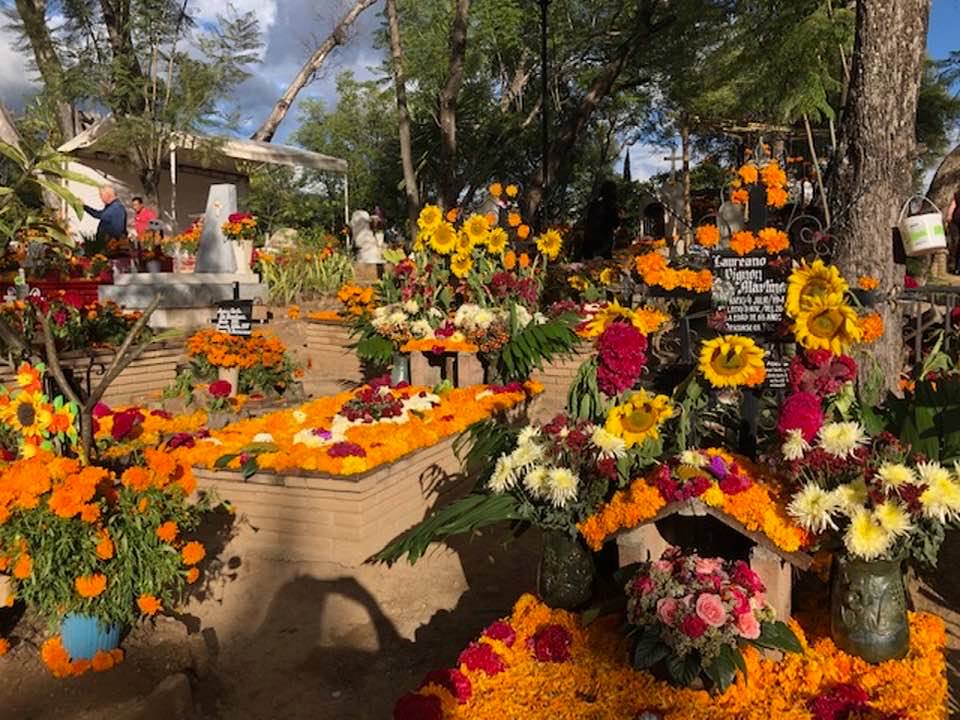
Flowers (usually bright marigolds), with their intense color and pungent smell, guide relatives home from the spirit world. Photos of the departed are a centerpiece of the altar.
Families lovingly decorate the burial sites and cemeteries. It is here families gather at cemeteries, with painted faces and candles, placing flowers on the graves of their loved ones. There is no crying or grieving, but rather music and a celebration of the departed’s life.
Traditional foods linked to the holiday include Pan de Muerto (Day of the Dead bread), tamales, pozole, and foods made with spicy mole sauce from recipes passed from generation to generation.
Popular drinks include atole (a non-alcoholic masa-based drink), and of no surprise, tequila. It’s customary to also prepare foods the departed once loved. As my Mexican friend Lena told me “To coax the dead back for a little reunion, tempting them with tacos and tequila certainly can’t hurt.”
Symbols of Día de los Muertos
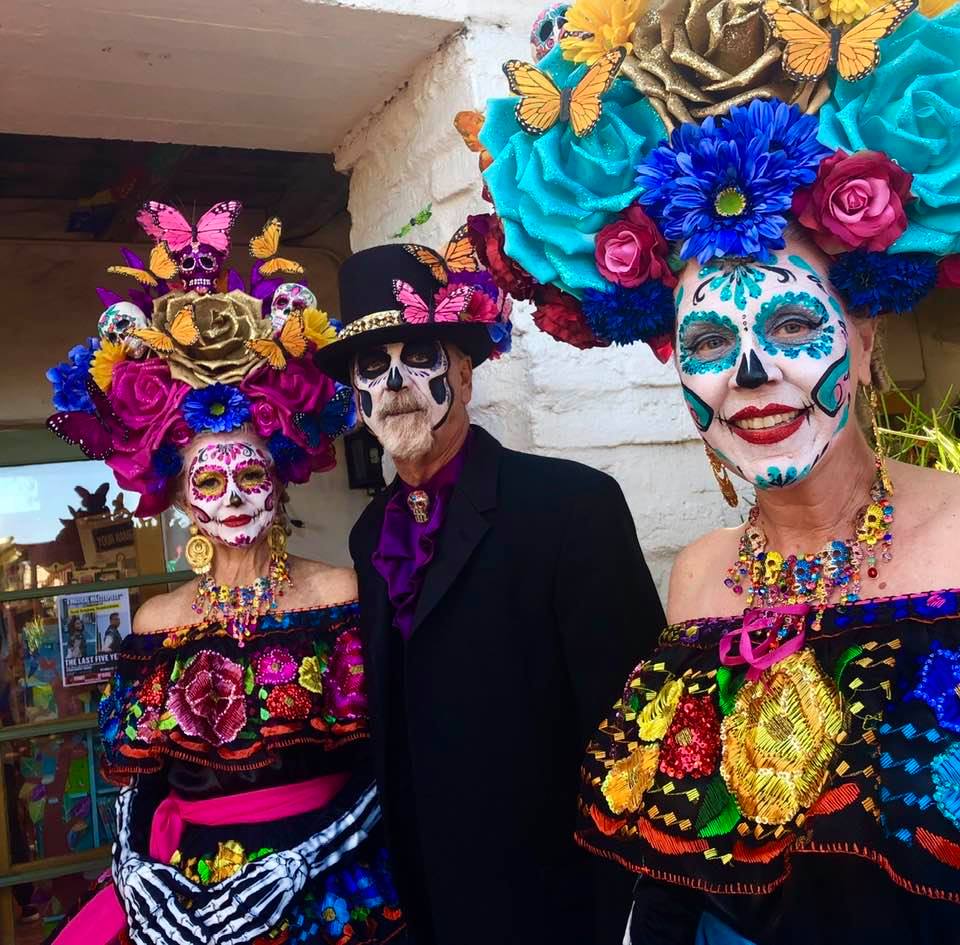
The most prominent symbols related to Day of the Dead are calacas (skeletons) and calaveras (sugar skulls). They represent rebirth into the next stage of life. These are typically decorated in a myriad of bright colors with ribbons, bows, and other fancy embellishments.
People commonly wear skull masks and eat sugar candies molded into the shape of skulls. Even skeleton dolls of all shapes and sizes are colorfully created.

Día de los Muertos in the Movies
In October 2017, Walt Disney Pictures and Pixar Animation released the animated fantasy film Coco. The amazing blockbuster tells the story of a young aspiring musician who travels to the land of the dead to find a long-lost relative.
The movie provided a colorful, touching, and enlightening look into the holiday. It showed its beloved traditions and opened the eyes of many who previously had no understanding of this sacred celebration of life and death.
Understanding this Magnificent Holiday
Although it’s commonly believed, Día de los Muertos is NOT a Mexican version of Halloween. While the two holidays share some traditions, including costumes and parades, they are not the same and have no cultural connection.
It’s fun to see the costumes and sometimes comical representations of skulls and skeletons. Always remember that Day of the Dead celebrations doesn’t laugh at the notion of death or take it lightly.
Instead, they serve to acknowledge death as an inevitable part of life and should be appreciated and celebrated. The Mexican tradition is to honor the generations that came before them. This is why they treat their elderly relatives, in both life and death, with respect.
Mexicans love when others are interested in their culture and want to know their traditions, therefore, asking questions to better understand an event and its traditional practices before partaking in the festivities is wise. The more you understand about this feast for the senses, the more you’ll appreciate Mexico’s most colorful annual event.
Important Facts about Day of the Dead
Día de Los Muertos is not only celebrated in Mexico and other Latin American countries. There are celebrations in many regions of the U.S. where large Mexican populations reside. In 2008, UNESCO, reflecting on the growing awareness of the holiday, added it to the list of its Intangible Cultural Heritage of Humanity.
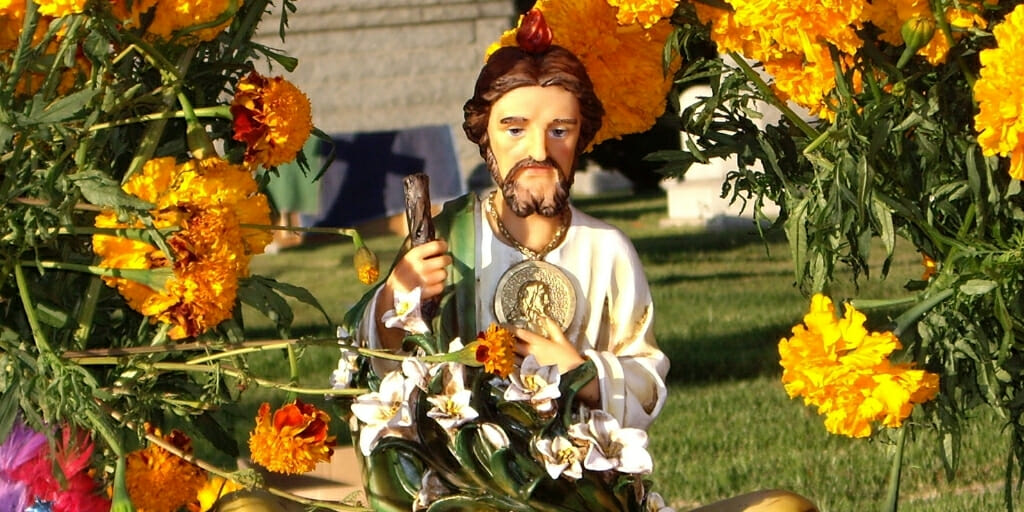
Please never ever disturb altars and gravesites. Always treat the Day of the Dead traditions and the families celebrating it with respect. Before taking a photo of an ofrenda, ask the family for permission. Keep in mind it contains photos of the deceased.
“Feliz día de los Muertos” with hopes this story has given some perspective and insight into this amazing holiday. One I have grown to love and respect so very much.
Día de los Muertos FAQs
Día de los Muertos falls on Sunday, November 1 and Monday, November 2, 2026, with many celebrations starting on Saturday, October 31. November 1 is Día de los Angelitos, dedicated to children who have died; November 2 honors adults. Because the holiday lands on a weekend this year, most San Diego events cluster on Saturday and Sunday — though Sherman Heights holds its candlelight procession on Monday evening.
No. They fall days apart and share some visual overlap — costumes, parades, skeletons — but they have no cultural connection. Halloween has Celtic roots; Día de los Muertos blends Mesoamerican ritual with Catholic All Saints’ and All Souls’ Days. It is not a Mexican version of Halloween, and it isn’t a frightening holiday. It’s a celebration of people who have died, held by the people who loved them.
The largest celebration is at Old Town San Diego State Historic Park and Fiesta de Reyes. Sherman Heights Community Center runs the longest-established program, now in its 32nd year. There are also celebrations in Downtown Chula Vista, on Logan Avenue in Logan Heights, at the San Diego Museum of Art in Balboa Park, at the San Diego Automotive Museum, in Vista, and in San Ysidro. Full details for each are above.
Almost all of them. Old Town, Sherman Heights’ altar viewing and procession, Chula Vista, Logan Avenue, SDMA and Vista are all free to attend. The two exceptions are the San Diego Automotive Museum’s evening concert at $33.85 per person, and Sherman Heights’ Noche de Mole fundraiser at $75 in advance or $125 at the door.
The holiday itself is October 31 through November 2, but San Diego’s celebrations run much longer. Ofrendas go up in Old Town from September 1, and Sherman Heights displays its community altars across two weeks in late October.
The skeletons are calacas and the decorated sugar skulls are calaveras. They represent rebirth into the next stage of life rather than death itself, which is why they’re brightly colored and often comic. The elegantly dressed skeleton figure you’ll see everywhere is La Catrina — several San Diego events run Catrina costume contests.
Marigold orange above all — the cempasúchil flower, whose color and scent are believed to guide spirits home. Purple signals mourning, white purity, pink celebration, and red the blood of life. Ofrendas are deliberately bright; this is not a somber holiday.
Yes. These are public celebrations and visitors are welcomed — the holiday is about remembrance, and several San Diego events invite anyone attending to add a photo of their own loved one to a community altar. Chula Vista asks specifically that you bring a copy rather than an original.
At public events, generally yes. At a family ofrenda or a gravesite, ask first — an ofrenda holds photographs of someone’s dead, and it isn’t a backdrop. Never move or touch anything on an altar.
Noreen Kompanik wrote Day of the Dead Traditions – Día de Los Muertos in San Diego for San Diego Explorer. Maria Haase, Editor-in-Chief of SanDiegoExplorer has added and updated the 2026 Día de los Muertos events and FAQs.
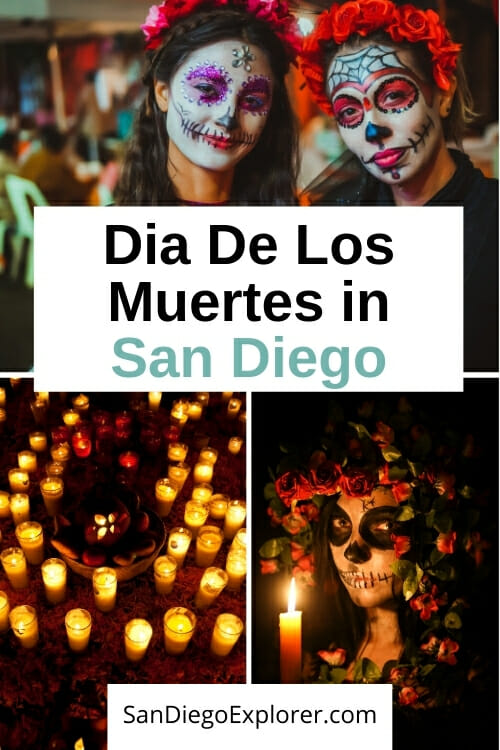
Day of the Dead Traditions – Día de Los Muertos in San Diego – Pin for Later:

Last Updated on September 9, 2026 by Maria Haase
The post Día de los Muertos in San Diego: Where to Celebrate, from Old Town to the Border appeared first on San Diego Explorer.


![12 Best Valle de Guadalupe Hotels & Winery Resorts: A San Diego Local’s Picks [2026]](https://sandiegoexplorer.com/wp-content/uploads/2023/02/IMG_001-13.jpg)
![15 Best Julian Hotels & Cabins: Where to Stay in Apple Country [2026]](https://sandiegoexplorer.com/wp-content/uploads/2023/09/IMG_6220.jpg)