What We Can Learn from a School Educating the Kids of Service Members
 EM - News Moderator



Introducing Voice of San Diego’s Acorn Awards: This week are giving out a new set of recognitions to highlight schools that outperform expectations on a metric comparing student income to test scores, which we developed in partnership with UC San Diego Extended Studies Center for Research and Evaluation.
The children who attend San Onofre Elementary School pass through a military checkpoint every morning before class.
That’s because this school is located on Marine Corps Base Camp Pendleton – its student population of nearly 500 is made up of 100 percent military family students. And though the life of a military family often means San Onofre students move before completing their elementary coursework, the school’s teachers have still figured out how to keep kids on the path toward success.
Because of its location, the school is primarily funded with federal dollars, which make up about 80 percent of the budget. Student test scores reflect that investment.
For the first time ever, Voice of San Diego is giving out awards to recognize schools that outperform expectations on a metric we created in partnership with UC San Diego Extended Studies Center for Research and Evaluation. We are recognizing San Onofre Elementary as the top performing elementary school in San Diego County.

Our income vs. test score metric compares projected test scores based on a school’s percentage of students who qualify for free and reduced-price meals and compares it to the school’s current English language arts and math scores. Schools with scores of “0” on the metric are performing exactly as expected for their income bracket, while schools in the negative are performing worse than their poverty level average and schools above “0” are performing better.
San Onofre’s income vs test score ratio stands at around 81.
Still, San Onofre is not without its challenges.
“Being on a military base we have a lot of mobility, so students are here usually the max is three years,” said Joe Kniseley, the school’s principal.
With such a high turnover rate, Kniseley says a key focus is making the students and families feel a part of the community.
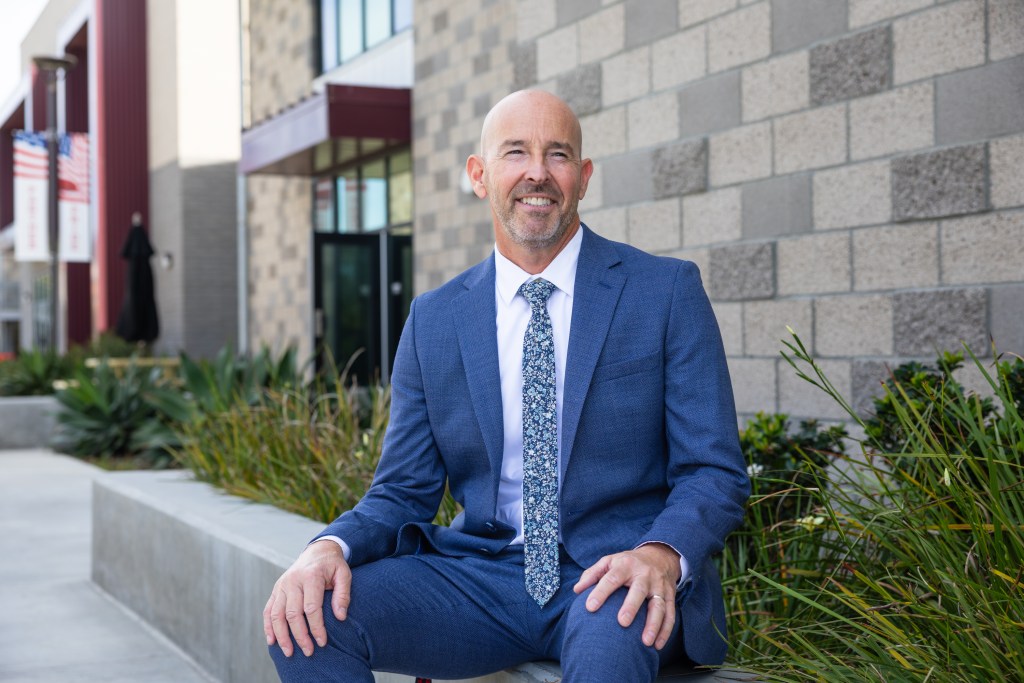
“From the academic standpoint, just coming from other school districts, different types of schools…the standards, the scope and sequence of how they’re learning is so different,” said Calyn Woods, an instructional coach at San Onofre.
The staff is used to getting children who may be coming and going up to speed.
“Our teachers really have to work hard to find those gaps,” Woods said.
In addition to an instructional coach who helps teachers improve their curriculum, San Onofre has an intervention teacher who works with students that are a behind, helping teachers address any gaps.
Intervention teachers participate in a process San Onofre calls, “target time,” a 30-minute slot of time four times a week where students are grouped based on ability and given extra support based on need.
As part of San Onofre’s teacher support strategies, the school has leaned into developing an effective professional learning community. A group of teachers from each grade level who are constantly looking at test data, diagnosing areas of need for each student.
According to Woods, San Onofre’s professional learning community was rolled out in the last few years, increasing staff’s ability to find problem areas in their teaching and fill those gaps.

“They’re looking at their data really closely, identifying very specific skills and needs,” Woods said. “And then [they’re] analyzing those actionable steps that they can take in the classroom, whether it’s target time, small groups are being pulled or utilizing our intervention services.”
While San Onofre might be militaristic in efficiency, much of the curriculum is still about student enjoyment and hands-on elective teaching.
“We want kids to be happy, not just write rigorous learning all the time right?” Kniseley said. “You want to enjoy it because they’re kids.”
The post What We Can Learn from a School Educating the Kids of Service Members appeared first on Voice of San Diego.