What Are San Diego Police Helicopters Doing Up There?
 EM - News Moderator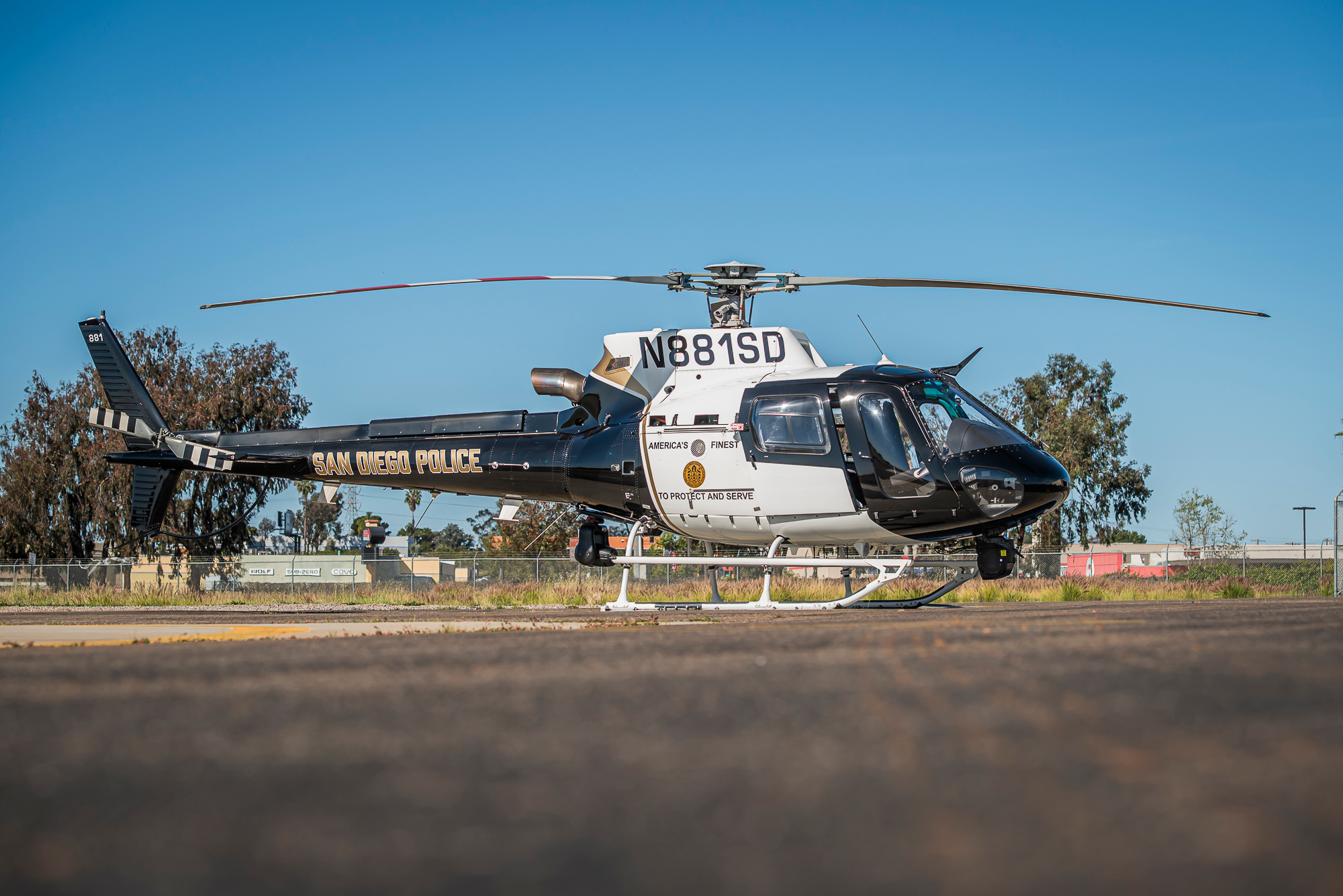


This story has been updated.
The roar of a police helicopter overhead is an all too familiar sound to most San Diegans.
But recently they’ve been spotted breaking up college parties. Witnesses wondered how police helicopters became such a fixture in city airspace; what they’re doing up there; and how much it costs the taxpayer?
Voice of San Diego endeavored to find out.
Helicopters Are Mostly Just Watching
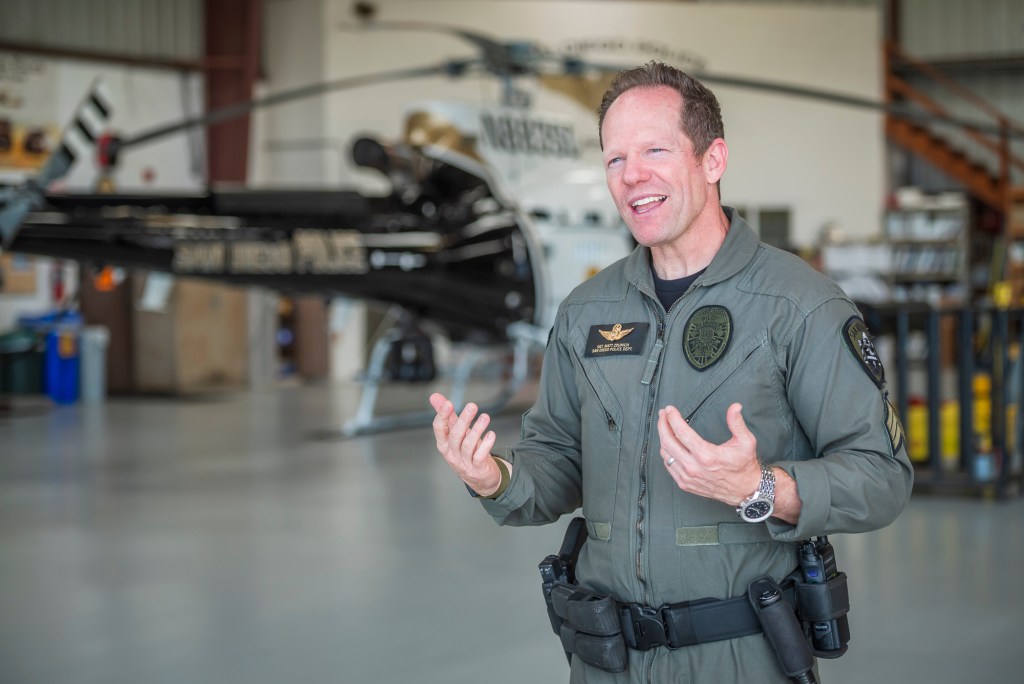
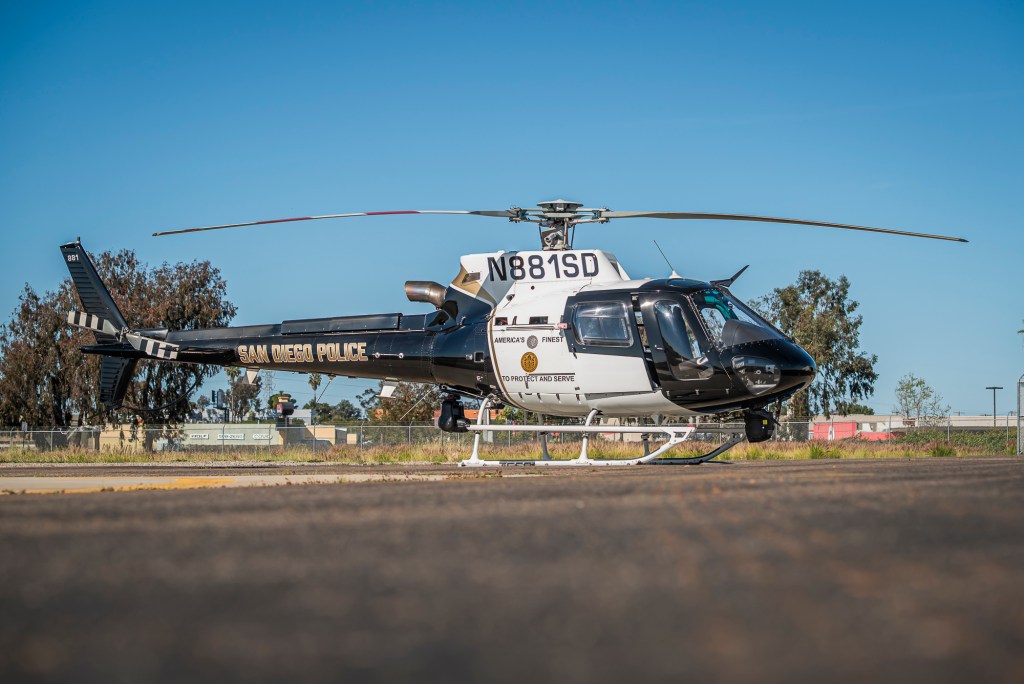
San Diego’s police helicopters are equipped to fly around and look at things. The airborne vehicles are not armed, and they don’t land to arrest people. Inside are two police officers, one flying the helicopter and one looking through the variety of cameras to scan the ground.
They provide air support to police patrols on the ground as well as surveillance for investigations, according to the San Diego Police Department’s Airborne Law Enforcement Manual. Police helicopters also fly “photographic missions” to gather evidence, search for lost people or even assist as a scout helicopter during a wildfire.
Ashley Nicholes, a spokesperson for the police department, said surveillance doesn’t mean police helicopters are flying over someone’s house to watch them.
“They’re patrolling and assisting with radio calls and responses as needed,” Nicholes said. She added that the helicopter’s cameras are “only activated when they are on a call.”
Their helicopters have no weapons aboard except for officers’ on-person handguns and police aren’t permitted to fire weapons from the helicopter, Nicholes confirmed.
San Diego Police say their helicopters’ other purpose is de-escalation. One could be called to hover over a college party, or a petty theft or reports of people shooting guns in the park. Police said the helicopter can sometimes arrive at a 911 call faster than a squad car and let the department know the level of the emergency.
“We can get on scene to about one third of the calls that we go to before any ground officers get there,” said Matthew Zdunich, a San Diego Police sergeant in charge of the department’s Airborne Law Enforcement Unit. “We can assess what’s going on … and (suggest) how urgently they need to get to this call.”
When asked what determines whether one is sent, Zdunich answered with a question: “Will the safety of officers and citizens be enhanced by our presence?”
Zdunich gave an example of a call he took to Kate Sessions Park to check out a report that masked suspects with guns were in the area. Once the helicopter arrived, Zdunich could confirm it was just some kids playing with toy weapons and Nerf guns.
“If (helicopter support) hadn’t got there first to assess that information, the response from officers would have been much different,” Zdunich said.
Nicholes elaborated that on the ground officers likely would have arrived to a call like that with their weapons drawn as well.
How Often Are They Flying?
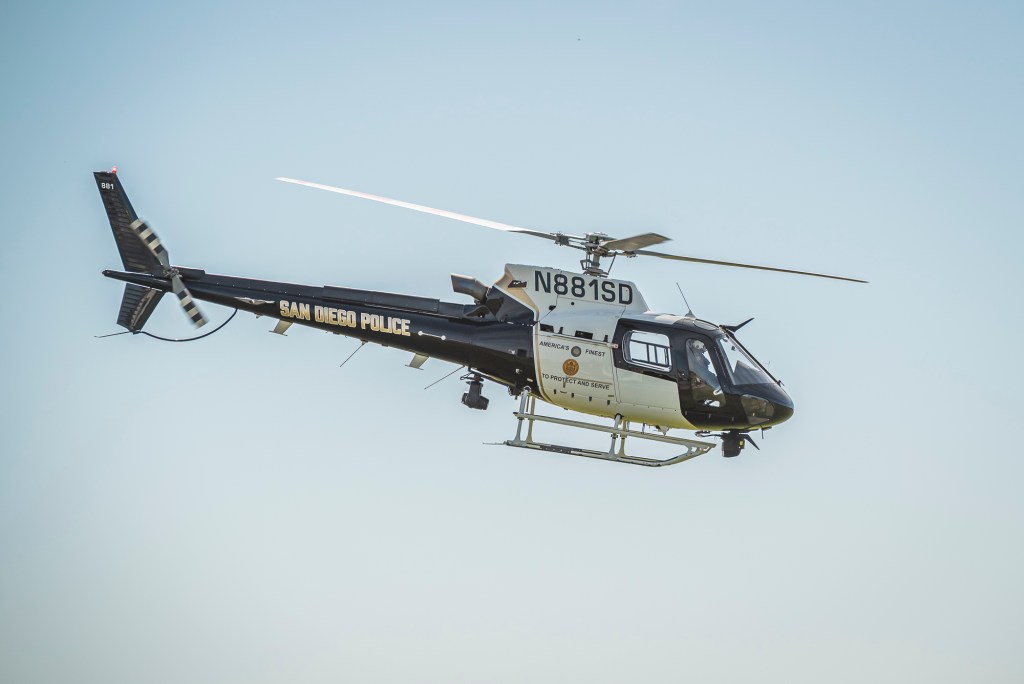
San Diego Police have four helicopters staffed to fly 20 hours a day, but only one helicopter is operational at a time unless there’s a very large emergency. Nicholes wouldn’t say when the helicopters typically fly, citing that information as an “operational security risk.”
“If a criminal was reading Voice of San Diego, they’d know when we don’t have a helicopter up… and do criminal activity during that time,” she said.
While San Diego police said they could and would send a helicopter to just about any type of 911 call, Nicholes said that in 2025, police helicopters responded to only .48 percent of them.
“They’re really selective in the calls they’re assisting with,” Nicholes said. “Some of the calls they’re going to are some of the worst, so we need that perspective.”
The San Diego County Sheriff’s Office, on the other hand, shared its seven helicopters are on call from 7 a.m. to 3 a.m. with typically only one fire/rescue and one patrol helicopter up in the air at a time. The Sheriff’s Office also recently sent a helicopter to help break up a high school party in Rancho Santa Fe on March 14.
Nicholes said San Diego Police helicopters logged over 2,600 flight hours in 2025. That means a police helicopter is hovering in city airspace at least 30 percent of the year. Helicopters won’t fly if there is severe weather, she added.
What’s Inside a Police Helicopter
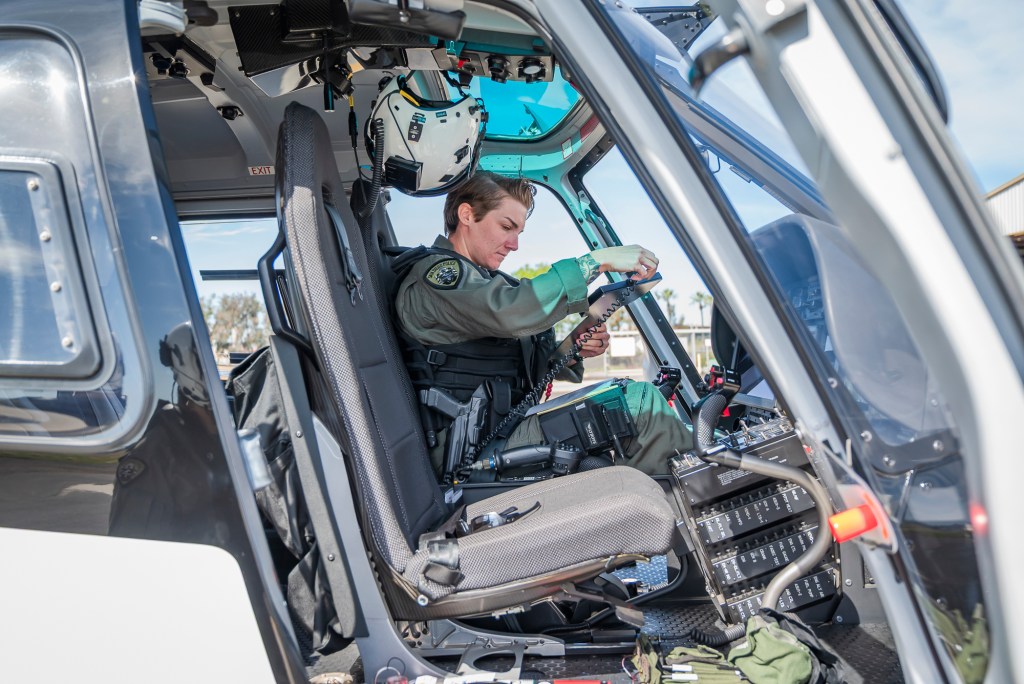
San Diego Police gave Voice a tour of one of their helicopters. Just about everything in the front of the aircraft that isn’t a window is lined with buttons. Stashed next to the passenger seat is a long pair of binoculars. The officers also have a pair of night vision goggles aboard, Nicholes said.
On the underbelly of each helicopter, near the nose, is a camera around the size of a basketball with infrared capabilities able to display video by sensing heat instead of just light. One of the two officers in the helicopter mans the camera while the other pilots.
The camera on the helicopter can display and record anything on the ground. Nicholes said police only record and cameras are only activated when a helicopter is responding to a call.
There’s also a huge spotlight, near the back of the helicopter, which can be seen shining down in videos of helicopters breaking up the recent college and high school parties. Police call this the “TrakkaBeam.” This light also is used for illuminating pursuits and low-light situations, Sgt. Zdunich said.
Helicopters Prioritize Certain Neighborhoods

Police helicopters visit certain neighborhoods more than others, police said. Mid-City, which stretches from Burlingame to Normal Heights to Rolando Park, is one of the police department’s busiest divisions. The department’s central division, which includes the downtown Gaslamp District, Little Italy and Barrio Logan, as well as the northern division, which includes Mission and Pacific beaches through Clairemont, are also areas more likely to see helicopter assistance, police said.
That concerns Khalid Alexander, president of Pillars of the Community, a social justice organization based in southeastern San Diego. Alexander says helicopters are a part of daily life in East and Southeast San Diego and he questioned their cost.
“It’s the idea (that) ‘we’re always watching you, we’re always there, we can always catch you,’” Alexander said. “To make sure that folks in Logan, East San Diego and South San Diego know that they are there.”
Alexander was one of hundreds of activists and residents that flooded City Council meetings back in 2020 calling on lawmakers to defund the police department. The Black Lives Matter movement had swept through the country the prior summer and cities across the country heard calls from residents for less police spending. Alexander’s sentiment hasn’t changed.
“Police want as many toys as possible and the matter of cost efficiency is not part of their calculations,” Alexander said. “Taxpayers are the last thing that SDPD considers ever.”
Nicholes, with San Diego Police, acknowledged uncertainty from residents about the importance of police helicopter use.
“We understand that some may not feel the helicopters provide value to the community; however, they serve a vital public safety function and operate with caution, including how low they fly, how long they stay in one area, and any announcements they make,” Nicholes said.
Helicopter Unit Costs Unclear
The San Diego Police Department’s aviation unit was born in 1987 after police seized a helicopter during a drug bust on a methamphetamine czar.
According a 1988 article in the Los Angeles Times, city of San Diego leaders had been reluctant to purchase a helicopter but after the bust, the police department kept one of the aircrafts. Since then, the ABLE unit has owned two planes and multiple other helicopters.
Now, the department has retired its planes and replaced four helicopters they purchased in 2006 with newer, leased models.
The leases are expected to cost nearly $19 million over the next 10 years. According to city documents, the city is selling back the older helicopters to the company they’re buying the new ones from to save money.
In 2025, according to records provided by the San Diego Police Department, the city spent more than $7.3 million on police helicopter personnel and non-personnel expenses, and more $370,000 on fuel. These yearly expenses are roughly a $1 million increase since 2021.
The city spent $637 million on the police department last year, at 31 percent of the total budget, it takes up the largest share of taxpayer dollars than any other city service. That’s up from $568 million back in 2020.
Update: This story has been updated to add additional information about the cost of fuel.
The post What Are San Diego Police Helicopters Doing Up There? appeared first on Voice of San Diego.