The Learning Curve: Einstein Charter’s Board May Soon Look Different
 EM - News Moderator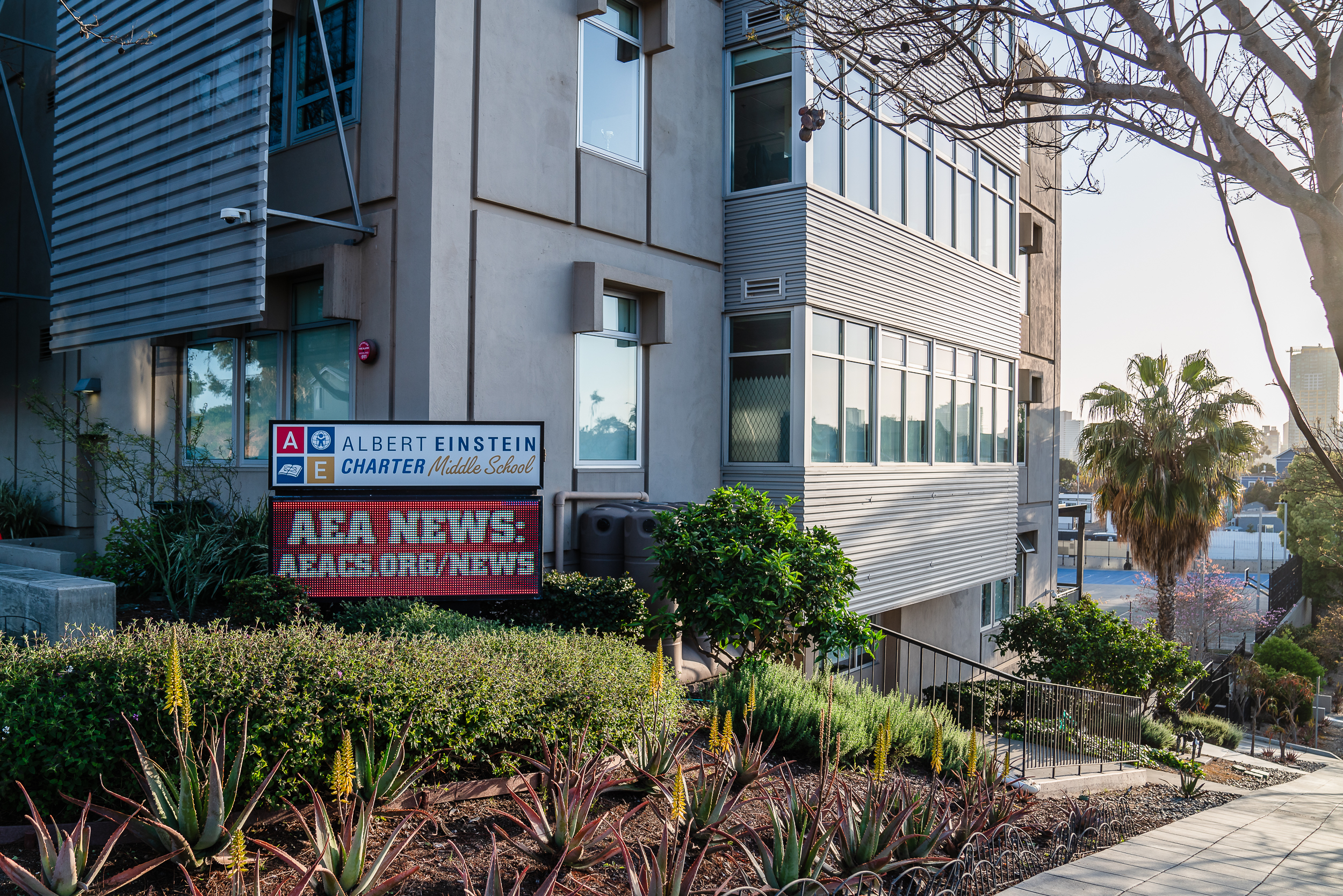


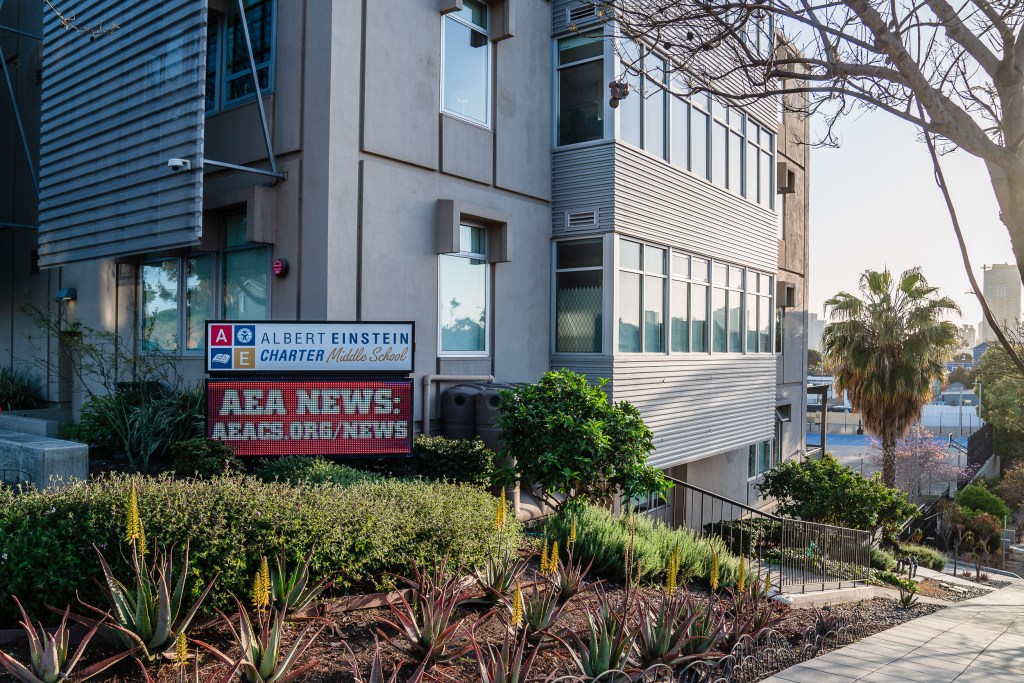
For over a year, Albert Einstein Academies has been rife with conflict. The rolling controversies, and community members’ perception that the charter network’s leadership hasn’t done enough to mend the rifts, have soured the relationship between some administrators, staff and parents.
While many parents and teachers have focused their ire on Einstein’s superintendent, they’ve also identified others to blame – the charter’s board. Now, a committee has proposed changes to the board’s formulation that members hope will give the community a greater voice in decision making.
Einstein is a charter network known for its international baccalaureate and language immersion programs serving nearly 1,500 students at an elementary and middle school. A high school is also under construction.
The trouble at Einstein started with parent uproar over the watering down of its trademark dual language immersion program. It accelerated with the abrupt firing of a beloved principal, a decision that helped inspire a petition of no-confidence in Superintendent David Sciaretta. Most recently, Sciaretta came under fire for alleged misspending on his charter issued credit card, renewing calls for him to step down.
Frustration with Sciaretta runs deep with some in the community, but many say the charter’s board is just as much at fault. They say board members have failed to hold Sciaretta accountable and that the board doesn’t actually represent the interests of the community.
Unlike boards at public districts, Einstein trustees are not elected by community members. Instead, they’re screened by an internal committee made up of staff and families that makes recommendations and then appointed by the board itself. And since board members also don’t have term limits, they can stick around indefinitely.
“The lack of shared governance has compounded this energy that anything that comes out of a board trustee’s mouth is unreliable, invalid and serving to protect the superintendent,” Sarah Peterson, an Einstein parent and educator told me earlier this year.
To deal with the frustration, the board convened an ad hoc committee on shared governance comprised of parents, teachers and a current board member. Peterson was one of those parents. The committee, helmed by Trustee Christopher Beesley, was tasked with coming up with changes to the board’s structure that could rebuild trust.
The committee crafted a survey that was sent out to all families of Einstein students and staff members at each of the two charter schools. The response rate was low – only about 150 of the about 2,500 people who received the survey participated – but the responses were strikingly uniform.
More than 83 percent of respondents were not confident that the “current board structure effectively reflects the perspectives of the [Einstein] community.” Concerns about transparency, the lack of board elections, diverse representation and the need to foster trust dominated written responses.
“The school has deteriorated because of the ever-growing distance between upper administration and the people who actually make the school,” one parent wrote.
“We are losing families right now. Shared governance would rebuild trust and transparency and allow for more informed decision making,” wrote another.
On Tuesday, members of the committee presented their suggestions to the board they hoped to remake. They had a couple of immediate recommendations and even more long-term ones.
The immediate recommendations were to fill the board’s two vacant seats with an elected teacher and parent member. Per the suggestion, each member would be elected by their peers – teachers electing a teacher member and parents electing a parent member. The committee urged the board to adopt a resolution that night that would commit to moving forward with that change.
“Taking immediate steps to fill the two vacant seats with an elected parent and an elected certificated staff member gives concrete evidence that the board hears, values, and respects the community’s voice,” the committee wrote in its presentation.
Long term, they suggested the board consider adopting term limits and staggered appointment periods, ensuring regular turnover for trustees. They also floated the idea of increasing the number of seats from seven to nine to potentially create space for additional staff or parent trustees and creating a seat for a student trustee whose votes would be advisory, similar to San Diego Unified’s student trustees.
“[Einstein] feels broken right now. We feel like we’re at a crossroads,” said Mary Findlay, a teacher on the shared governance committee during the presentation. “We can come back together and hear each other, and maybe we won’t all agree but just to feel heard and feel that our voice matters, I think that will go a long way.”
Trustees pumped the brakes on immediate adoption of changes, but their concerns were largely about process: How will the elections work? Who will be eligible to vote? How would the organization put together ironclad recusal rules to prevent conflicts of interest?
The committee relied on conversations with leadership at Helix High School, a charter school that’s long included parents and staff on the board, to develop its recommendations. During the meeting, Einstein’s trustees asked the members to also look into how other charter’s approached the practice.
Despite the concerns, trustees seemed uniformly receptive to the changes. They wanted to see the committee to bring forward more specifics before they voted to approve them. And some trustees, like the committee, hoped to get a new system in place sooner rather than later.
“Genuinely, I too would like to move forward with this,” said Trustee Christiana Gauger. “I’m not saying ‘We can’t go forward until everything’s perfect and ironclad,’ but I think we need to – for that trust and transparency – have these bigger conversations knowing that whatever we do is going to be a little clunky initially.”
Sabrina Bochen, a parent who’s long been critical of Einstein’s leadership, was one of the parents included on the committee. She said she was initially skeptical that anything would come of the committee, but was pleasantly surprised with the final proposal. She was disappointed that the board didn’t immediately commit to the changes, but wrote in a text message she was “cautiously optimistic” members were serious “about becoming less insular.”
“Getting agreement to elect two new family/staff board members before the end of the school year would have been an important symbolic gesture to the [Einstein] community,” Bochen wrote. “Many [Einstein] families wonder if the board is truly prepared for change, given the fact that they still haven’t removed or suspended the superintendent, even though he misappropriated school funds.”
What I’m Reading
San Diego Unified’s lil bitty payout: Two weeks ago, San Diego Unified board members did something unusual – they unanimously voted down a $1.4 million paycheck.
That payout, offered by the City of San Diego, is part of complex legal maneuvering wherein the city is attempting to maintain control of Liberty Station and, importantly, prevent the complex’s majority leaseholder from wresting ownership away. But to accomplish that, the city would need the agencies which benefit from tax revenue generated by Liberty Station to pass up future revenue in exchange for the aforementioned payouts.
“It’s not that I don’t trust the city, but I don’t trust the city,” Trustee Sharon Whitehurst-Payne said of the payout offered, as the Union-Tribune reported.
The board’s decision led to some trash talking of the district by some former city folk. Turns out it was for naught. Last night, the board flipped its vote and unanimously approved the payout.
Hackaholic: Last year, a handful of local school districts got nightmare news: PowerSchool, a software system used by school districts to store sensitive student information, had been hacked. Info like birthdays, social security numbers and medical records of students at three local districts – Santee, Ramona and Rancho Santa Fe – had been obtained by the hacker as part of what was one of the largest breaches of school information in history.
The hacker, then-19, was later arrested in his dorm room. Now, in an interview with ABC News, he’s speaking about his experience as a hacker and … it sounds kind of awesome?
“It’s indescribable the adrenaline you get when doing something like that. It’s way more than driving 120 miles per hour on like a back road or a highway,” hacker Matthew Lane told the outlet.
Grossmont Union sued (again): One of San Diego County’s most frequently-sued districts is (drumroll, please) getting sued again! The first of two recently filed suits alleges the district board’s conservative majority banned books featuring queer themes and retaliated against staff who opposed those efforts. The second alleges a special education director at the district was victim of a “coordinated campaign of discrimination, harassment and retaliation,” because of her LGBTQ+ identity and advocacy.
What We’re Writing
San Diego Unified leaders have advertised a fix to the plumbing of the School of Creative and Performing Arts in three successive bond measures dating back to 2012. Still, despite having raised nearly $12 billion dollars from those measures, a comprehensive fix never came, leaving the school to face successive leaks and water shutoffs. As the district begins to plan for another bond measure, SCPA may have to wait years more for work on its plumbing.
What We’re Doing
Are you way (way way) into San Diego County politics? Do you want to watch skits skewering local electeds with nerdy inside jokes? Do you like eating dinner next to the aide that writes a Chula Vista councilmember’s tweets? Well, we’ve got the event for you.
We still have a few tickets for Off the Record 2026. The Met Gala of local civic nerdery is an exclusive night filled with community leaders, politicians and newsmakers of all types and despite my ribbing, it is pretty fun. It features everything from pre-recorded skits to roasts of local notables and even a pretty good dinner. Best part about it is we take away your phone at the door. (Seriously. I’m not joking.)
The post The Learning Curve: Einstein Charter’s Board May Soon Look Different appeared first on Voice of San Diego.