South County Report: Chula Vista Mall Joins Westside Development Push
 EM - News Moderator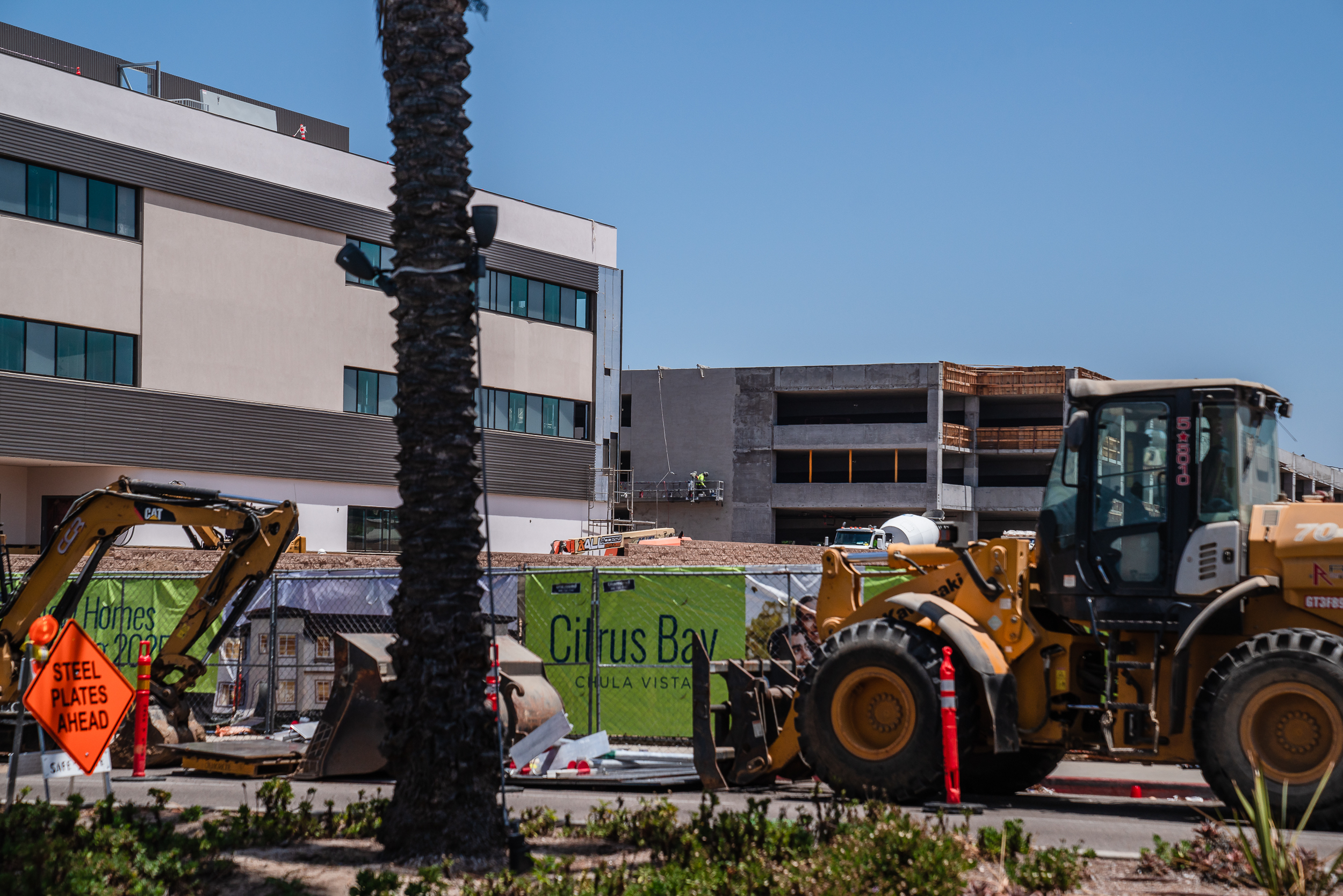


In Chula Vista, everybody has a story about the mall.
Even Mayor John McCann frequently recalls dreaded childhood trips to the Sears department store that once anchored the 64-year-old Chula Vista Center on the city’s urbanizing west side.
McCann, who grew up in Chula Vista, says he remembers his mom saying after church on Sundays, “I need to pop into Sears a few minutes.” Hours later, McCann still would be dragging along as his mother browsed the store’s seemingly endless aisles.
Today, the Sears store is long gone. And Chula Vista Center, like many malls across America, is looking for a new direction.
Last year, Los Angeles-based retail and office developer Primestor bought the 32-acre mall for $86 million.
The company, which specializes in serving majority-Latino communities, has been making cosmetic changes and conducting market research.
Now, the company is finalizing plans for a major overhaul, said mall marketing manager Patricia Sobue.
Plans include what Sobue called a “redeveloped” east side of the mall, including areas surrounding the movie theater. Sobue declined to detail plans but said they would be “structural in terms of the layout of the center.”
(Yes, she said, renovation will include the theater escalator, which frequently breaks down.)
Sobue said a major feature of the new design will be a full-service grocery store that will help fill a need on Chula Vista’s west side, where grocery offerings are sparse. She declined to name two companies in talks for the grocery spot but described both as “similar to Vons or Ralphs.”
Negotiations also are underway to fill the vacant 7,000-square-foot former home of Las Tres Catrinas Mexican restaurant on the mall’s northeast side. Sobue said other eateries also are looking to lease space at the mall.
The proposed renovation will join other changes already underway at the mall – and indeed throughout Chula Vista’s rapidly evolving west side.
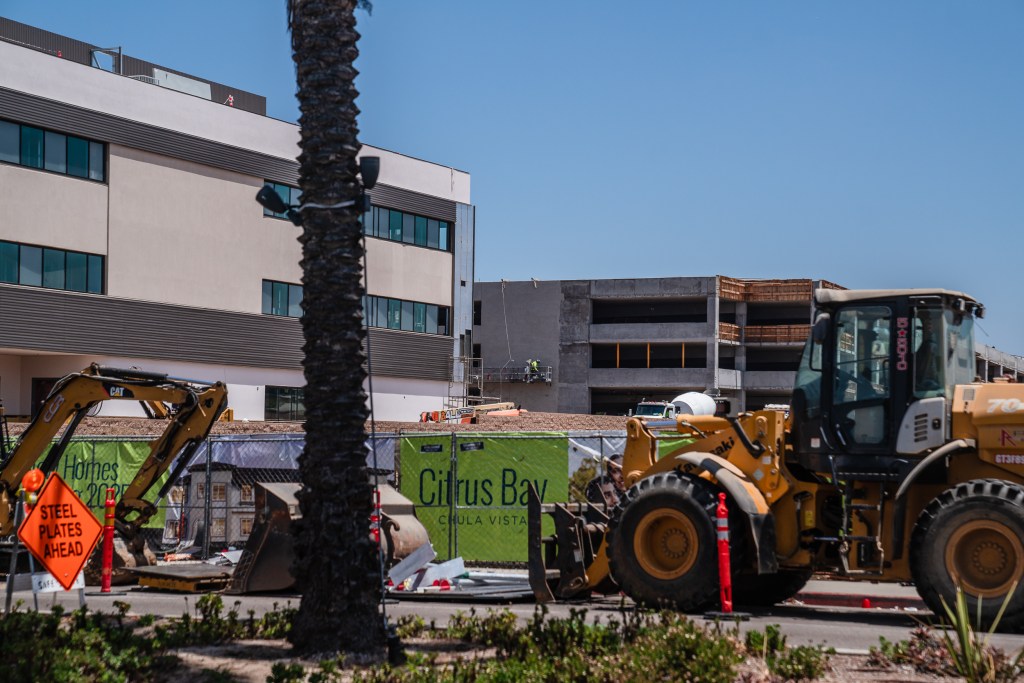
At the site of the former Sears, construction crews are building roughly 700 new medium-density homes for sale, some priced below $600,000 to attract entry-level homebuyers.
A few blocks away, a 135-unit high-rise apartment complex completed in 2020 at 3rd Avenue and H Street will be joined soon by a 208-unit complex under construction next door, said David Graham, Chula Vista’s economic development director.
Graham said the intersection of 3rd Avenue and H Street is becoming a kind of mini-downtown for Chula Vista, with a recently opened 75,000-square-foot SHARP Rees-Stealy medical complex on H Street and a new San Diego Workforce Partnership regional resource center across the street.
Graham said Primestor officials have not submitted development plans to the city for approval yet.
“But they have started conversations,” he said, including meetings with Graham himself and with the city’s development services director, who oversees planning and building.
Taken together, Graham said, and combined with other completed or greenlighted developments along the Chula Vista bayfront, the city’s west side is on track to become a regional business, tourist and retail hub.
“When you begin to think about what’s happening on the west side, there’s revitalization around Chula Vista Center, vibrancy and reactivation on 3rd Avenue, more dense residential complementing a business district [plus] job-serving uses attracting businesses such as technology, advanced manufacturing [and] medical device [development],” Graham said.
“You have a balance of jobs and retail that’s all coming together,” he said.
The development push accords with wider city ambitions to become a major regional economic player.
Most residents seem on board with the developments. But some elected officials are sounding a cautionary note.
City Councilmember Jose Preciado, whose district includes the Chula Vista Center, said he supports the work Graham and other city officials are doing to expand economic and residential opportunities in west Chula Vista.
But he said he worries that, if new development focuses too much on high-end businesses and tourists, ordinary westside residents will get left behind.
“I’m very concerned for west Chula Vista,” Preciado said. “I’m worried that convention business [from the recently opened Gaylord Pacific Resort and Convention Center, along with other planned hotels, will] gentrify our community eateries.”
“The Gaslamp Quarter used to be community-serving but then it shifted over to serving conventions,” Preciado said. “When that happens, everything gets expensive: $30 burritos, $17 beer.”
Preciado recently joined fellow City Councilmember Cesar Fernandez in spearheading an economic development plan for the west side.
The plan, approved by the Council last year, includes raising hotel taxes citywide, sprucing up key business corridors and promoting what Preciado called “sports tourism,” by which he meant hotels and restaurants geared toward youth sports tournaments.
The goal, Preciado said, would be to build sports facilities that serve city residents while also drawing youth travel teams, which have become a major source of hotel and sales tax revenue in some cities.
“I’m talking about a strategy to use the bayfront and [other key sites in the city to focus] on sports activity or sports tourism,” he said. “[We want] city businesses to thrive and residents to thrive.”
At Chula Vista Center, Sobue said Primestor already is seeking to harmonize its development efforts with Chula Vista’s evolving community needs.
Since buying the mall, she said, the company has staged outdoor gatherings geared toward Mexican holidays and exhibited artworks by local artists.
The events, Sobue said, have become a regional draw.
County Supervisor Paloma Aguirre was among 3,000 visitors who attended a Sunday afternoon Gran Posada celebration in December, Sobue said. The event included giveaways of Mexican desserts and tamales, music performances and a dance area where Aguirre “danced with the public,” Sobue said.
“She had a blast,” Sobue said of Aguirre.
If Sobue is to be believed, the mall’s new approach already is attracting the kind of boldfaced names Chula Vista’s development efforts are chasing.
Voice of San Diego was unable to verify one particularly juicy story Sobue told about the mall’s new, more chic clientele.
“I actually learned that Prince Harry and Meghan Markle actually came here [last year],” she said. “It was very low-key. It was in the morning. Just the staff saw it. They came here to watch a movie.”
Hopefully, the escalator was working that day. If it wasn’t, the mall is on track to take care of it.
In Other News
The San Diego Regional Water Quality Control Board on Wednesday voted to clear the way for a federal international wastewater treatment plant near the Tijuana River to expand its operations to treat 35 million gallons of river-borne sewage per day, up from 25 million gallons. The plant expansion is a key step in multipronged efforts to solve the river’s ongoing sewage crisis.
A coalition of environmental activists and South County residents on Thursday afternoon planned to protest at a meeting of the San Diego Air Pollution Control District, demanding that the district adopt rules to curb air pollution from large warehouses near the Port of San Diego and the U.S.-Mexico border.
The post South County Report: Chula Vista Mall Joins Westside Development Push appeared first on Voice of San Diego.