San Diego Celebrates Interstate Colorado River Deal with Nobody
 EM - News Moderator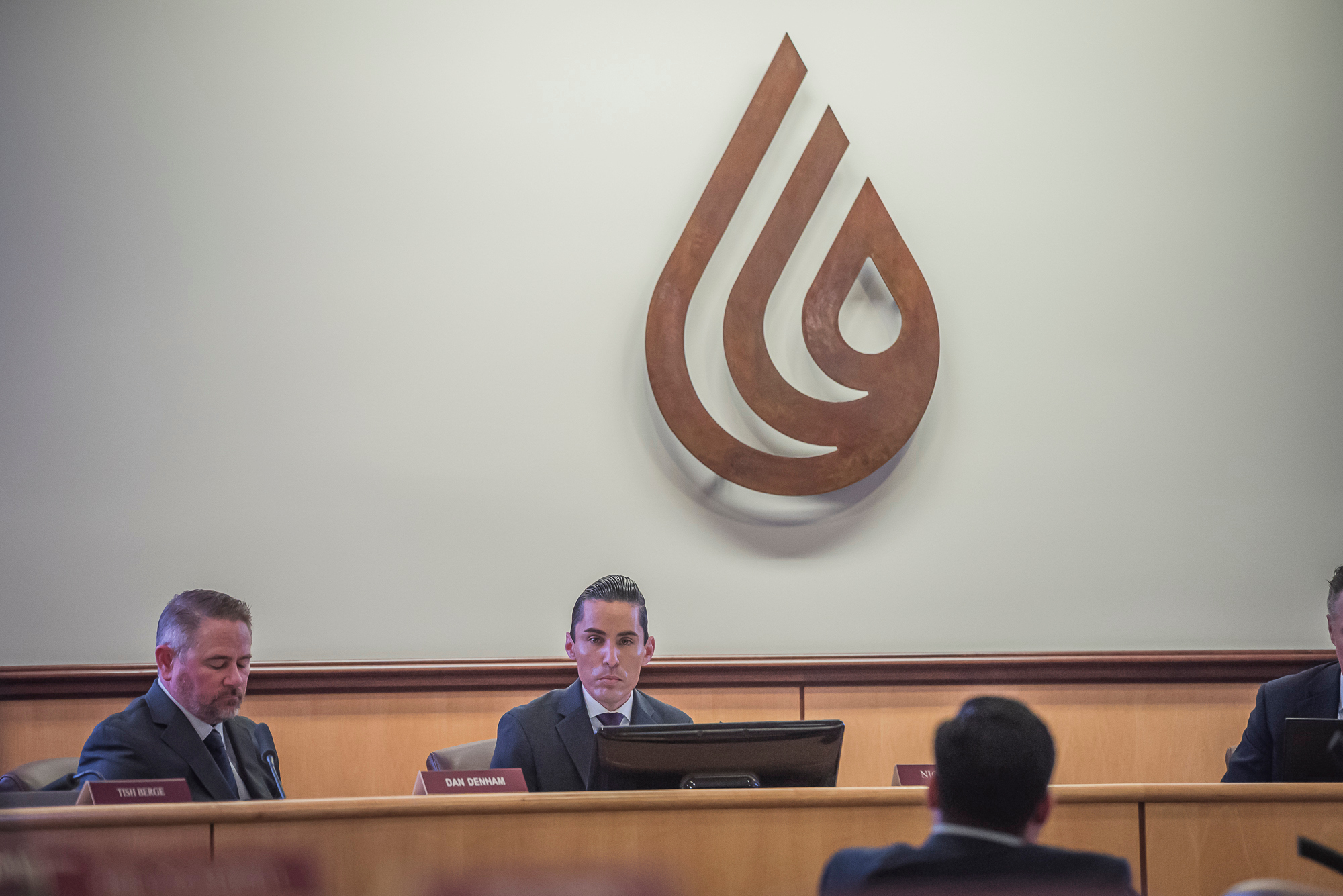


Dignitaries from Southern California water world made a big deal Thursday over Riverside officials agreeing to purchase water from oversupplied San Diego.
That deal is nothing compared to the larger one San Diego is pursuing to sell its water supplies across state lines for likely a much higher price. It’s a long way off from happening, but that plan, pitched by San Diego earlier this month, could rewrite how entire U.S. states share the drying Colorado River and Southern California’s main water supply.
But San Diego doesn’t even have a deal to discuss that deal yet. It will likely be a heavy lift since all of the major players on the Colorado River are distracted by an intractable disagreement over how to share the river, which is already critically low. A record-breaking warm spring has left very little snow in the Rocky Mountains, the river’s main source.
Earlier this month the San Diego County Water Authority’s governing board approved a memorandum of understanding to explore how trading Colorado River water across state lines might work. It basically says California, Nevada, Arizona and the federal government are going to talk about how to legally make these kinds of deals. But nobody has signed on yet.
When asked whether the U.S. Bureau of Reclamation – the federal body that manages the Colorado River — had agreed to sign the memorandum, a Bureau spokesperson did not confirm nor deny.
“We appreciate the San Diego County Water Authority being creative in addressing the water supply challenges that face the Colorado River Basin. We look forward to working with them and others as this progresses,” wrote Peter Soeth, deputy chief of the Bureau’s communications office. He wouldn’t elaborate.
The Water Authority has faced relentless criticism about its high rates – rates that are high in large part because of all the reliable water the agency secured. Now its leaders want to sell the pricey drinkable supplies to thirsty states like Arizona and Nevada that desperately need new water. The money they get in return could help the Water Authority lower rates or at least pass along lower potential rate increases in the future.
Here’s how the trade would work: San Diego would sell some of its cheaper Colorado River water – which it buys from Imperial Valley and the Metropolitan Water District of Southern California – potentially at or around the price of its more expensive de-salted ocean water from a plant in Carlsbad (the only desalination plant in California).
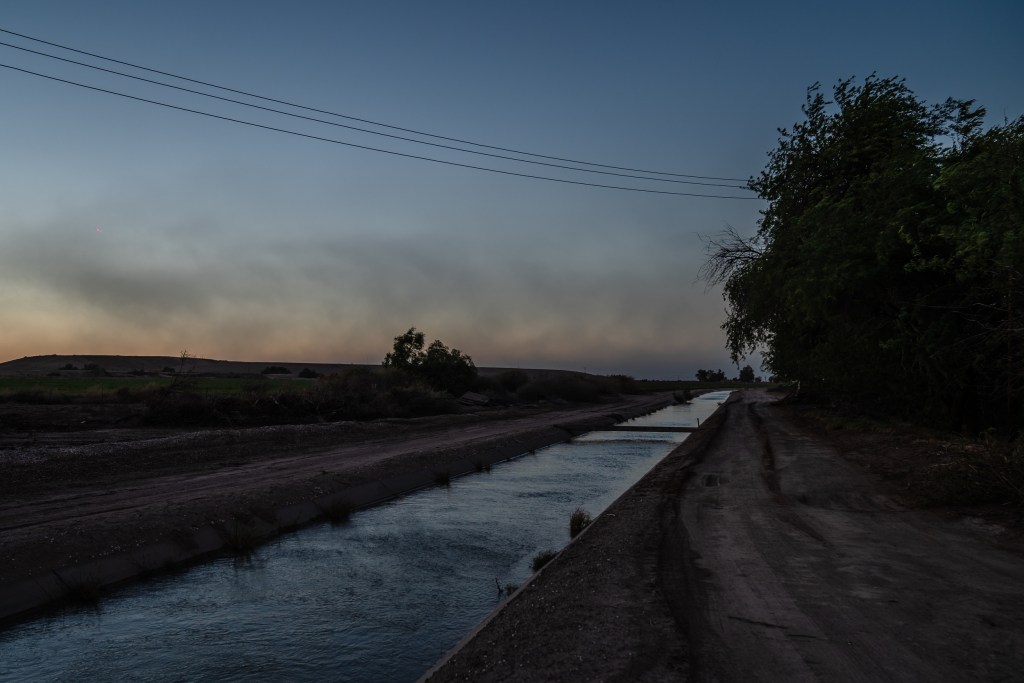
There’s no way to get desal water to those areas. So a buyer would take an equivalent amount of Colorado River water. The de-salted ocean water would stay in Southern California. Water insiders call the trade a “paper water” transfer.
“There’s definitely overwhelming interest. I was surprised the cost of our water hasn’t turned anybody away,” said Meena Westford, director of imported water at the Water Authority. “But this is new water (for the Colorado River). Inexpensive water is no longer available.”
San Diegans pay around $3,500 per acre foot of de-salted ocean water, depending on the price of the enormous amounts of energy needed to make it. (An acre-foot of water is about what two, four-person California families consume in a year.) Treated ocean water is the most expensive of the Water Authority’s supplies. Colorado River water is much cheaper ranging from $850 an acre-foot from Imperial Valley farmers to $1,528 per acre-foot of treated water if purchased from Metropolitan.
Put another way, Westford is saying that under this deal, San Diego’s desalination water could be counted as new Colorado River water, and, in effect, grow the size of the river or amount of water available. Unlike Colorado River water, desalination water would be safe from cuts during times of extreme drought, she said.
Those are attractive attributes for prospective buyers in the drying West as Colorado River users fight with each other over a river that’s been squeezed by climate change, over-allocated and overused for generations.
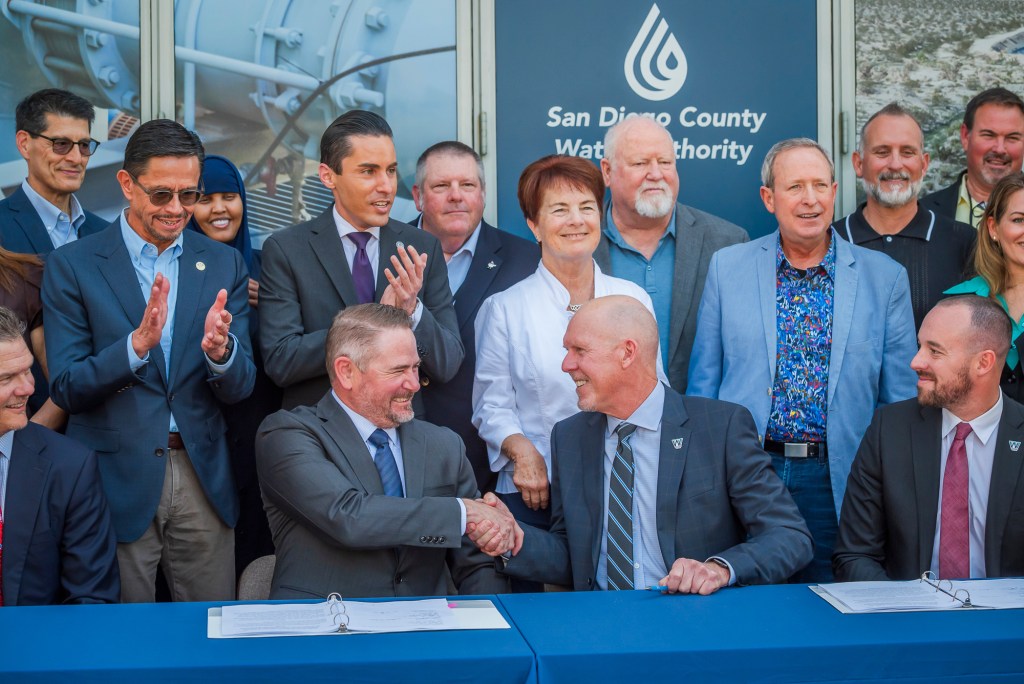
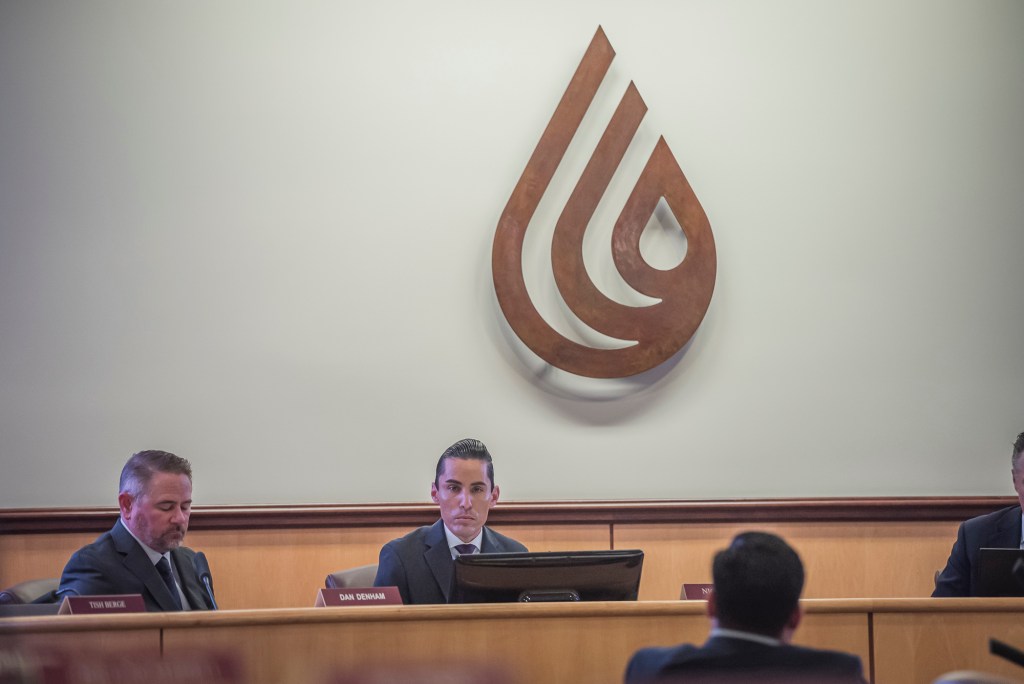
The Water Authority General Manager Dan Denham celebrated the development as an innovative move for Western water management.
“It’s never been done before,” Denham said. “We were at the forefront of this last time, too.”
He’s talking about the last big water deal San Diego made in 2003 when the region secured its own supply of Colorado River water by buying it from farmers in the Imperial Valley. At the time, San Diego was the first urban center in the Southwest to purchase agricultural water so the region could grow.
But now San Diego has secured more water resources than it needs. San Diego City Councilmembers almost didn’t approve water rate hikes on residents to support the department’s budget needs last year. They blamed the Water Authority for buying too much expensive water and called on the agency to sell it.
How the Trade Brings San Diego Rates Down

Denham has said it takes roughly about $7 million to drop water rates by 1 percent. But whether the savings from selling San Diego’s excess water would immediately impact rates is unclear.
It will be up to the Water Authority’s governing board to decide how that money is used. The agency is sitting on over $2 billion in debt already.
Denham has said about 50,000 acre feet of San Diego’s water is for sale. That’s about 15 percent of the water the agency is obligated to buy from Imperial Valley and the desal plant.
Who’s the Buyer?
Nobody is sharing yet who the prospective buyers might be. A housing developer in Arizona could make a deal with the Water Authority, or even a mining company or an agricultural producer. Another government agency could purchase it — maybe even a data center.
But the buyer and the price would eventually be disclosed, Denham confirmed.
San Diego has no real political power when it comes to making deals on the river that feeds, quenches and powers the West. Metropolitan does because it was part of the original division of the waters (almost a century ago) of the Colorado River between the seven states that use: California, Arizona, Nevada, New Mexico, Wyoming, Utah and Colorado. Metropolitan also controls San Diego’s physical connection to the river, the San Diego Aqueduct which connects to the California Aqueduct that draws water from behind Parker Dam
“This MOU is something we support because it’s really the first step in having a conversation,” said Shivaji Deshmukh, Metropolitan’s new general manager since January. “It gives us a starting point to have the discussions with major players on the river.”
Metropolitan had already begun to think about trading Colorado River water with other states. Southern Nevada Water District (of which Las Vegas is a customer) paid Metropolitan $6 million to help cover the cost of studying a proposed wastewater to drinking water recycling project. The exchange was in anticipation of Nevada being able to use some of Metropolitan’s Colorado River water while the Californians use recycled water.
San Diego needs representatives from Arizona and Nevada’s major Colorado River players to agree to the interstate trade if they’re going to sell to anyone in those state territories. Like Metropolitan, Arizona’s Central Arizona Project and Nevada’s Southern Nevada Water Authority control the aqueducts that bring water into their respective states.
What about the Other Colorado River users?
The Imperial Irrigation District is not mentioned as a potential partner in the memorandum of understanding. Nor are any of the other more northern users of the river like Colorado, Wyoming, New Mexico or Utah.
San Diego relies heavily on the Imperial Valley for Colorado River water. Tina Shields, the district’s water department manager, said she expects any actual interstate water transfers with California’s portion of the river to require sign off from Imperial Valley and the state’s other five players that hold contracts on the river.
“We want to make sure California’s needs are met before considering any water going out of state,” Shields said. “We’re not in the business of water transfers. We’re in the business of farming.”
The post San Diego Celebrates Interstate Colorado River Deal with Nobody appeared first on Voice of San Diego.