Nonprofit Deploying Overdose Reversal Drug for County Didn’t Pay Subcontractors, Staff for Months
 EM - News Moderator


Months before the Harm Reduction Coalition of San Diego’s former chief operating officer faced criminal misappropriation charges, the nonprofit stopped paying staff and its contract partners.
County officials knew of the unpaid bills but repeatedly directed those looking to be paid to the Harm Reduction Coalition.
Three nonprofits that partnered with the Harm Reduction Coalition on its county contract to deploy overdose reversal drug naloxone report that they are collectively owed nearly $200,000 in county money that the coalition was supposed to distribute to them.
And a former Harm Reduction Coalition contract employee told Voice of San Diego that the Harm Reduction Coalition failed to pay her about $36,000 from March through July 2025.
The missing payments – and previous bouncing or delayed checks from the nonprofit – paint a picture of escalating financial chaos surrounding a nonprofit that then had two county contracts totaling $2.2 million annually.The county began learning of the nonprofit’s struggle to pay its bills in 2024 – and the situation only worsened as the months went on.
County officials also knew the past-due bills put significant pressure on Harm Reduction Coalition workers and subcontractors. At least for now the county hasn’t taken action to ensure those past-due bills are covered.
The county emphasizes that it was the Harm Reduction Coalition’s responsibility to pay workers and subcontractors.
“The county is not deferring payment responsibility to HRCSD – as the contractor this is their responsibility. The contract clearly states that the contractor is responsible for paying,” county spokesperson Tim McClain wrote in an email to Voice of San Diego. “The county is however exploring options for reimbursing the subcontractors that never received payment from HRCSD.”
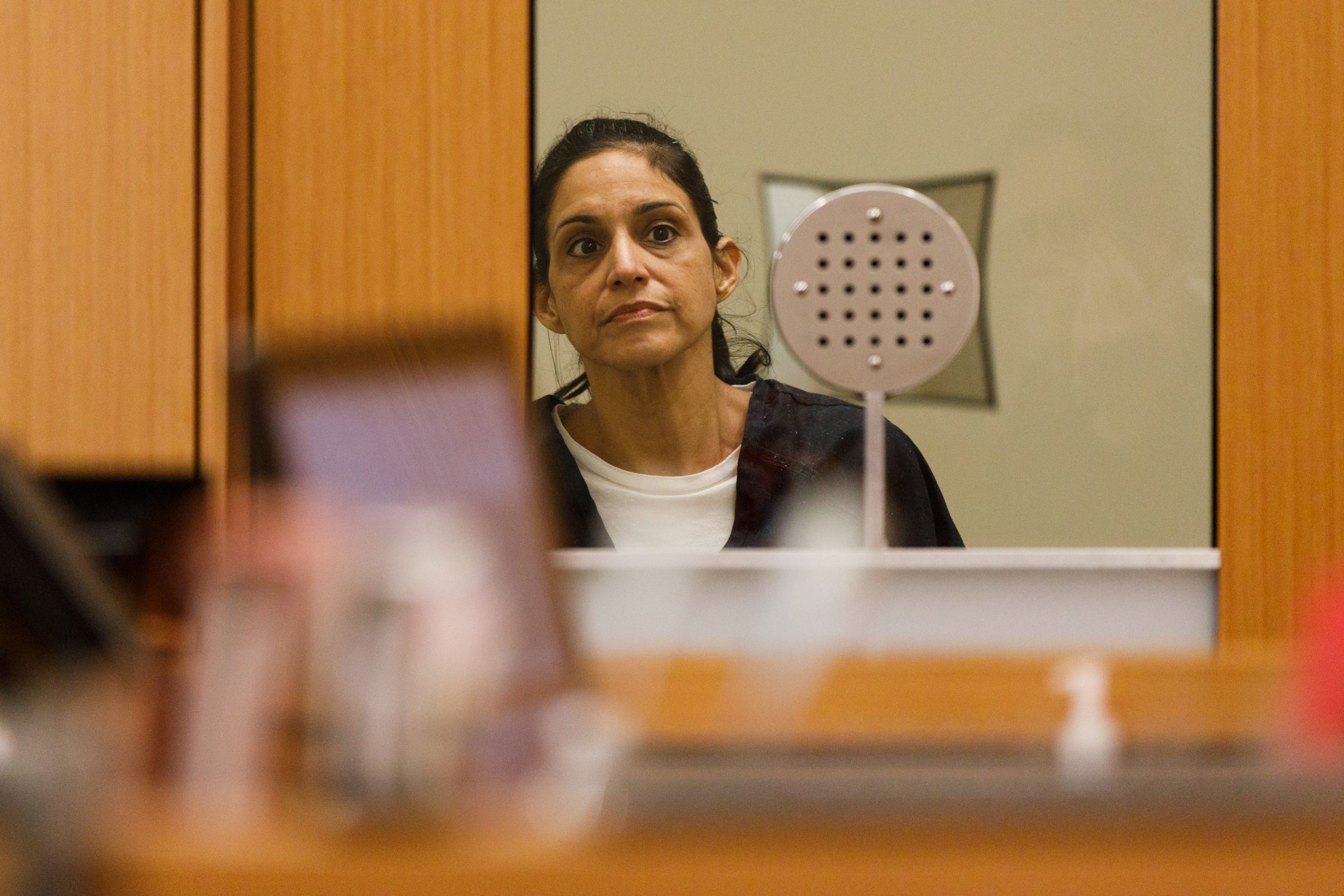
District Attorney Summer Stephan’s office charged former Harm Reduction Coalition finance chief Amy Knox with felony misappropriation last month and has estimated that she had spent at least $210,000 in public funds on everything from plastic surgeries to purebred dogs. A deputy district attorney also revealed last week that investigators are trying to account for another $600,000 that at least initially landed in Knox’s bank accounts. The charges and allegations came months after the county’s late June cancellation of its two contracts with the nonprofit.
Harm Reduction Coalition CEO Tara Stamos said she wasn’t aware of the payment challenges for subcontractors and workers until Knox left the organization in May 2025. She had relied on Knox to handle invoices and payments and was rarely keeping up with emails.
“I’m devastated for myself, for them,” Stamos said. “I feel like I’ve disappointed people.”
For former Harm Reduction Coalition employees and subcontractors, financial concerns started to emerge in 2024.
A New Path, a small nonprofit focused on advocating for people and families struggling with addiction, subcontracted with the Harm Reduction Coalition to train San Diegans on how to use overdose reversal drug naloxone.
In August 2024, A New Path Executive Director Gretchen Bergman said a nearly $50,000 Harm Reduction Coalition check for a couple prior months of work bounced.
Emails released after a records request show A New Path reached out to the county on Sept. 4, 2024, to request an urgent meeting with the county staffer assigned to oversee the contract. The contract administrator responded five days later to suggest meeting times.
A day after their Sept. 10 meeting, A New Path told the contract administrator that the Harm Reduction Coalition had delivered a $35,000 certified check but that it was still owed $14,528 – and still awaiting payment for two-and-a-half months of services for the prior fiscal year.
Bergman said the county made it clear that A New Path should be taking unpaid bills up with the Harm Reduction Coalition.
“As subcontractors, if we had an issue with our contractor, we were told that we should take it up with the contractor,” Bergman said.
Former Harm Reduction Coalition employees said their paychecks sometimes bounced too.
Former staffer Jordan Parnes said his bank put his paycheck on 10-day holds at least a half dozen times over a seven-to-eight-month span. The nonprofit also switched off between direct deposits and paper checks.
That trend continued into 2025.
“I don’t think there was ever stretch of two months in a row where we got consistent direct deposit,” Parnes said. “We never got direct deposit for four paychecks in a row.”
At the time, Parnes said Knox told him the county was lagging on reimbursements for drug testing work. Unlike the Harm Reduction Coalition’s naloxone contract, the nonprofit had to spend upfront and bill the county for reimbursements.
“(Knox) was saying that it was issues with the funding, like the county wasn’t paying for this or that and they were lagging on payments,” Parnes said.
McClain, the county spokesperson, said the county was simply following the contract.
“The county issued timely payments after the contractor submitted expenses and the expenses were reviewed and approved, in accordance with contractual requirements,” McClain wrote.
The payment situation got far worse in the new year.
Louie Nguyen of SAY San Diego, a second subcontractor helping to train San Diegans to use naloxone, said his nonprofit was flagging missed Harm Reduction Coalition payments by early 2025. His staff couldn’t get answers about what was happening.
“We’d get stonewalled,” Nguyen said.
In the end, Nguyen said his nonprofit was shorted $92,500, a cost it’s been able to absorb for now.
Two other subcontractors didn’t have that same financial flexibility.
A New Path reports it wasn’t paid $98,820 for five months of work and is still owed just under $4,400 to make up for the 2024 bounced check.
The missed payments were devastating for the nonprofit with an under $500,000 annual budget.
In the weeks after the county cancelled the Harm Reduction Coalition’s contracts in late June 2025, Bergman said some full-time staffers’ hours were slashed by a quarter and she initially gave up her own salary. A large, well-timed donation and a direct county contract in August 2025 helped the nonprofit ramp back up, though workers struggled to find people grappling with addiction who had relocated when they hit the streets again.
A smaller nonprofit with a less formal memorandum of understanding with the Harm Reduction Coalition also struggled.
Reginald Washington, founder of Project AWARE, estimates that the Harm Reduction Coalition failed to pay his grassroots organization focused on empowering at-risk youth and families about $2,000 to teach people often living in the shadows to use naloxone to revive their neighbors.
Washington said his organization continued its work during the months it didn’t receive checks from the Harm Reduction Coalition, but the missed payments contributed to the departure of two workers.
“Individuals have left because we weren’t able to pay them,” Washington said.
Former Harm Reduction Coalition employees faced similar dilemmas – at a much larger scale.
Morgan Godvin started working on the nonprofit’s drug checking contract with the county in March 2025, when the Harm Reduction Coalition had already stopped paying subcontractors.
She didn’t get her first check until May – and said another staffer persuaded her to take an initial $10,635, short of the $13,635 she was owed. Godvin said she never received the additional $3,000 and was never paid again. She estimates she’s owed more than $36,000 for work through July 2025.
At the time, Godvin said Stamos and Knox said they were waiting for the county to reimburse them for drug testing work before they could pay her. Godvin continued to work for the Harm Reduction Coalition for a month after the county cancelled its contracts, hoping to eventually be paid.
Godvin was left scrambling when the checks never came. She said she sold off stock investments and ran up credit card debt to avoid falling into homelessness. She eventually sought help from the county contract administrator, the county’s Office of Ethics and Compliance and attorneys without success.
“I’m one of many people – the wreckage, the ripple effects of that wreckage is almost unfathomable to me to be honest,” Godvin said.
In response to questions from Voice about workers going unpaid, a county spokesperson wrote that the Harm Reduction Coalition contract “clearly states that the contractor is solely responsible for paying employees.”
Stamos said she’s devastated for former staff and nonprofits that partnered with the Harm Reduction Coalition to combat a deadly addiction crisis.
“They’ve been caught up in something they didn’t ask for. Neither did I. I feel powerless to be able to do anything about it,” Stamos said. “They should never even have had to wait five months to be paid. They should be paid on time, every time.”
Stamos said she’s also struggling with the financial fallout.
Stamos estimates she only received about $40,000 for her work as CEO in 2025 despite a public tax filing that reported that she was paid $316,373 as of 2023. Stamos said the filing that Knox made to the Internal Revenue Service was inaccurate and that she’s now seeking to update it.
“We had no money at the very end,” Stamos said.
The post Nonprofit Deploying Overdose Reversal Drug for County Didn’t Pay Subcontractors, Staff for Months appeared first on Voice of San Diego.