Morning Report: South Bay’s ‘Hot Spot’
 EM - News Moderator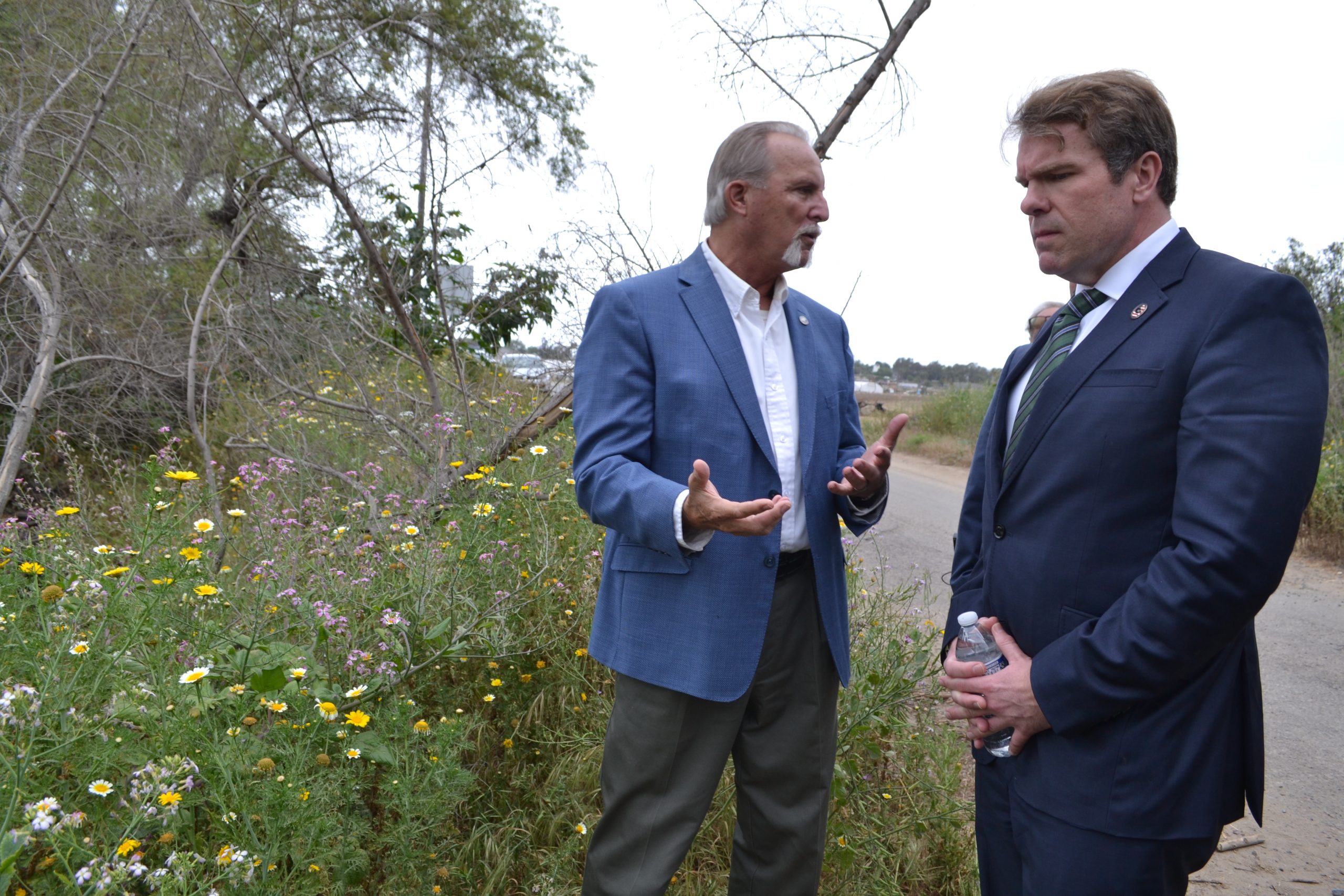


Could South Bay businesses’ woes make the long-running Tijuana sewage crisis a more urgent priority in Washington D.C.?
This week, Imperial Beach business owners met with top officials from the U.S. Small Business Administration. Our Jim Hinch was there to document business owners’ complaints about fewer customers and visitors and slashed revenues – and federal officials’ response to their testimonies.
In his latest South County Report, Hinch writes that federal officials said they hoped to return with solutions – and notes that the economic crisis fueled by the environmental one could be more compelling to an administration focused more on businesses.
Bonus: Hinch also followed officials as they made their way to a pollution hot spot – and how they reacted.
Read the South County Report here.
Behind Voice: A Housing Super Star?

Yesterday, we published a story about how the city of San Marcos is on track to meet state-mandated housing targets in three of four housing categories. You can read the story here.
We chatted with North County reporter Tigist Layne about her findings. Here’s our conversation below, edited for length and clarity.
You’ve been covering housing development in North County for a while now. How did this story about San Marcos get on your radar?
I try to consistently keep tabs on how North County officials are navigating housing production in their respective cities. This is also normally the time of year when cities begin releasing their annual Housing Element progress reports, which shows how each city is progressing toward the targets outlined in their Housing Element, or housing plan.
I noticed that San Marcos had permitted a lot of homes in 2025. It was the second-highest number of homes the city had permitted since this Housing Element cycle began in 2021. And as I looked closer, I realized the city had already surpassed its goal for the moderate-income category and was more than halfway toward meeting its goal for the low-income category.
That’s something not many other cities in the county can say, so it caught my eye.
Just how much housing is the city supposed to make way for? And how much have they built in each category?
In total, San Marcos has to make way for 3,116 homes by the time this Housing Element cycle ends in 2029 for people in four different income categories: very low, low, moderate and above moderate. As of last year, it has permitted 2,765 homes.
In the very low-income category, San Marcos has permitted 192 homes, with 344 remaining.
In the low-income category, San Marcos is roughly 57 percent toward meeting its goal—it has to make way for 530 homes for low-income residents, and it has permitted 303 homes, with 227 remaining.
In the moderate-income category, the city has permitted 871 non-deed-restricted homes for moderate-income families; these are moderately priced homes that aren’t subsidized. Coupled with 44 additional deed-restricted moderate-income units, the city has already surpassed its moderate-income housing goals by 373 homes.
And in the above-moderate category, San Marcos’ target is 1,316 homes, which the city has also exceeded, permitting 1,366 homes as of last year.
Does this mean once they meet their goal, they don’t have to build anymore? All done?
No. California housing laws require jurisdictions to approve all housing projects that include affordable housing and fit objective zoning and development standards. So, even if San Marcos meets its targets in all income categories, city officials will still have to approve affordable housing projects that come their way.
And after 2029, a whole new housing cycle will begin, which means cities will receive new housing targets.
What do you think is next for the city of San Marcos?
Residents will see San Marcos’ North City development, the city’s new downtown area, continue to take shape as construction is still ongoing.
I also think the city will continue to make strides toward its housing goals. It’s in a good place to meet its targets by the end of the housing cycle, which means it will avoid penalties from the state and potential lawsuits from the attorney general or housing advocates.
You can follow Layne’s reporting by subscribing to her newsletter, the North County Report. We publish it every other Wednesday. Subscribe here.
In Other News
- City of San Diego officials are eyeing municipal golf course revenue as they look to close a $120 million budget deficit for the upcoming year. (Union-Tribune)
- More than 650 San Diego families – including the Raschke family we profiled in 2022 – counted on Emergency Housing Vouchers to end their housing instability and homelessness. Now they are grappling with what to do next as funding for those vouchers runs out far sooner than expected. (inewsource)
- The operators of at least two North County elder-care homes pleaded not guilty Thursday to human trafficking and wage theft charges following allegations that they forced at least three staffers to work long hours with little pay. (Union-Tribune)
- The boat dubbed the Bill of Rights that’s docked at Safe Harbor South Bay will remain there after the marina rescinded an eviction notice. (KPBS)
- A bill introduced by U.S. Sen. Bernie Sanders could keep the Padres from departing San Diego. (Union-Tribune)
The Morning Report was written by Lisa Halverstadt, Andrea Sanchez-Villafana and Tigist Layne. It was edited by Andrea Sanchez-Villafana.
The post Morning Report: South Bay’s ‘Hot Spot’ appeared first on Voice of San Diego.