Looks good on you
 EM - News Moderator



IF YOU THINK color analysis, as popularized on social media, just means draping cloths to determine which color looks good on you, then you’ve got to talk to Carla Pamela Florin, president and chief executive officer of The Lookbook Style Studio.
Ms. Florin was a guest lecturer at the Korean Cultural Center’s K-Beauty Week at its Taguig site. The event runs from April 15 to 23. During her class, she explained what goes on into color analysis and how it helps everyday life.
For example, it’s not just a matter of vanity. She said that it saves time and energy: “When you go shopping, you just go directly to that specific color,” she said, eliminating trial and error.
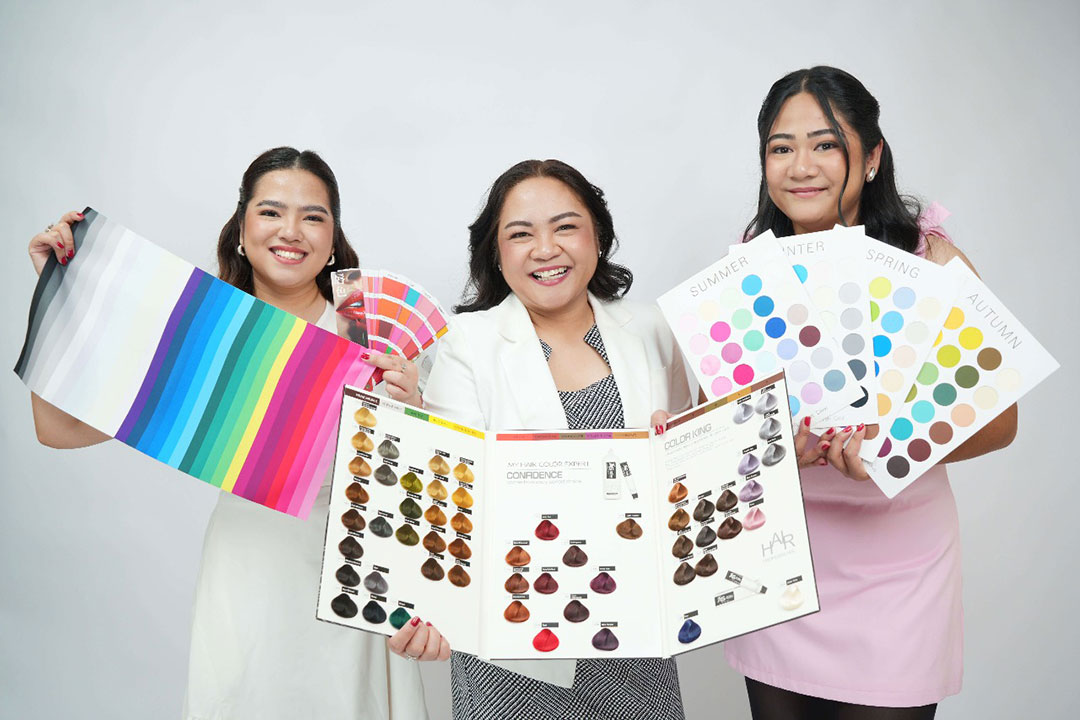
Colors are grouped according to season: Spring and Autumn are warm; Summer and Winter depend on cool tones. How they interact with your skin depends on one’s undertone: more pinkish undertones mean one has a cooler palette while more yellowish undertones mean a warmer palette. The skin’s surface is affected by things like sun exposure and genetics. Contrary to popular belief, many Filipinos, despite what seems to be a uniformly brownish tone, lean more towards cooler palettes due to pink undertones. “It’s actually based on your blood,” she says about the science of it. More hemoglobin in your blood gives you a pink undertone, while more carotene in your body gives the yellow tones.
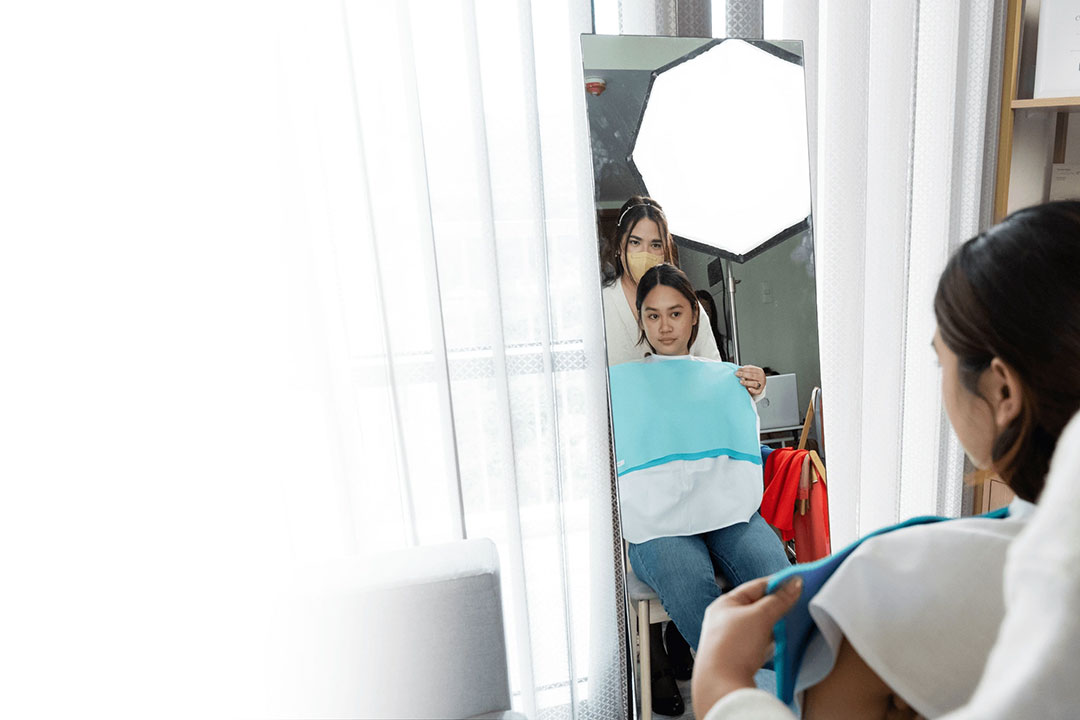
During her demo, she showed with a volunteer what goes on in a class. Despite the numerous white lights on the model, she says that during consultations, they depend more on natural light. They can’t use yellow light as it gives a person a deceptive warm glow, while they need to control the brightness of the white light because it will then make a person look too pale.
She works with the Korean color system, which she says differs from the Western system. The Korean system is based more on lightness, or color value, due to the nature of East Asian pale skin. The Western system depends on the color’s saturation, due to the diversity of hair, eye, and skin color present in the West.
Lighting is a factor as well (just look at how sunlight differs here and in other countries). That’s why she’s planning to develop a more Filipino-centric color analysis course. “We have a different concept of beauty here in the Philippines. We have a different climate. And our average color is different,” she said in a mixture of English and Filipino. “I think it would be more into saturation as well. We’re medium-colored.
“We’re also researching what are the usual colors from our local brands,” she says, the better to fit this Filipino-centric color analysis, should it come to fruition. For this she uses her background as a sales analyst. She went into personal image consultancy and color analysis (earning her certifications from Malaysia, Japan, and Korea) as a second chapter after retirement (while being helped by her daughters: one an interior designer and the other in business).
One assumes a large celebrity clientele (which is true), but many of her clients come from the professional class: doctors, lawyers, accountants. One such doctor, an oncologist, asked for her advice. “She wears dark colors. She felt that it’s more professional.” After figuring out that she looked good in cooler, paler summer tones, she concluded with the doctor: “It also helps how your patients see you. It’s not going to be so dark,” since the doctor’s work in cancer was very serious.
Of course, we don’t have to follow what color analysts say — clothing is a way to express ourselves in the world, and a specific color palette might disrupt that. “At the end of the day, it still boils down to your preference and what you want.”
Visit https://lookbookstylestudio.com/ for more information. — Joseph L. Garcia