Lawyer: County Board Chair’s Taxpayer-Backed Poll Questions ‘Cross the Lines’
 EM - News Moderator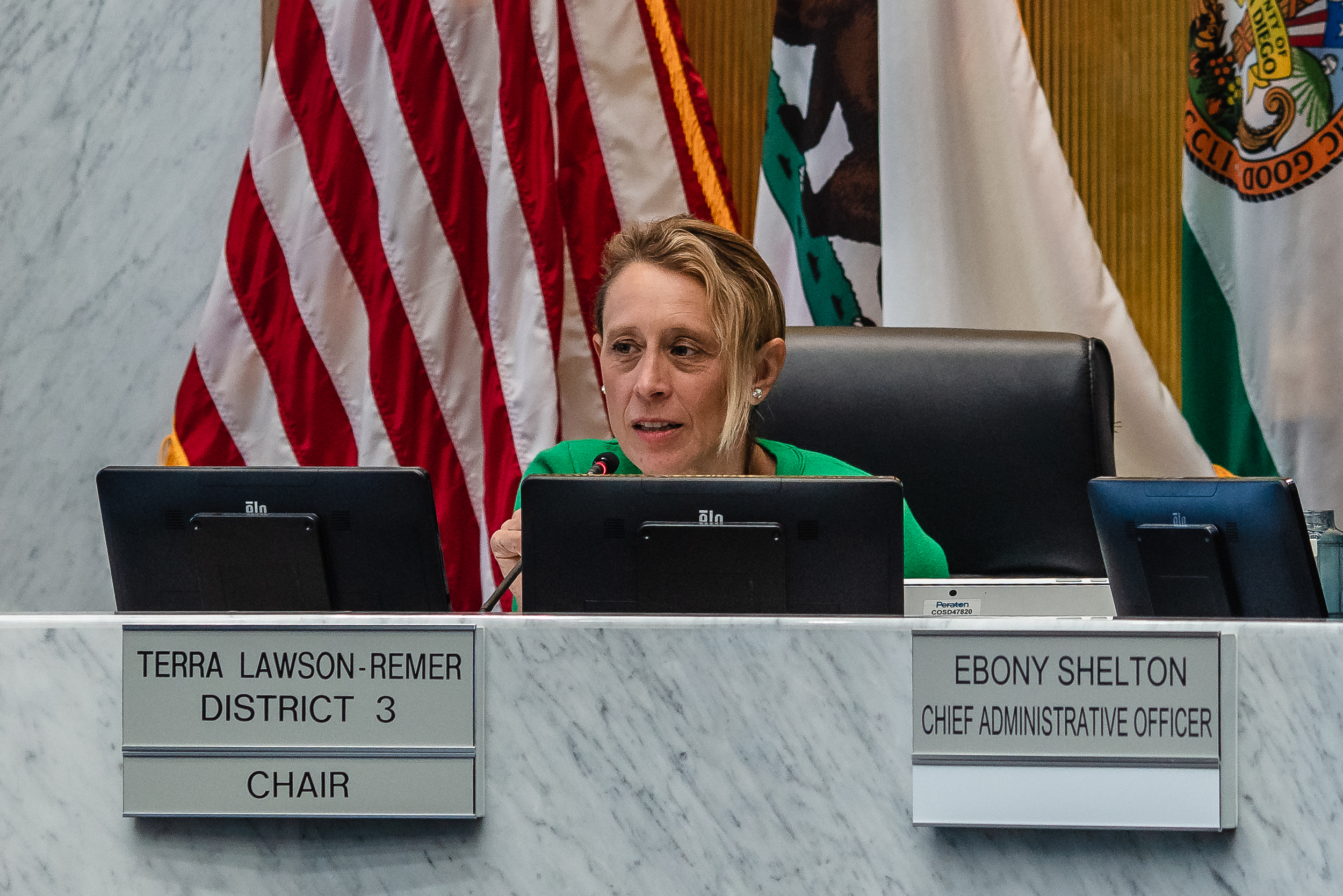


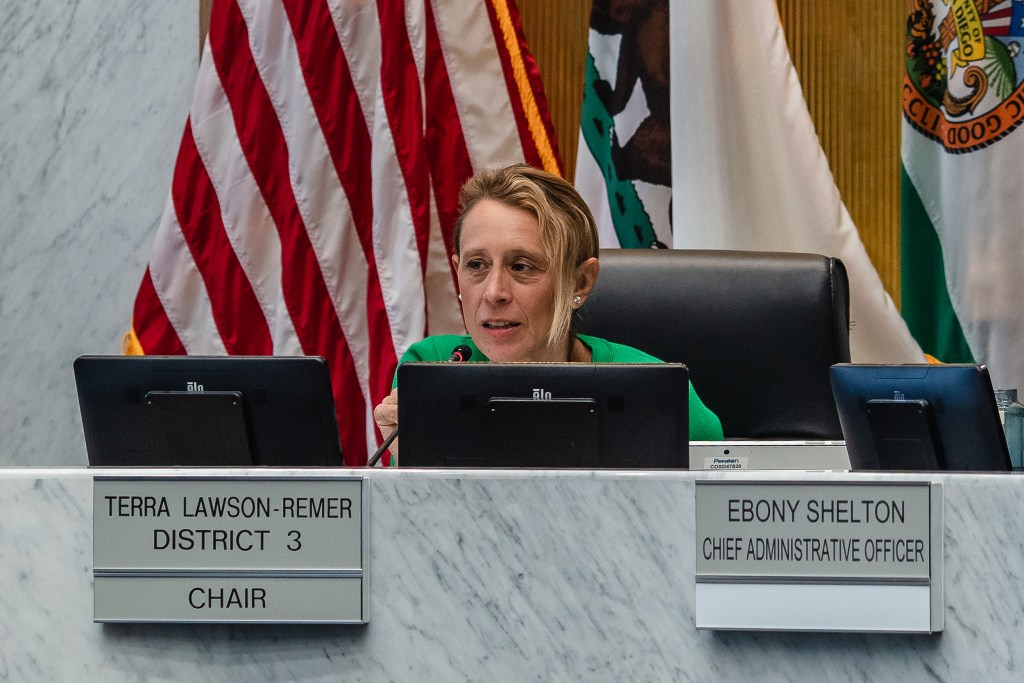
County Board Chair Terra Lawson-Remer has spent $89,000 in taxpayer money to poll-test potential ballot measures that would raise taxes and reform county government.
A prominent election law attorney argued that questions in one of those surveys cross the line on what state law allows local government funds to support. County officials say the polling is within the bounds of the law.
Lawson-Remer floated governance reforms after working with a polling firm contracted to survey hundreds of likely voters countywide. Meanwhile, a coalition that includes county labor groups is collecting signatures for a potential November 2026 half-cent sales tax measure that would pay for similar priorities as those Lawson-Remer poll-tested last June.
It’s common for local governments and elected officials to use taxpayer dollars to assess support for potential ballot proposals. Yet doing so often raises eyebrows and state law polices what sorts of questions local governments can ask.
San Francisco-based election law attorney Jim Sutton said Lawson-Remer and the polling firm designed the questions on extending term limits and other reforms to county governance to help a future campaign rather than help county officials craft a ballot measure, thus crossing the line of what’s allowed under state law.
Voice of San Diego obtained detailed polling and procurement records after a public records request. Lawson-Remer has also posted charter survey and revenue measure poll presentations on her website.
County procurement records show Lawson-Remer’s office used a contract her office signed last year allowing her office to spend up to $250,000 on budget-related surveys to pay for the polls. The contract calls for countywide constituent surveys to “assess public sentiment on sustainable revenue strategies, budget priorities and fiscal trade-offs.”
An initial $49,000 contract in May 2025, amended weeks later to increase the potential payout for polling firm FM3 Research, noted that surveys would be “issue-based” and only used for “legislative or governmental purposes.”
County staff didn’t update the contract to broaden its focus to include charter reforms before the Los Angeles firm conducted the county governance reform survey. The survey tested the waters on reforms including an elected county executive and an additional term for supervisors that could directly benefit Lawson-Remer.
Lawson-Remer’s office has said it spent $40,000 in Supervisorial District 3 office funds on the charter survey but did not respond to Voice’s questions about how much it has spent on the up-to-$250,000 contract since last June.
Lawson-Remer spokesperson Beth Willon provided a general statement.
“Supervisor Terra Lawson-Remer’s strong commitment is to represent and advocate for the 700,000 residents of her district,” Willon wrote. “Since taking office she has committed to robust community outreach, townhalls, surveys, community events and more to better understand and champion the needs of her district.”
County spokesperson Tammy Glenn later clarified the county has spent $89,000 on the FM3 Research contract so far and the expenses fall within the bounds of a state law that polices local government spending on ballot measures because there aren’t measures on the ballot yet.
“In accordance with state law, the gathering of public information may be done in consideration of a potential ballot initiative, but public entities may not spend money on campaigns and/or campaigning once an initiative has qualified for the ballot,” Glenn wrote.
Sutton, a prominent California election-law attorney, said polling that helps local government officials decide what to include in potential ballot measures isn’t unusual. What’s problematic with the supervisor’s poll on charter reforms, he said, is it appears to test campaign messages.
The November charter governance reform poll of 737 likely November 2026 voters asked voters to rank a series of what it described as “educational statements” they considered convincing reasons to support the measure and to evaluate whether an opposition message was “a convincing reason to vote no.”
For example, the survey asked voters if learning that the San Diego County charter is outdated made them more likely to support the measure.
Sutton said questions like that one go too far.
“Those questions cross the lines and are an impermissible use of county funds because they are solely designed to develop the communications which will be sent to voters during the campaign,” Sutton said.
The polling results: More broadly, the survey tested various county government reform proposals and concluded that eight in 10 respondents would back overarching changes. Transparency and ethics reforms had the strongest support.
More controversial pitches including giving county supervisors the ability to serve a third four-year term – up from the two-term limit set by voters in 2010 – appeared to draw support from 73 percent of likely voters. The poll did not clarify that supervisors now are allowed just two four-year terms, something that political insiders and The San Diego Union-Tribune editorial board have recently criticized.
An idea to switch to an elected top manager steering county government rather than the county’s current non-elected chief administrative officer drew support from 79 percent of those polled. The latter now seems unlikely to make it into a final proposal based on feedback from labor leaders and other insiders.
Sutton found less fault with Lawson-Remer’s June 2025 survey about potential revenue measures. He said it seemed designed to gauge what might be palatable.
The June poll of 819 registered voters showed 38 percent of those polled described their support of a half-cent sales tax hike as “definitely yes” while 15 percent were “probably yes.” Respondents also weighed in on a potential fee on property transfers, a proposal that drew definite and likely support from 56 percent of participants. In both cases, voters were asked what line items and proposals they supported. Addressing the Tijuana sewage crisis, bolstering wildfire prevention and preserving public safety were among the highest rated causes.
Months after the poll was conducted, two labor unions and a child care advocacy group filed a proposed countywide sales-tax hike they’ve dubbed the Protect San Diego County’s Health & Safety Act with the county Registrar of Voters in hopes of making the November 2026 ballot. Nearly 23 percent – or roughly $81 million of the projected $360 million annual haul – would go toward combating the Tijuana sewage crisis and nearly 18 percent to public safety services, wildfire prevention and crisis response.
The post Lawyer: County Board Chair’s Taxpayer-Backed Poll Questions ‘Cross the Lines’ appeared first on Voice of San Diego.