Inside the Debate Over Secret County Subcommittees
 EM - News Moderator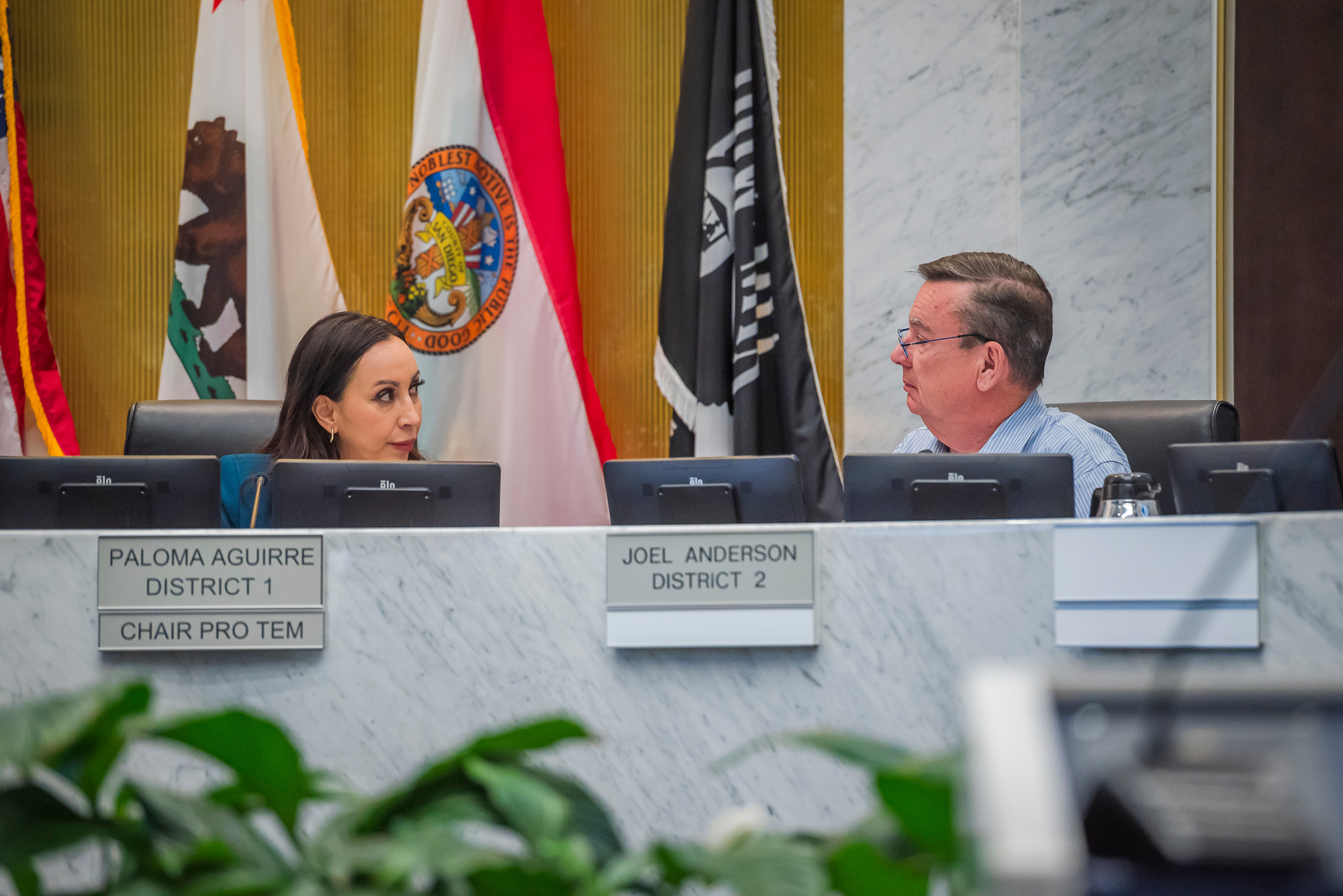


For months, county supervisors have met behind closed doors in subcommittees to discuss how the county could respond to projected federal cuts and the Tijuana River sewage crisis, and spend reserves. Only one of the board subcommittees has invited the public to attend.
The county says the committees, each made up of two elected supervisors, are advisory and temporary – and are not subject to the state’s open meeting law.
If they were, the county would need to hold public meetings, supply meeting notices and agendas, allow public comments and share post-meeting minutes.
At least one attorney who spoke with Voice of San Diego argues the subcommittees are focused on longer-term issues that suggest the need for more transparency under the state’s Brown Act.
“I think there’s a strong argument that these committees are covered by the Brown Act and should be treated as such,” said attorney David Loy of the nonprofit First Amendment Coalition.
Supervisor Joel Anderson, who co-chairs a county contracting review subcommittee that kicked off with a public meeting this week, is urging a Tuesday board vote to change county policies to require noticing and other transparency procedures for subcommittees.
The changes aren’t required for supervisors to make subcommittee meetings public, but Anderson thinks county policy should mandate transparency.
“San Diego County residents shouldn’t have to wonder where important policy ideas are being shaped,” Anderson said.
Anderson’s proposal follows growing frustration about the fiscal sustainability subcommittee made up of board Chair Terra Lawson-Remer and Vice Chair Monica Montgomery Steppe. The subcommittee recently proposed how the county should spend $47.4 million in newly unlocked reserve funds, leaving other supervisors out of the sausage-making process until a Board of Supervisors vote. The subcommittee has also spurred two bidding requests, including one that the county cancelled earlier this year after outcry from Supervisor Jim Desmond and another that resulted in a $320,000 contract.
The lack of information about subcommittee actions has stirred supervisors who aren’t on them.
Emails obtained by Voice of San Diego after a public-records request show one of those controversial bidding processes was cancelled in early January after a staffer for Desmond emailed Chief Administrative Officer Ebony Shelton to raise concerns about the process directed by Lawson-Remer and Montgomery Steppe’s subcommittee.
In a Dec. 30 email to Shelton, Desmond Chief of Staff Darren Gretler wrote that the process made his office uncomfortable. The quick-turn bidding process was playing out in the thick of the holiday season, and his office was caught off guard by a bidding callout for lobbyists who could negotiate changes to state law to facilitate county tax hikes made his office uncomfortable.
“This will be a high profile and controversial topic, and the hiring of a political consultant in this manner seems to fly in the face of transparency,” Gretler wrote. “Is it possible to get a briefing on why this happened in this manner? Does the full Board of Supervisors have an opportunity to weigh in on this consultant and other efforts?”
Shelton replied on Jan. 2, writing that county leaders would discuss the “appropriate mechanism for reporting subcommittee actions to the full board, including how and when information from board subcommittees is shared more broadly.”
After that exchange, county spokesperson Tammy Glenn told Voice that county staff informed board offices they would summarize subcommittee actions on a quarterly basis and submit a wrap-up memo once committees close. She also wrote that “items requiring resource allocation or policy changes” will come to the full Board of Supervisors.
Yet Glenn couldn’t say whether supervisors or the public would receive immediate notifications of any bidding processes or awarded contracts triggered by subcommittees outside the county’s procurement system. Board approval isn’t required for contracts under $2 million – and both controversial bidding processes instigated by the fiscal sustainability subcommittee fell under that amount.
The fiscal sustainability subcommittee is one of four that the Board of Supervisors have voted to create over the past year.
In June, the board created an Ad-Hoc Subcommittee on the Tijuana River Sewage Crisis made up of Lawson-Remer and South Bay Supervisor Paloma Aguirre to make recommendations to address the years-long crisis.
A couple months later, Lawson-Remer and Montgomery Steppe proposed the creation of the Ad-Hoc Subcommittee on Social Safety Net Services and Behavioral Health Systems Transformation. The committee was tasked with advising the county on implementation of the One Big Beautiful Bill Act, which will bring with it significant cuts affecting county social services and on a move to make the county’s behavioral health services department a standalone agency.
A month later, Lawson-Remer and Montgomery Steppe proposed the fiscal sustainability subcommittee to make recommendations to protect county services amid federal cuts and assess both financial risks and funding options for the county.
Desmond expressed his discomfort as his colleagues made both proposals.
“I can’t support another ad-hoc subcommittee, and if this is going to be going forward, it should least be open and transparent in front of the whole Board of Supervisors and in front of the public,” he said before the September vote.
Then, in November, the board approved Anderson and Aguirre’s proposal to create a Fiscal Transparency and Accountability Ad-Hoc Subcommittee focused on reviewing and evaluating county contracts to seek out savings and efficiencies. Unlike the others, the committee has committed to public meetings.
Per 2003 guidance from the state Attorney General’s Office, ad-hoc committees should focus on “accomplishing a specific task in a short period of time.”
Loy of the First Amendment Coalition raised concerns that the committees could be creeping beyond their initial missions and argued that the issues they’re designed to tackle aren’t necessarily novel or new. For example, governments often deal with dips in revenue and should consistently try to ensure their contracts are as effective as possible. And the Tijuana River sewage crisis has been a long-running challenge for the region.
For those reasons, Loy said he thinks the ad-hoc subcommittees should instead be standing committees that must follow the state’s open meeting law and allow for more public participation.
“These are regularly occurring issues of county governance, at least arguably so,” Loy said. “It does look to me that this presents significant Brown Act problems.”
Orange County-based attorney Nicholas Ghirelli, whose firm typically represents government agencies, wasn’t willing to offer a legal opinion but said subcommittees can allow supervisors more flexibility as they try to tackle a complex policy issue that could get more complicated with public meeting mandates. He also noted that the Brown Act doesn’t specify how long ad-hoc committees can continue before they should become standing committees.
The key, Ghirelli said, is that they must be advisory and tee up proposals for the full board.
“There’s always going to be a public process at the end of the line,” Ghirelli said.
Lawson-Remer and Montgomery Steppe didn’t respond to questions from Voice about their subcommittees.
But the two supervisors have slotted updates to the full board next week on the Ad-Hoc Subcommittee on Social Safety Net Services and Behavioral Health Systems Transformation and detailing the four meetings of their fiscal sustainability committee.
A spokesperson for Aguirre, who serves on the Tijuana River sewage and contract review committee, said the sewage committee has met twice so far and prepared agendas that were not publicly posted but not formal minutes. After questions from Voice, she appears likely to take a different approach.
“Moving forward, the supervisor supports making agendas and minutes publicly available,” spokesperson Diane Castaneda wrote.
Aguirre, whose contract review committee with Anderson held a public subcommittee meeting on Wednesday, said they were intentional about making that committee public – and that she appreciated input on how subcommittees could be more transparent.
“I’ve always supported open government and transparency, and I’m open to hearing from Mr. Loy and reviewing Supervisor Anderson’s ideas,” Aguirre wrote. “We should always look for ways to do better.”
Anderson, who has argued that all subcommittee meetings should be public, said he looked forward to a Tuesday vote on his proposal to get more sunlight on the two-person committees.
“Whether it is an ad-hoc or standing subcommittee, transparency is essential,” Anderson said.
The post Inside the Debate Over Secret County Subcommittees appeared first on Voice of San Diego.