Elisabeth Röhm Reveals Why Don’t Trust the Girls Upstairs Is “More of an Emotional Thriller Than You Might Expect”
 Dante Ulanday - News Moderator


Grief, trauma, sisterhood, Lifetime’s latest thriller truly has it all.
Don’t Trust the Girls Upstairs is a compelling watch, and much of that is due to the adaptation of an acclaimed novel and the talent behind bringing this story to the small screen.
We had the distinct pleasure of speaking to the incomparable Elisabeth Röhm about adapting such an emotional piece, casting Remy Ma in such an emotionally challenging role, and Lifetime’s initiatives that champion women in front of and behind the camera.


Don’t Trust the Girls Upstairs is a layered suspense thriller whose strengths lie in the exploration of the family dynamics among Remy Ma’s Ashley, her daughter Luna, and niece Serena.
The film quickly reveals a story that’s intent on exploring mental illness as we learn that Ashley’s late sister, Courtney, battled some mental health issues — the effects of which linger throughout the film.
Her impact touches our primary characters in more ways than one.
It sows seeds of uncertainty, distrust, fear, and more when the nature of Courtney’s death still hangs heavily in the background while Ashley and her family struggle to adapt to the inclusion of Serena into her family.
The film delves into the complexities of sisterly and familial bonds, stigmatization of mental illness, and so much more, with Remy Ma carrying the film with a strong, heartfelt performance as a woman trying to navigate her own grief while protecting her family.


But at the crux of this film, the most compelling performances come from Sasha Rojen and Aliyah Marc as the contentious and complex dynamic between the cousins unfolds in really engrossing ways.
Viewers will be in for quite a ride that’s as suspenseful as it is emotional, which is something we had the pleasure of talking to Röhm about below.
I’ve watched you in so many things, and I love all of your movies and your Lifetime movies. And this one, of course, was really great. What exactly attracted you to this project?
Well, first of all, I’m a huge fan. Kara Feifer, my producing partner, and I are big, big fans of this sister duo writing team, Liv Constantine.
We did a movie called Wife Stalker, which Keshia Knight Pulliam starred in, and Grace and Trey Byers, which we did for Lifetime. So we already had this great relationship with them.
We read this book called My Sister’s Daughter, and we were like, “This is a great thriller.” And we, thank God, had a partner in Lifetime that felt the same about the book.
And so we then did an adaptation with a really wonderful screenwriter named Crystal Verge.


Then David Weaver, who’s a fantastic director, came on board and said that he would love to collaborate with us again. We’ve worked with him many times in the past. Then we were like, “Oh my God, Remy Ma wants to be in this movie.”
It was just a big, like pinch-me moment because we’re all just such big fans, and to see her make a transition into a starring role in a movie was really exciting.
So yeah, I’m so thrilled that you loved it.
I was going to ask you about that, too. You got Remy Ma to star in this, and I love how she brought such vulnerability to the role. Why was she the perfect person for it?
Oh, I’m so glad.
Yeah. I think what Kara, David Weaver, the network, and I — we all felt that it was a real character, you know? She was really playing another character.
And I think being vulnerable, like you said, or really having to dig deep in some real acting chops and sort of go through this very tough journey, losing her sister and everything that happens after that, it’s just a challenging role.
And I think she wanted that challenge, and she killed it. So I’m really excited for people to see the movie on Saturday.

Speaking of that, it’s a story that’s so deeply rooted in trauma. But of course it’s also this suspenseful, twisty Lifetime thriller.
How do you strike the right balance of making it really edgy and suspenseful while also acknowledging this story of trauma and grief?
Well, I do feel that we can make fun, commercial movies that can have a little bit of that twisty-turny, higher-level kind of thriller genre.
But I definitely think we’re drawn to telling stories that are hard and important and that deal with tough topics that Lifetime is incredibly responsible to.
And I can’t tell you how many movies we’ve made that have had either some component, a call to action, a 1-800 number, whatever it may be, really addressing these issues that the stories tap into.

Whether it was Girl in the Basement or Girl in Room 13, they’ve really taken that risk, taken it very seriously, and have been very responsible about the project.
Now, Don’t Trust the Girls Upstairs is a book adaptation, so it’s not ripped from the headlines. It’s not really a true crime. But it does delve into some of the deeper topics of generational trauma and mental health issues.
And I really do hope that when people see it, whether they just enjoy the ride or things come up for them, that they do dig a little bit deeper into some of those topics.
I definitely think the movie is an invitation to reflect in that way.

You just mentioned it’s a book-to-screen adaptation. Do you find it easier or more challenging to have source material to work with?
We at Röhm Feifer Entertainment mostly have either life rights or book rights, so we believe in the underlying IP for everything. I think it’s an incredible blueprint.
I think it has a built-in audience, generally speaking. So there’s something very meaningful about that.
True crime is harder because you have to wait for the trial to be adjudicated, or you have to get some sort of life right.
So it’s a more complicated path than just getting book rights and doing an adaptation.

I loved the parallels between Ashley and Courtney’s relationship and that dynamic blossoming again between Serena and Luna. It was contentious at times, but also felt like a very relatable sibling relationship.
Was it intentional to have those dynamics paralleling one another?
Well, I definitely think David Weaver did a great job finding those themes, using the flashbacks as a way to really connect back to Courtney and their childhood relationship.
So that was a really good sort of B-storyline, that relationship and how it was growing and how it connected to these sisters in the past.
Definitely, that’s also in the book. I do recommend people also read the book, My Sister’s Daughter by Liv Constantine. It’s great.
And I think it feels very relatable, even though there are the great classic twists and turns that make a thriller exciting, and you buckle up, and you’re going on this ride of all these ups and downs of this type of drama.
But I think that it does have very strong, meaningful themes in it that include trauma, sibling rivalry, and mental health issues, all within the family.
And then seeing it generationally, you know? Are they going to follow this legacy and this family into the next generation with these two girls upstairs that you shouldn’t trust?

I love stories about generational trauma, and I thought the balance of all of that was really, really good, considering it’s also such a massive suspense thriller.
I couldn’t predict anything that was happening next.
Well, that’s good.
I thought I could predict something, and then I’m like, wait, what? It was very engrossing.
That’s good.
Listen, I think, like I said, either the play is the thing or a great book. And I think the Liv Constantine sisters really, their books give you all of that. So, you know, you’re starting with a really good tool at the jump.

Of course, you tend to wear many hats. How does being an actor and then going into producing and directing inform how you approach storytelling?
As far as being a director, I think it’s all about the actors and really being prepared for them and building worlds for them in which they feel safe to play in, and that the trust is built, and they can surprise themselves and surprise the audience.
That is my greatest passion, whether it was myself doing it in the past or really creating an environment where the actors can succeed and go on an incredible journey.
And then, as far as the producing goes, Kara Feifer, also my producing partner, is a former actor.
And she, I think we really do approach our material thinking, are these roles that actors are going to want to play? Is the storytelling complicated?
I definitely think that’s why we lean towards true crime and true stories as our brand at Röhm Feifer, because those are the great roles to play.
So I think we do think actor-forward. We create an environment of respect and nurturing. I think that’s distinctly female. And we love what we do from the many different facets of how we’ve approached it over the years of our careers.
I’ve noticed that speaking with other people who’ve gone from acting to directing and producing. I think they tend to make some of the best directors and producers because they come at it from a different angle.
But again, if you’ve been an actor, you know that the crew is your family. The camera operators are your family. Script is your family. Craft is your family.
So I also think when you are approaching producing and directing, having been a series regular or somebody that’s done a lot of work on set, I think you really just respect the cinema family that you’re building, and or crew, and or teamsters, anybody, because this is your world.
And so that impacts just sort of the day-to-day as well.
You work with Lifetime pretty extensively, and one thing I love is their commitment to putting more women behind and in front of the camera. What has that experience been like for you?
Yeah, I think the Broad Focus program is one of the most effective in the industry.
You know, you see Lifetime hosting events, The Power Women’s Breakfast. And I do feel that the women’s network is something that’s real and actionable, and it’s actualized through these programs.
Like putting directors behind the camera who were former actresses, like Angela Bassett or Kyra Sedgwick, myself.
I know so many people who’ve been given their first opportunity to explore if they have a place behind the camera as a storyteller.

I think, as women, particularly if we were actors for decades, we never saw women in leadership roles. I was so seldom directed by women. I don’t know if I could have even dreamt it for myself because, unless we see it, it’s hard to fathom that it’s something that you can do.
To have that opportunity and the veil lifted for me by Lifetime, I will forever be grateful.
I think that’s why I’m so dedicated to continuing to work with them. And also A&E Global Media, just the whole conglomerate, really. So even the television series generally that we’ve sold and developed at Röhm Feifer have been through A&E Global Media.
So we love them, and we continue to partner because it’s just been such a great, empowering experience, and just phenomenal women and men over there running that network.
Before I let you go, what are three words you’d use to describe Don’t Trust the Girls Upstairs to entice people to tune in?
Tragic, surprising, emotional.
Yeah, and I think that will surprise people, that it’s so emotional.
And Remy did such a great job, and Garfield [Wilson] and the young ladies who play the girls. But I definitely think it’s more of an emotional thriller than you might expect, just because it’s so sad.
The girls were fantastic. I absolutely loved watching them because that’s some very heavy material to tackle.
They’re little superstars.
We’ve already worked with one of them again since then, because we just finished another movie, and we worked with her again. So yeah, I think they’re really special.
I think great things are ahead for them, and I think our fans are going to be very happy with this. So we’re excited to see how it does for the network.
Don’t Trust the Girls Upstairs premieres Saturday, June 20, at 8/7c on Lifetime.
-

Elisabeth Röhm discusses her latest collaboration with Lifetime, Don’t Trust the Girls Upstairs, spotlighting Remy Ma, and women-forward projects.
-

Tyler Johnson previews Where the Heart Lands, Lifetime’s latest romance, and he opens up about vulnerability, horses, and much more.
-

Stana Katic gives a powerful performance in Kidnapped in Her Own Home: The Martha Carelli Story. A fascinating exploration of trauma and human connection. Our review!
-
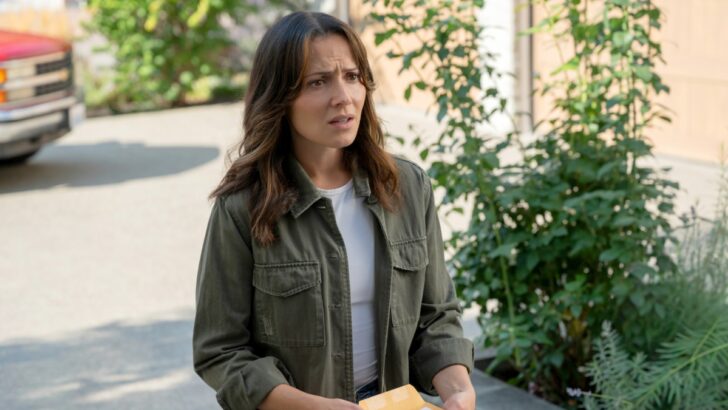
Italia Ricci stars in a twisty thriller, The Boy with My Son’s Face, and we caught up with her to discuss this darker role. Check it out!
-

We have the first look at Lifetime’s bone-chilling trailer of Rescued By Faith: The Connie and Larry Van Oosten Story. You won’t want to miss it!
TV Fanatic is searching for passionate contributors to share their voices across various article types. Think you have what it takes to be a TV Fanatic? Click here for more information and next steps.
Read the original article here
The post Elisabeth Röhm Reveals Why Don’t Trust the Girls Upstairs Is “More of an Emotional Thriller Than You Might Expect” appeared first on Los Angeles Weekly Times.