DoF open to scrapping some taxes
 EM - News Moderator


By Justine Irish D. Tabile, Senior Reporter
THE Department of Finance (DoF) is open to proposals to reduce or repeal some taxes, including the value-added tax (VAT), provided the resulting revenue losses are offset by alternative sources, Finance Secretary Frederick D. Go said.
“My categorical position on any tax removal is: I am not opposed to any tax removal for as long as a replacement revenue source is identified,” he said at a budget hearing on Monday.
“I am neutral to all the taxes, but we do have a national expenditure budget of P7.2 trillion, which we have to fund. So, if we remove any tax measure, the request is that your honor identify another tax source,” he added.
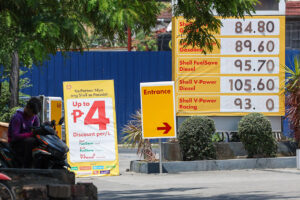
The Finance chief made the statement after Party-list Rep. Sarah Jane I. Elago sought an update on proposals to reduce or remove VAT to ease the impact of soaring fuel prices on Filipino consumers.
Ms. Elago also asked about proposals to extend the excise tax exemption to other petroleum products after the Development Budget Coordination Committee previously exempted only liquefied petroleum gas and kerosene.
Ms. Elago noted that minimum wages in seven regions remain below the poverty threshold of around P480 a day for a family of five outside the National Capital Region.
“This is concerning because it means that one breadwinner is not enough to support a family of five,” she said.
Meanwhile, Mr. Go said the country’s effective VAT rate is only half the statutory rate because of numerous exemptions.
“Our VAT rate is actually 12%, but our effective VAT rate is only half. It is only 6% because there are so many exemptions on VAT,” he said.
However, Asian Consulting Group Founding Chairman and Chief Tax Adviser Raymond “Mon” A. Abrea said the Philippines imposes one of the highest VAT rates in Southeast Asia.
“Yet, our VAT collection efficiency is only around 35-40%, versus roughly 57% for Association of Southeast Asian Nations (ASEAN),” he told BusinessWorld via Viber.
“That tells us the bigger problem is not the tax rate, but leakages and weak collection efficiency,” he added.
The government expects VAT and related sales tax collections to hit P762.42 billion this year, up 12.2% from the P679.64 billion collected in 2025.
In 2027, revenues from VAT and related sales tax are projected to increase by an annual 12.8% to P860.03 billion.
“For next year, we are hoping that the economy will bounce back and that the spending on infrastructure will start by the second half of this year,” DoF Undersecretary Rolando T. Ligon told BusinessWorld in an interview.
“Because if you spend on infrastructure, you will create jobs and that will help the economy. That is why we expect bigger collections from VAT, because VAT is based on transactions,” he added.
Mr. Abrea said that the “ambitious but achievable” goal could no longer just depend on consumption alone.
“A recovery in consumption and imports will help, but the bigger upside should come from full e-invoicing, real-time sales reporting, data matching and risk-based audits,” he said.
E-invoicing was mandated under the Tax Reform for Acceleration and Inclusion law, but its implementation remains incomplete years later with the deadline for covered taxpayers under the current rollout extended to Dec. 31.
Mr. Abrea said the 2027 target might reflect expectations of a recovery in consumption, but meeting it should not require consumers to spend more.
“Our policy priority should be to raise VAT efficiency before raising taxes — fully implement e-invoicing, rationalize unnecessary exemptions, use artificial intelligence and integrated data to detect underreporting, and collect what is already legally due,” he said.
“The Philippines does not need higher VAT. It needs a more efficient VAT system,” he added.
Separately, Mr. Go said the DoF would study a proposal to impose a billionaire’s tax equivalent to 1% for every P1 billion in taxable income.
“I think we can continue that discussion internally. We will study that internally,” he added.
The proposal would be separate from the wealth-related measures under the DoF’s Promoting Growth, Revenue, and Equity towards Socio-economic Sustainability package.
These include creating a 75% automobile excise tax tier for vehicles worth more than P8 million and raising the tax on nonessential goods by five percentage points.