Why We’re to Blame for San Diego’s Orphaned Bear Cubs
 EM - News Moderator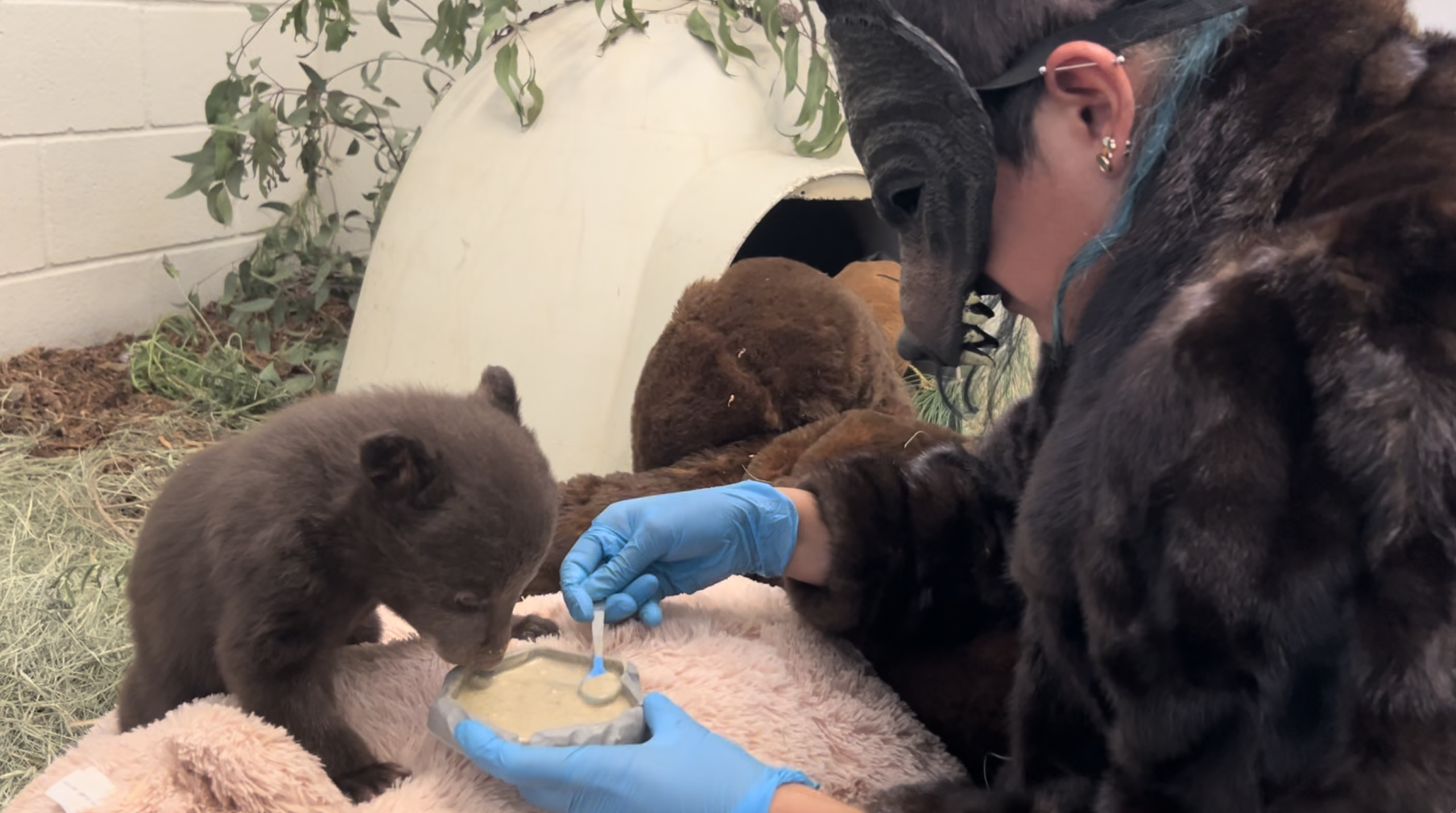


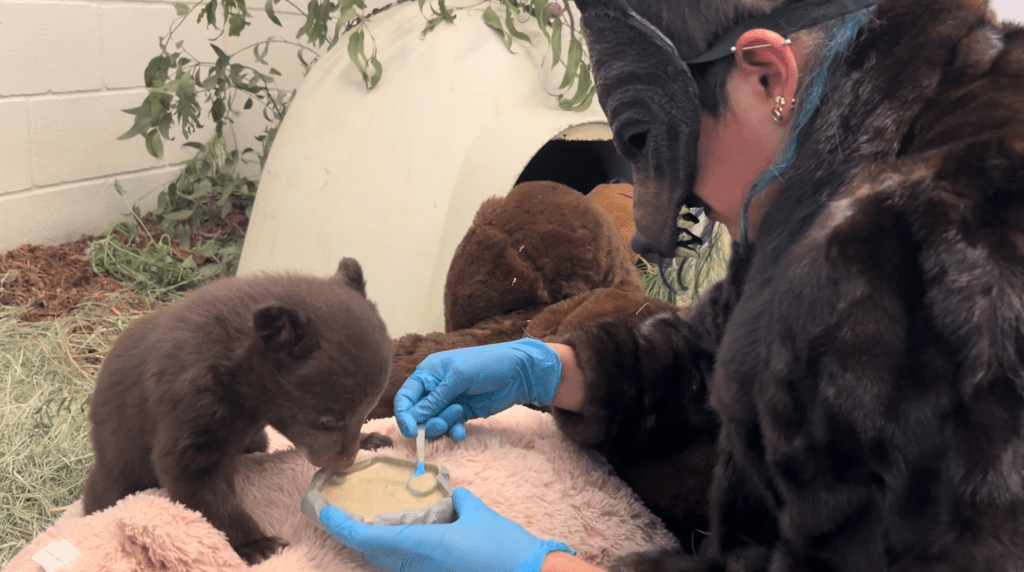
Autumn Welch covered half her face with a bear mask then silently slipped a long fur coat over her scrubs.
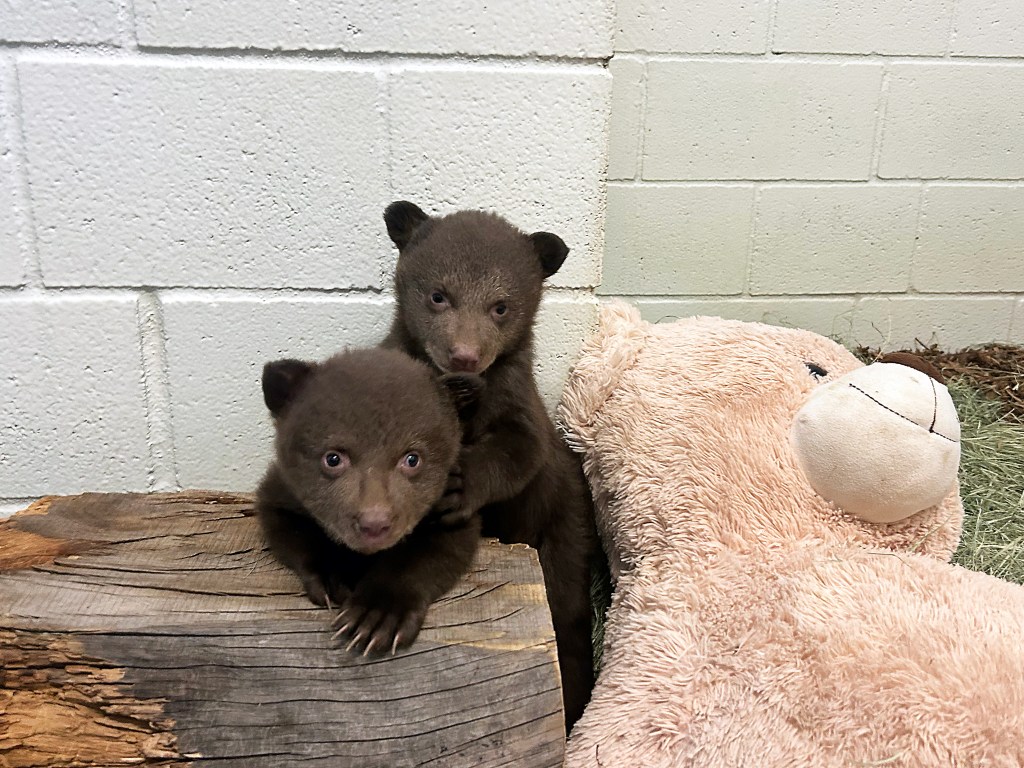
She’s hoping two orphaned baby black bear cubs sleeping inside the San Diego Humane Society’s Wildlife Center won’t recognize she’s human. State Fish and Wildlife officials euthanized the cubs’ mother earlier this month after a woman out walking her dog in Monrovia near the foothills of the San Gabriel mountains reported the bear swiped at and scratched her.
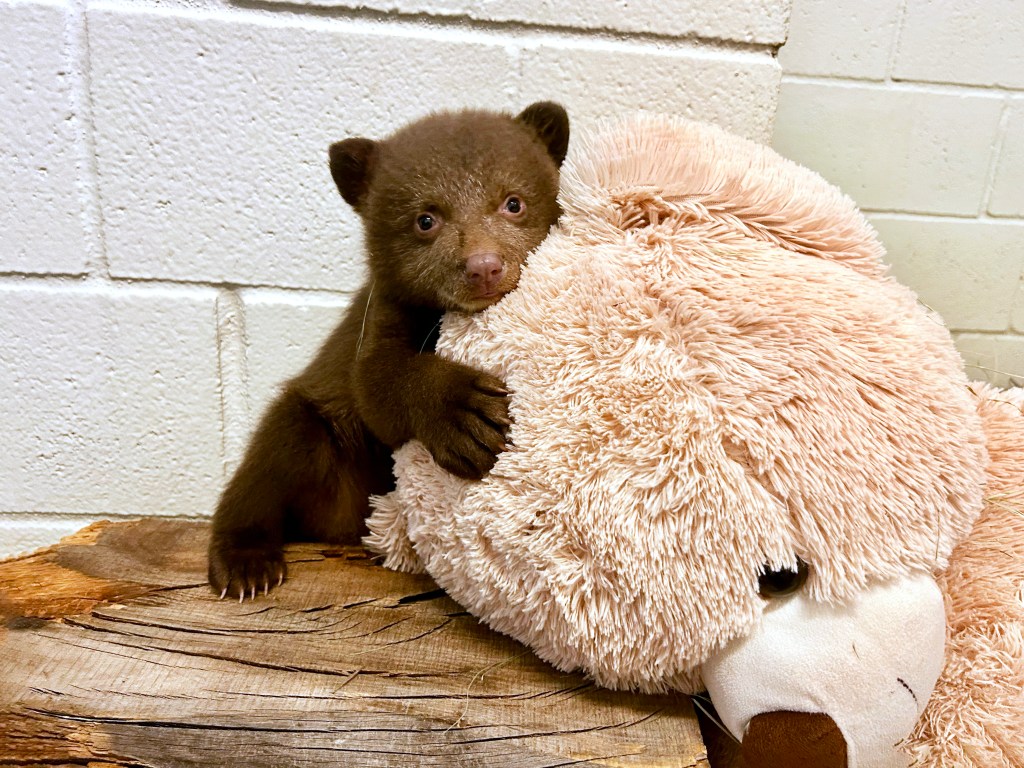
Ramona’s Wildlife Center is one of only three places in the state that can accept orphaned bear cubs for care and re-release into the wild. The staff refrain from speaking near the cubs’ enclosure so the sound of human voices remains unfamiliar. The twin males are only two and a half months old, not even weaned off their mother’s milk. But Welch has hope they can be raised with a healthy fear of humans and therefore their greatest chance at survival.
Their mother was not so lucky.
DNA evidence linked that bear (who Monrovian residents called Blondie) to both the incident with the dog walker and another a year ago when that same bear reportedly approached an elderly man on his porch, swiped and scratched him, California Fish and Wildlife Department Spokesman Cort Klopping confirmed.
The department deemed Blondie a “public safety bear,” a category reserved for black bears exhibiting an aggressive action that made physical contact with a human. Those bears must be put down, according to that policy.
The bear’s death made global news, in part because Monrovians started crying foul. Thousands signed a petition calling for changes to state bear policy. There were demonstrations and a vigil, honoring Blondie’s life. Dylan Feik, the city manager, penned a letter on behalf of the City Council informing residents they lobbied for the bear family’s relocation, but there was nothing they could do.
“By the time we were able to speak with state officials… the decision to euthanize was already made,” Feik wrote.
But there’s another problem nobody is talking about.
Blondie had likely become “habituated,” which officially means accustomed to human presence after repeated exposure to human food or stimulus with no consequence. In other words, Blondie lost her wildness.
She had been living with her cubs for a few months underneath a home in Monrovia. It’s illegal to intentionally shelter wild animals under California Code. The homeowners in this case knew the bears were there but never made a report, Klopping said.
There’s a large body of research showing human-accustomed bears, and their young, are more likely to be killed by humans. Mother bears model habituation for their cubs who then learn to seek out human activity, especially for food. Habituated bears are also more of a danger to humans, as the Blondie incidents show, because it increases the likelihood of an interaction between the two species. Black bears – which, as adults, can reach up to 500 pounds – are technically predators.
Climate change is only going to make matters worse. Researchers attribute an uptick in human-wildlife conflicts with black bears, mountain lions, coyotes and bobcats to intensifying drought.
In reporting out this story, I learned that Monrovians clearly feel they have a special connection to the otherwise wild bears living in the neighboring mountains. But that connection is verging unhealthy for both the bears and the people.
I asked Monrovia City Councilman Edward Belden what keeping bears wild meant to him.
“I don’t know what that means to me. I don’t know what that means to anybody,” he said. “Monrovia just has a different relationship to bears.”
Belden said many people in Monrovia consider bears to be part of the community. One might see a bear more often than a raccoon, Belden said. While he didn’t know Blondie personally, he said he knew others in town nicknamed Cinnamon and Oreo.
What’s clear is that the city doesn’t appear to be discouraging human-bear interactions.
Belden couldn’t point to any city policy or guideline on what people should do when they see a bear. The city’s website encourages locked and secured garbage cans or purchasing bear-resistant trash barrels and closing off crawl spaces. They encourage residents to call the Pasadena Humane Society for a coyote sighting, but there’s no specifics on what to do about a bear sighting.
I asked Belden whether he thinks people should report bear sightings to the state.
“We have deer on a regular basis all over Monrovia. Should I call Fish and Wildlife when I see a deer?” Belden said.
Ramona’s Wildlife Center staff won’t name Blondie’s young, an intentional step to prevent attachment. They’ll continue to hand feed the cubs a mixture of berries, bear and dog kibble multiple times a day until they’re large enough to be placed in an outdoor enclosure. Hopefully, if they pass an assessment determining they haven’t habituated to humans, the cubs will be released back into the wild.
In Other News:
- The Tijuana River spewed dangerous levels of toxic gases and bacteria during this month’s heat wave. (inewsource)
- State Sen. Steve Padilla advanced bills aimed at data centers in Imperial Valley. (inewsource)
- Imperial Valley residents chanted over a proposed data center developer’s presentation to the county Board of Supervisors meeting, so much so that supervisors called a recess and the developer left the premises. (Calexio Chronicle)
- El Cajon just got a massive electric heavy-duty vehicle charging station. Helix Water District customers will be the first to benefit from clean-air vehicles. (KPBS)
- The San Diego County Water Authority has teed up another water sale, this time to Eastern Municipal Water District where its two defected water districts now reside. (Voice of San Diego)
The post Why We’re to Blame for San Diego’s Orphaned Bear Cubs appeared first on Voice of San Diego.