The Learning Curve: What San Diego Unified’s Housing Workshop Will Look Like
 EM - News Moderator


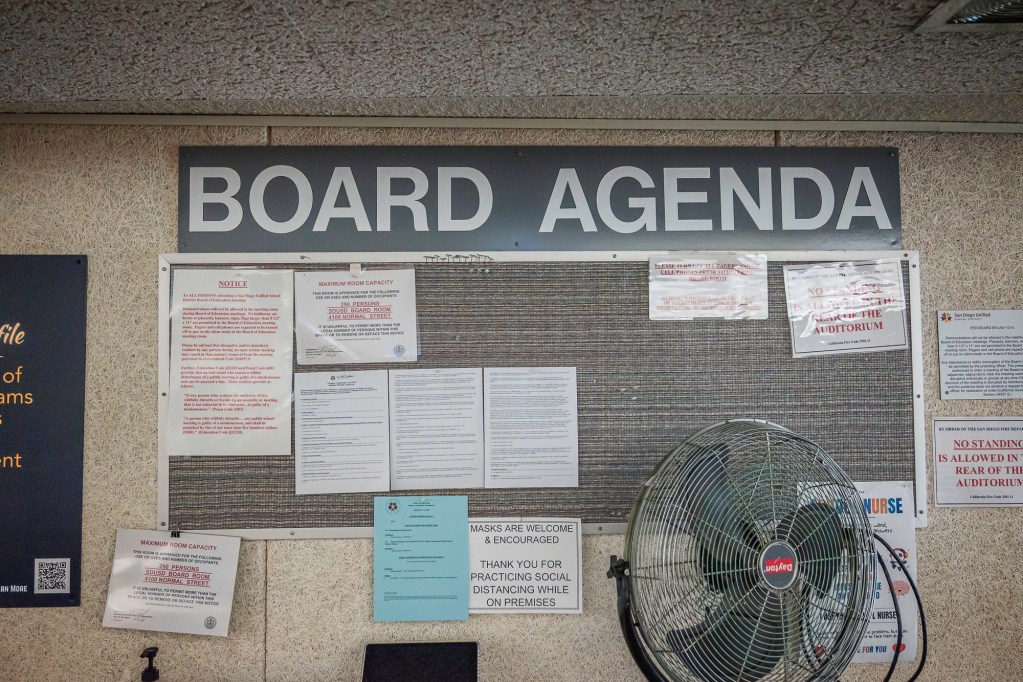
Last month, San Diego Unified’s board unexpectedly postponed a vote on proposals to develop affordable education workforce housing on five plots of district-owned land. Officials postponed the vote on proposals until later this month. New directions to developers shed light on what to expect.
San Diego Unified’s housing push is a big deal, and part of a long evolution of its approach to underutilized land. Its proposed housing efforts, which could yield 1,500 units or more, would be an unprecedented leap forward in the effort to build housing on district-owned land. Thus far, California school districts have only built about 850 units.
Questions about how big the district should go, and what exactly qualified as affordable housing, swirled around the board prior to last month’s meeting. One question, which could have played a major role in an eventual vote, was whether the district’s pledge to prioritize maximum affordability meant it would give deference to projects whose affordable units were cheaper or ones with more affordable units.
While a district committee prioritized the former in grading proposals, the district’s request for proposals prioritized the latter, as then-Board President Cody Petterson repeatedly pointed out. Those misalignments fueled the possibility of a rare split vote. Even so, Trustee Richard Barrera’s successful effort to postpone a decision was a surprise. That postponement meant developers would return to the board to present their proposals all over again.
In an invitation sent to the developers who submitted proposals, officials laid out the basics.
The workshops will be split over two days. Developers who submitted proposals for an East Village property and the district’s University Heights headquarters, the crown jewel of the five sites, will present on Jan. 26. Developers who submitted proposals for district properties in Old Town and Linda Vista will present the next day.
Developers will be allotted 10 minutes for each presentation, with time limits strictly enforced, and presentations will be followed by a board Q&A period. District officials expect the board to vote on proposals during each of the meetings.
One of the biggest points of intrigue following the December meeting was just how much developers would be allowed to adapt their projects based on board feedback. In discussion on the dais, and in conversation with me after the meeting, Barrera indicated he’d like to see significant changes. Those included everything from prioritizing certain income brackets to ensuring developers built housing for families.
The letter from district officials puts a kibosh on that element of Barrera’s direction.
“All of the information provided in your presentation … must be fully consistent with the information provided in your previously submitted proposal,” the letter reads. “You cannot change your proposal,” was added in bold for extra emphasis.
Developers were also advised that communicating with staff or trustees before the vote was expressly prohibited.
For Petterson, the additional board meeting, which he voted against, changes very little. He acknowledges there are still questions but says they’re mostly on the edges.
“As I said at the last meeting, the fundamentals are there in the (request for proposals),” Petterson said. “If I thought this was substantially necessary I would have voted for it at the last meeting.”
Looking forward, Petterson said he’d like to help other districts follow San Diego Unified’s lead. Despite efforts by lawmakers and advocates to grease the wheels of education workforce housing, amid California’s housing shortage, progress has been glacial.
“Whatever the outcome is, our work here is likely to become a state and nationwide model,” Petterson said. “My plan is to come back in February and do an analysis of the process, identify lessons learned and develop a framework that not only works out the kinks out for us but is available for other districts to adopt and adapt.”
Preuss Parents Keep Kids Home
Three weeks after teachers at the prestigious charter school Preuss went on strike amid contract disputes, parents staged a strike of their own, keeping their children home from school on Wednesday and Thursday.
The action was organized by Salem Tessema, the mother of seventh and ninth graders at the school, which is operated by University of California, San Diego. Tessema, who immigrated to America from Eritrea, is a PTA member at Preuss.
Each day, Tessema’s kids commute to the La Jolla school from their central San Diego home by trolley. The trek takes them an hour each way. Still, her kids are eager to go because they love the school, and their teachers.
But she and other parents have become increasingly frustrated by prolonged contract negotiations with the school’s leadership. At the heart of the dispute, Preuss teachers say, is whether they will be paid as much as teachers at San Diego Unified. Wednesday’s action is an effort to pressure leadership to yield to teachers’ demands, Tessema said.
“If the teachers are not happy then our kids are not happy,” Tessema said.
She estimated that of the school’s about 800 students, 500 stayed home on Wednesday. A spokesperson for the school did not provide an estimate.
“I hope that they decide this is a loud message for them,” Tessema said. “I hope that they see kids are not happy, parents are not happy. We don’t ask much, the teachers don’t ask much.”
“UC is committed to bargaining in good faith and making fair proposals reflecting the critical services provided by Preuss faculty. We hope to reach a resolution soon. General bargaining updates are available on UC San Diego’s Labor Relations website,” UCSD spokesperson Jen Jordan wrote in an email.
Speaking of Strikes … San Diego Unified Teachers Vote for One-Day Special Ed Strike
Long-simmering anger over large caseloads for San Diego Unified’s special education specialists has boiled over.
For more than a year, officials at the San Diego Education Association, the union that represents district teachers, and educators have complained that the district’s special education departments are significantly understaffed. That’s led to consistent violations of specialist caseload limits agreed to in contracts, educators say.
In December, over 90 percent of participating union members voted to authorize a one-day strike in February. On Thursday, the union will announce plans for a one-day strike in February.
The post The Learning Curve: What San Diego Unified’s Housing Workshop Will Look Like appeared first on Voice of San Diego.