South County Report: A New Front in the Sewage Battle
 EM - News Moderator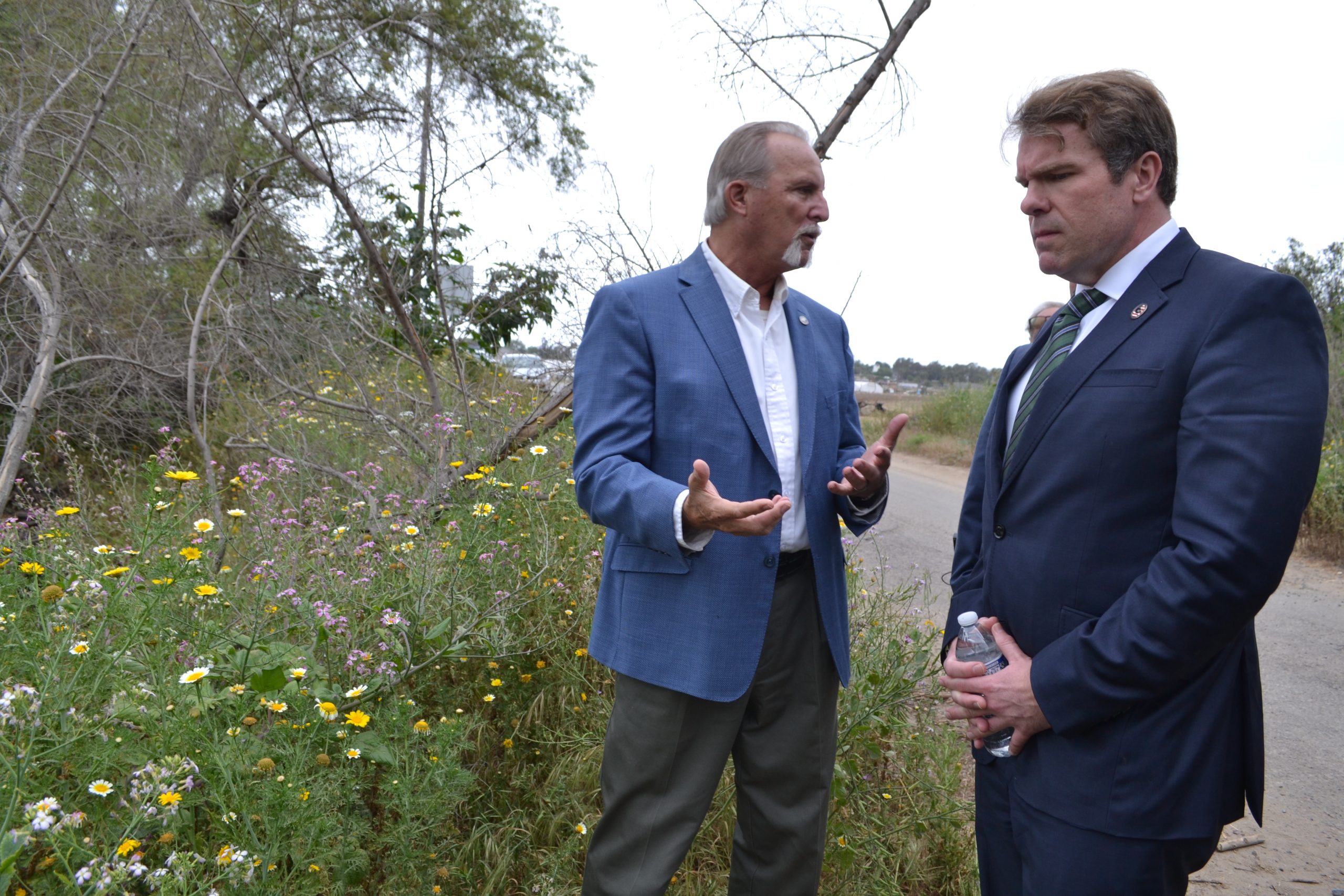


For decades, South San Diego County residents have known the Tijuana River as a noxious source of cross-border sewage pollution.
This week, business owners in Imperial Beach added a new dimension to the river’s troubled reputation. They called it an economic Grim Reaper.
Following a back-channel request from Imperial Beach Mayor Mitch McKay, top-ranking officials from the U.S. Small Business Administration on Tuesday met with a roundtable of local business owners to hear first-hand about the economic toll taken by years of unchecked sewage discharges in one of San Diego County’s most densely populated regions.
Business owners took full advantage of the opportunity to share their woes. They told of vanishing tourists, lost customers, decimated revenues and near-empty sidewalks along what should be a vibrant Southern California beachfront.
“Imperial Beach has reputational damage across the country,” said Mike Hess, owner of Mike Hess Brewing, a San Diego brewing company with a location in Imperial Beach. “People are not coming to town. That’s our problem.”
The federal officials, including Deputy Administrator William Briggs and two local representatives from the agency’s San Diego field office (in fact, the office’s only two remaining employees after President Donald Trump’s Department of Government Efficiency gutted the local staff), did not come bearing promises.
They said they would convey business owners’ concerns to officials in Washington, D.C. and hoped to return with proposals from a federal administration more attuned to corporate needs than environmental issues.
“I’m here to listen to the concerns and come back with solutions,” Briggs said.
The spotlight on businesses marks a new phase in South County’s ongoing battle with one of America’s worst environmental problems.
For years, activists have focused on the environmental and public health consequences of the Tijuana River’s year-round flow of untreated sewage and industrial waste from Mexico.
With a Republican administration now in power in Washington – and with Republicans and conservative-leaning independents now in the majority on the Imperial Beach City Council – economic concerns are moving to the forefront.
San Diego County Supervisor and former Imperial Beach Mayor Paloma Aguirre rose to prominence leading a coalition of environmentalists and researchers in a successful effort to wring hundreds of millions of dollars in federal funds to boost local sewage treatment.
Earlier this year, she led fellow County Supervisors in commissioning a comprehensive economic study that will seek to document the regionwide monetary cost of closed beaches, diminished tourism, stagnating real estate values and the “reputational damage” described by local business owners.
McKay said he requested the meeting with federal business officials because he felt local businesses simply can’t wait for the years-away resolution of the river’s myriad environmental problems.
“In the wake of this environmental crisis is an economic crisis,” he said. “There’s a clear opportunity to align with this [federal] administration’s priorities.”
Business owners at the roundtable said they are barely hanging on.
“We are losing 200 to 300 customers a day,” said Harunder Singh, owner of two 7-Eleven franchises in Imperial Beach. “We are struggling now. We need to get the customers back and visitors back in.”
Realtor Sandi Crosby, who also leads the Imperial Beach Chamber of Commerce, said property values in the city have declined by more than 10 percent in recent years.
“People who bought here before 2020, those people do not exist here anymore,” she said. “When I offer Imperial Beach as an affordable beach property, [homebuyers] say, ‘Absolutely not.’”
Other business owners, including a hair stylist on Seacoast Drive and the owner of Katy’s Café, a local beachside institution, described similar challenges.
“In 2020, [word spread] that Imperial Beach was the most polluted beach in America,” said Katy’s owner P. J. McCandless. “Our business plummeted…It’s hard to break even.”
Hess said the river’s economic damage is felt far beyond San Diego. He said he recently tried to open a new location in San Pedro in Los Angeles County.
“When we went to the banks for a loan, they all said no because our Imperial Beach business is declining,” he said. “We would have employed 100 people in L.A. Now I have to extricate myself from the lease.”
Luci Montgomery of the SBA.’s San Diego field office said agency officials are evaluating the possibility of offering local businesses the kinds of low-interest or forgivable loans typically offered following disasters, such as floods or wildfires.
One wrinkle, she said, is that such loans, known as Economic Injury Disaster Loans, “are not set up for ongoing disasters. Disasters usually end.”
It’s not even clear loans would help businesses facing ongoing losses, Montgomery said. Businesses might benefit more from help expanding their customer base beyond beach tourism.
Imperial Beach city officials have focused recent economic development efforts on broadening options for visitors and residents. They are upgrading key business corridors and promoting assets, such as public art and a new beachfront splash pad, that don’t require open beaches.
Following the roundtable, officials made the obligatory pilgrimage to what in recent months has become perhaps the most photographed spot on the Tijuana River: A notorious pollution “hotspot” where sewage-laden currents spew out of a culvert and send noxious fumes into the air.
Briggs, the SBA. deputy administrator, stared long and hard at the foamy torrent. The air smelled like a clogged toilet. The shoreline around the river was black.
He turned away appearing troubled. Only after much coaxing from a reporter did he betray a hint of emotion.
“I can see why people are concerned,” he said.
ICYMI: I discussed the SBA visit earlier this week on KPBS’ Midday Edition. Listen to the episode here.
Chamber Breakfast Dust-Up
In what might count at the first mini-controversy of this year’s Chula Vista City Council elections, candidates seeking to represent District 2 on the Council this week sent an outraged letter to officials at the Chula Vista Chamber of Commerce protesting what they said was their exclusion from a Friday breakfast briefing that is set to feature current District 2 Councilmember Jose Preciado, who is running for re-election.
“We were shocked and dismayed to learn that the Chamber would allow Preciado to have special access to the Chamber and other business officials during an election season,” the three candidates wrote. “This provides Preciado a special access that other candidates are prevented by you from enjoying.”
Chamber President Marcy Weaver said the candidates’ concerns are unwarranted because the First Friday Breakfast at which Preciado is scheduled to speak alongside fellow Councilmember Michael Inzunza is a regularly occurring, non-partisan forum intended to update local businesspeople about economic developments in each City Council district.
Chula Vista’s other two councilmembers, Cesar Fernandez and Carolina Chavez, are scheduled to deliver similar updates in August, Weaver said. Chavez also is up for re-election. Mayor John McCann also frequently addresses members of the city’s business community at the monthly gatherings.
“Our First Friday Breakfast is non-political,” Weaver said. “I know that it caused some confusion among the candidates…[But this] is just an opportunity for councilmembers to give updates.”
Weaver said the Chamber’s public policy committee plans to host what she called a meet-and-greet for candidates in all City Council races later this year.
“The Chamber is non-partisan and we do not get political,” she said.
Former Parks Commissioner Russ Hall, one of the candidates challenging Preciado (the others are former law enforcement officer Jesse Navarro and educator Angelica Martinez), was not mollified.
“We’re five weeks before an election and [they’re] going to bring in someone who’s running for office,” he said. “If you do that, you need to give all the candidates equal access.”
The post South County Report: A New Front in the Sewage Battle appeared first on Voice of San Diego.