Sacramento Report: How This Voter ID Ballot Initiative Got the Signatures
 EM - News Moderator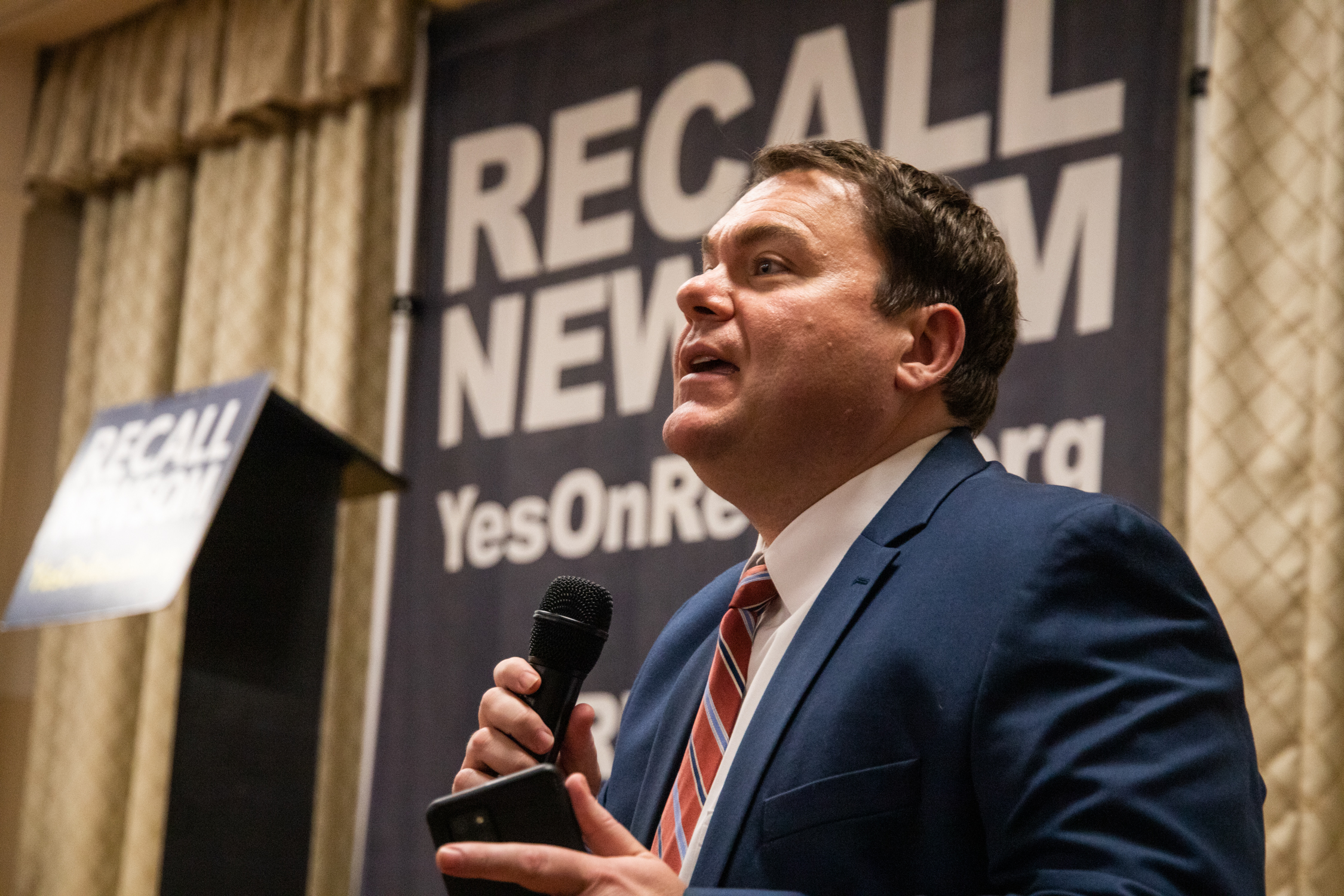


Lawmakers and advocates gathered near the Capitol steps earlier this month to announce that they’ve succeeded in what few grassroots organizations have been able to do: acquire about 875,000 signatures to put a proposal on the November ballot.
It was Republican Assemblymember Carl DeMaio’s third attempt at a ballot initiative that would require voters to show a government-issued ID at the polls.
From September to March, with the help of 18,000 volunteers, small donors and financial backing from the mother of a tech billionaire, the initiative was able to collect 1.3 million signatures and currently awaits certification at county election offices, according to DeMaio
“The fact that Julie Luckey, Californians for Voter ID, a bipartisan group of supporters came together, that’s really what fueled this effort in providing the financial resources to back a citizens-led effort,” DeMaio said.
As it turns out, more money made the difference this time.
Here’s what else you need to know about the Republican-backed initiative and the multi-million dollar pay-per-signature operation that helped get it off the ground.
What the Voter ID Ballot Initiative Would Do
If approved by voters, the ballot initiative would require voters to bring a government-issued ID each time they cast a ballot. Mail-in voters would need to provide the last four digits of their ID, such as a driver’s license number. Currently, voters do not need to have an ID when they vote, but must show proof-of-citizenship and their Social Security number to register to vote.
The secretary of state and county election offices would also be required to verify voters’ registration status each time they cast a ballot.
Thirty-six states require or suggest voters show some form of identification at the ballot box, while 10 of those have tighter ID restrictions, according to the National Conference of State Legislatures.
California’s nonpartisan Legislative Analyst’s Office estimates that it’d cost the state and local governments tens of millions of dollars to implement.
Supporters of the initiative say it’s a popular, common-sense proposal that will keep elections secure.
“We need an ID to buy beer and alcohol. We need an ID for public assistance,” Republican Sen. Tony Strickland said. “You need an ID in everyday life.”
Opponents, including the state’s labor unions, plan to mount their own campaign if the ballot measure gets certified.
Critics of the initiative also say that it can support voter turnout and puts up needless obstacles for voters who don’t have documents readily on hand.
“In California, we already have secure elections,” Common Cause program manager Brittany Stonesifer told Voice of San Diego. “This attempts to solve for a problem that doesn’t exist.
Voter fraud is rare in California and across the country. Fears, and support for, proof-of-citizenship laws have increased since President Donald Trump touted false claims that the 2020 election was stolen.
A 2025 poll from the UC Berkeley Institute of Government Studies showed a majority of Californians surveyed support voter ID at the polls — 54 percent overall approved of showing proof of citizenship each time a vote is cast.
The Trump administration is also pushing a bill that would require voters to show proof-of-citizenship in federal elections. Proof of citizenship could be a higher bar than drivers licenses, which do not necessarily establish citizenship. It’s a bar more people would not be able to clear without significant effort. But that bill is unlikely to pass because Republicans do not have enough support in the Senate.
DeMaio’s Previous Attempts
Californians for Voter ID, the ballot committee financing the initiative raised $8.8 million in 2025, according to campaign filings. The committee is chaired by Julie Luckey, the mother of Oculus founder Palmer Luckey.
Luckey’s donor base helped pay for signature-gatherers to collect the majority of signatures, while working in tandem with DeMaio’s Reform California group and its volunteers.
Signature-gatherers have been paid anywhere from $3 to $15 per signature they collect.
Previous ballot committees had raised about $2 million from 2021 to 2024, and consisted of gathering initial signatures through online forms before mailing an official petition to those same people.
“We don’t launch until we’re ready,’ DeMaio said in a 2024 video about the campaign then. “Right now, we are aggressively funding the recruitment of volunteers throughout California so that they can help us get the signatures at the lowest possible cost.”
In Other News
- Mayor Todd Gloria visited Sacramento earlier this week to once again push for more homelessness funding with other big city mayors. Funding was cut in half from the typical $1 billion allotted for cities across the state in his January budget proposal.
- Meanwhile, Gov. Gavin Newsom signed a bill on Thursday to officially rename César Chávez day to Farmworkers Day ahead of the holiday next week.
- And on Friday, Assemblymember Chris Ward announced a proposal, Assembly Bill 2222, that would give public media stations a one-time $80 million grant to offset federal funding cuts.
What I’m Reading Now
- Riverside County Sheriff Chad Bianco seizes even more ballots in defiance of court orders, the Los Angeles Times breaks.
- The state attorney general is suing leaders of a fraudulent San Diego charity after they siphoned nearly $4 million in concession stand fees at Petco Park and Snapdragon Stadium, Voice of San Diego reports.
- KPBS learns that the Navy is looking into potential Pentagon violations over congressional candidate Ammar Campa-Najjar’s use of military attire in campaign materials.
Thanks for reading the Sacramento Report. Please feel free to reach me: nadia@voiceofsandiego.org.
The post Sacramento Report: How This Voter ID Ballot Initiative Got the Signatures appeared first on Voice of San Diego.