Politics Report: The Midway Rising Bill
 EM - News Moderator



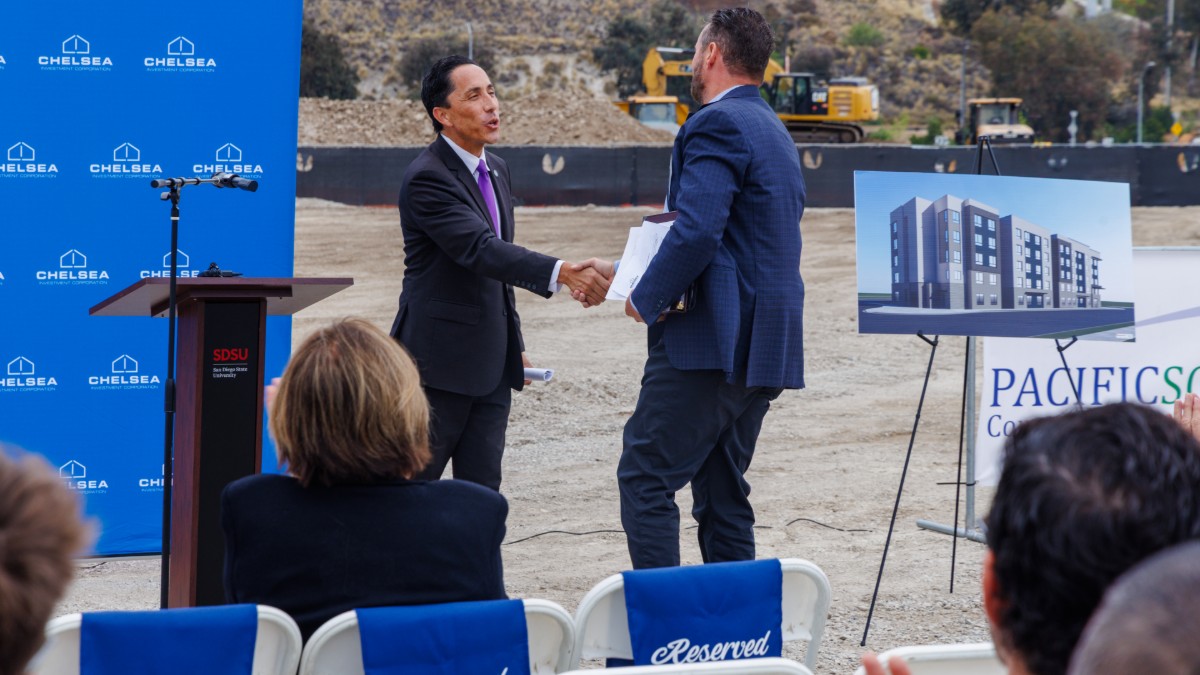
San Diego Mayor Todd Gloria has entered the nothing-is-going-to-get-in-our-way phase of the plan to build a new arena and more than 4,000 new housing units on the city’s nearly 50 acres of land along Sports Arena Boulevard in Midway.
The city is officially sponsoring the legislation we reported on this week that would exempt the Midway Rising project from the sometimes onerous requirements of the California Environmental Quality Act, or CEQA. Inadequately fulfilling the requirements of CEQA and getting sued has caused countless projects delay or failure.
The Midway Rising team still plans to comply with the law and mitigations their environmental impact report demands, but the new law would prevent people from suing them if they think it’s inadequate.
The bill, sponsored by Sen. Akilah Weber Pierson, who represents the area, is a long way from final. And the other member of the Legislature that represents the area is not even on board yet.
State Assemblymember Tasha Boerner said she’s still thinking about it.
“I am a strong proponent of CEQA and believe it serves an important purpose in protecting communities. I am still reviewing the proposal for the Midway Rising project, the legal ruling and proposed legislation,” she wrote in a prepared statement.
“My goal is to push for what’s best for our communities, worker safety, and city as a whole. I understand the importance of more housing, and it must be balanced with proper guardrails.”
Assemblymember Chis Ward, whose district borders Midway, told the Politics Report that he supports the bill so much, he would write the Assembly version of it. He said the area has already had multiple environmental impact reports for the community plan. The project fits with the community plan and that should be enough.
“When you already have a master programmatic document that governs the area and has already analyzed the total development of an area, any project substantially consistent with that plan doesn’t need to go through secondary review,” he said. “Another review ultimately just delays a really great cumulative development.”
Mayor’s take: Nick Serrano, the deputy chief of staff for the mayor, said enough is enough.
“We’ve seen this project get stymied over and over again. Voters have weighed in. They’ve affirmed support for the vision of this property twice now. It’s time to get it done. The mayor is being relentless in getting this project done,” he said.
As for the Midway Rising guys, they say they will keep acting like there’s no legislation. They are planning to get their environmental impact report certified by the City Council in May. The legislation is separate.
“Our project is on its own trajectory. We’re doing an environmental impact report with commitments to mitigation and that’s going to the City Council to get certified. It spells out all the impacts and mitigation we will deal with and that will all happen irrespective of this legislation. If it doesn’t pass, it will have no bearing on the project. It will be just like any project in San Diego,” said Jeff Meyer, the spokesman for Midway Rising.
Potential plaintiffs cry foul: Keith Behner, who commissioned a legal analysis of the draft environmental impact report produced by Midway Rising, has said it has not sufficiently studied the potential impacts on traffic congestion, particularly when paired with the Navy’s NAVWAR housing development near Old Town.
Behner said Midway Rising’s main investor, billionaire Stan Kroenke, is trying to buy his way out of the accountability and transparency CEQA requires.
“The developers are seeking an out-of-town Sacramento override to hide and obfuscate the draconian impacts of their project from the citizens of San Diego. Sadly this is being done with the full support of our mayor and the majority of our City Council,” Behner told the Politics Report.
On the question of the combined impacts of NAVWAR and Midway Rising, Ward said it’s too early to do that, the Navy and feds have not presented their official proposal for developing that land.
“You only need to put in the environmental review what you know or can reasonably project you know and it’s not appropriate to speculate that something could happen 30 years down the road if there’s no evidence that intense of a thing is going to happen,” Ward said.
Coastal District Council Candidates React
We emailed the seven City Council candidates for District 2, which covers Pt. Loma and Midway, and also stretches up and east into Clairemont, about their reaction to the news. We heard back from six of them.
Last week, in the Politics Report we did our best to categorize each of the seven candidates politically. You can read that here. Two candidates are vying for the support of the Democratic establishment. Three seem to angling for the Independent/Conservative lane. One is a traditional Coastal Independent and one other is a little hard to categorize. The top two vote getters in June will head to the November General Election. It’s really anybody’s race.
Happy about it: Nicole Crosby and Josh Coyne, the two battling for traditional Democratic support, both seemed the happiest about the exemption.
Coyne was the most unequivocal. He said San Diegans are tired of delays, Midway needs revitalization and he supports Weber Pierson’s bill.
Crosby was also adamant in her support for the project itself. Putting “underperforming” city property to better use is exactly what the city should be pursuing, she said.
She added two disclaimers: First, she couldn’t technically comment on ongoing city litigation, since she is a deputy city attorney. And second, she called CEQA “an essential framework for protecting our communities.”
Not entirely clear: A few weeks ago, former Coronado Mayor Richard Bailey told us he didn’t like the Midway Rising project as proposed, because traffic in Midway is already terrible and the project would only make it worse.
He struck a different note in his response this week.
Bailey wrote: “This legislation is beneficial for the project because it’ll prevent future litigation. However, good policy should be applied consistently. If the proposed legislation is sound, it should apply equally to all projects” — in other words get rid of CEQA everywhere. “This appears to be nothing less than a way for the city to engage after failing to defend two lawsuits due to deficient EIRs.”
Not so happy: This camp included Havlik, as well as Paul Suppa and Jacob Mitchell.
(My initial take on Mitchell was that he was hard to define politically, but I am starting to see him as battling with Havlik — and maybe to some extent Suppa, too — for the Coastal Independent lane. What I mean by this is a NIMBY liberal, someone who is against most new housing, but is big on protecting the environment.)
Havlik tempered her response the most of these three. She said she appreciated the “scale of affordability being proposed,” but that the CEQA exemption “raises important concerns.” She was unequivocal in saying residents should not lose their ability to weigh in on Midway Rising via CEQA.
(At a candidates forum earlier this month, Havlik proudly told the crowd she had helped lead the efforts to overturn the previous ballot measures that waived the city’s coastal height limit in Midway.)
Mitchell wrote: “The area clearly needs redevelopment, but so many aspects of this deal stink… I drive through Midway almost daily and I dread the traffic once [Midway Rising] is finished.”
Suppa came out the strongest against the project and the exemption: “The Midway area is already under significant strain. A project of this magnitude, if not carefully evaluated, risks overwhelming local infrastructure, including parking, traffic circulation, sewage capacity, and electrical systems,” he wrote.
Mick Rickey, another candidate, didn’t respond.
Notes
Another water sale teed up: The agenda for the April 1 meeting of the Board of Directors of the Eastern Municipal Water District has an interesting item: “Approve and Authorize the General Manager to Execute an Exchange Water Delivery Agreement with San Diego County Water Authority.”
This one is rich with irony. You may remember when Rainbow Municipal Water District and Fallbrook Public Utility District left the San Diego County Water Authority because its rates were too high. They had to pay $25 million. The Water Authority and city of San Diego leaders were so upset they sponsored legislation to make such secessions much more difficult in the future.
Fallbrook and Rainbow joined the Eastern Municipal Water District.
Now, Eastern is buying San Diego water. We couldn’t get the details on how much or the price but its good content for water nerds. Enjoy.
If you have any feedback or ideas for the Politics Report, send them to scott.lewis@voiceofsandiego.org or will.huntsberry@voiceofsandiego.org.
The post Politics Report: The Midway Rising Bill appeared first on Voice of San Diego.