Politics Report: It’s About the Homes
 EM - News Moderator


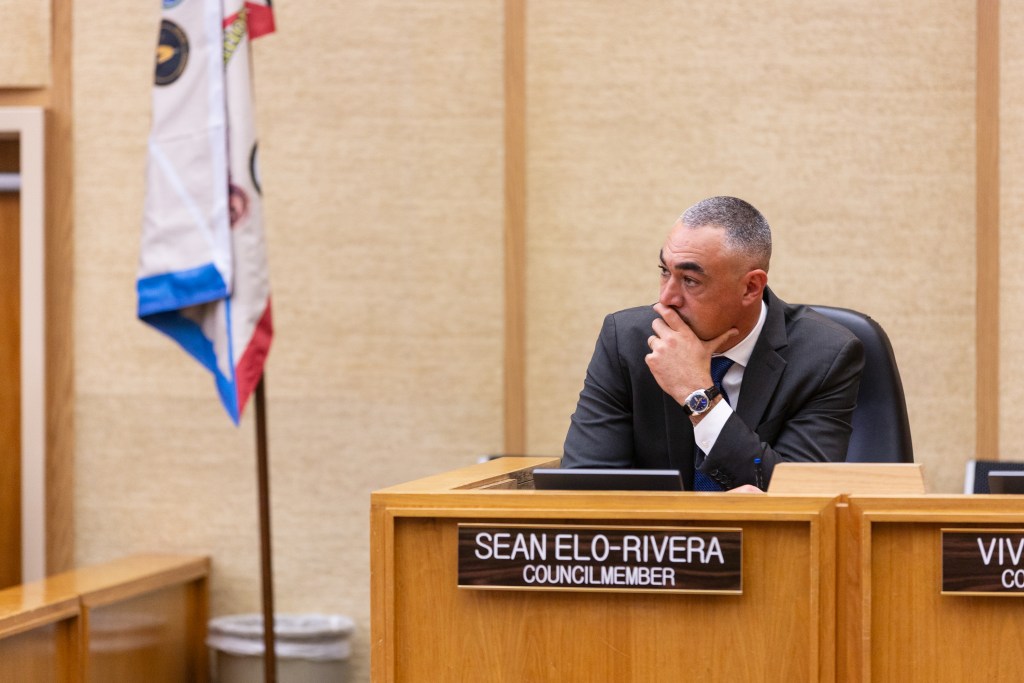
San Diego City Councilmember Sean Elo-Rivera has settled on a pitch for his proposed tax on vacation rentals and empty second homes: We need the housing back in the market.
It was always part of the pitch but now he says it’s the main pitch. If the city gets some additional revenue with it to help with the deficit, great. But he’s going all in on the “neighborhoods are for neighbors” argument after a PR blitz this week leading to the first hearing of the measure at the Rules Committee Wednesday.
He and his team have modified the proposal and lowered their estimate of how much money it would bring in. It’s no longer a per-bedroom charge. It would be $8,000 per whole home that is either empty or being rented out to visitors. Property owners could face another $4,000 in surcharges if the homes are corporate owned or have repeat code violations.
“If this tax produced zero dollars in new revenue for the city, that would mean 11,000 homes were returned to the housing market and sold or rented to San Diegans,” he said. He told me to imagine how big of a deal that size of project would be to city leaders who have big celebrations for the ribbon-cuttings of much much smaller housing developments.
“Every home put on the market has immense value and every one that is not will support the city’s finances,” he said.
Now the battle begins: Despite Elo-Rivera modifying the proposal away from the per-bedroom fee, which could have made the annual tax $20,000 for a four-bedroom home, Airbnb and the San Diego Regional Chamber of Commerce are still ready to fight.
“This proposal will not build a single new home. The majority of this tax would be owed not by corporations but by working class San Diegans,” read a statement issued by the opposition coalition led by the Chamber and Airbnb.
I talked to Chris Cate, the CEO of the Chamber. (He’s also a member of Voice of San Diego’s Board.)
“There are other ways to add new housing than through penalizing folks or hoping that inventory shifts from vacation rentals to housing,” he said. The City Council went through a long process, he pointed out, to find the balance between allowing people to rent out their homes to visitors while also protecting San Diego’s housing stock. Elo-Rivera was there and they settled on the fees and taxes and limits it set.
“I feel bad for the host community who went through hearing upon hearing and were demonized repeatedly until they finally got some clarity and now, this policy is dropping and they have to go through it again,” Cate said.
Side housing note: Elo-Rivera brought up something I think will become a bigger part of the discussion about housing on the coast: school enrollment. School districts are blaming vacation rentals for some of the enrollment struggles they’re facing. If even just a few hundred families were able to live in those areas it would make a difference. But it’s also something these neighborhoods hostile to new housing need to face: Their schools, the community centers and historic places they care about, are absolutely in jeopardy of being closed and ironically eventually converted to housing if they don’t change the trends.
The votes: I have no idea how this could play out. The Rules Committee includes Elo-Rivera, Council President Joe LaCava and Councilmembers Vivian Moreno, Raul Campillo and Kent Lee.
Campillo has already opposed it and just had a baby so may not be there. Moreno I would bet will be supportive but could easily surprise people. That leaves LaCava and Lee. I detect Lee is not supportive but not definitely opposed.
Notes
Op-ed exchange on budget: If you missed this great point, counterpoint between former Coronado Mayor Richard Bailey and Michael Zucchet, the general manager of the city’s Municipal Employees’ Association, I recommend catching up. Bailey hit first with the message that the city of San Diego has a spending, not revenue, problem.
“Since 2015, the city’s population grew by about 1 percent, while over that same period, city staffing increased by roughly 27 percent,” he wrote.
Zucchet then pulled the receipts from Bailey’s own leadership of Coronado. “… San Diego is in line with or even outperforming other cities – including the city of Coronado under Bailey’s leadership as councilmember and mayor for 12 years,” he wrote, and listed the points.
Balboa Park parking: The Rules Committee meeting Wednesday will also consider a ballot measure proposed by Shane Harris to repeal paid parking policies at Balboa Park. They’ll likely dismiss it but the issue isn’t going away. Elo-Rivera told me he’s still hoping residents could get free parking and the charges would apply only to visitors.
“We continue to believe the fees for residents should be suspended. From the jump this said it should be free for residents and charged for non-residents. I had to be persuaded that was going to be done well and they haven’t been,” he said.
The post Politics Report: It’s About the Homes appeared first on Voice of San Diego.