Oceanside Pop Warner won two national titles. But soaring costs are making it hard to find a home
 Dante Ulanday - News Moderator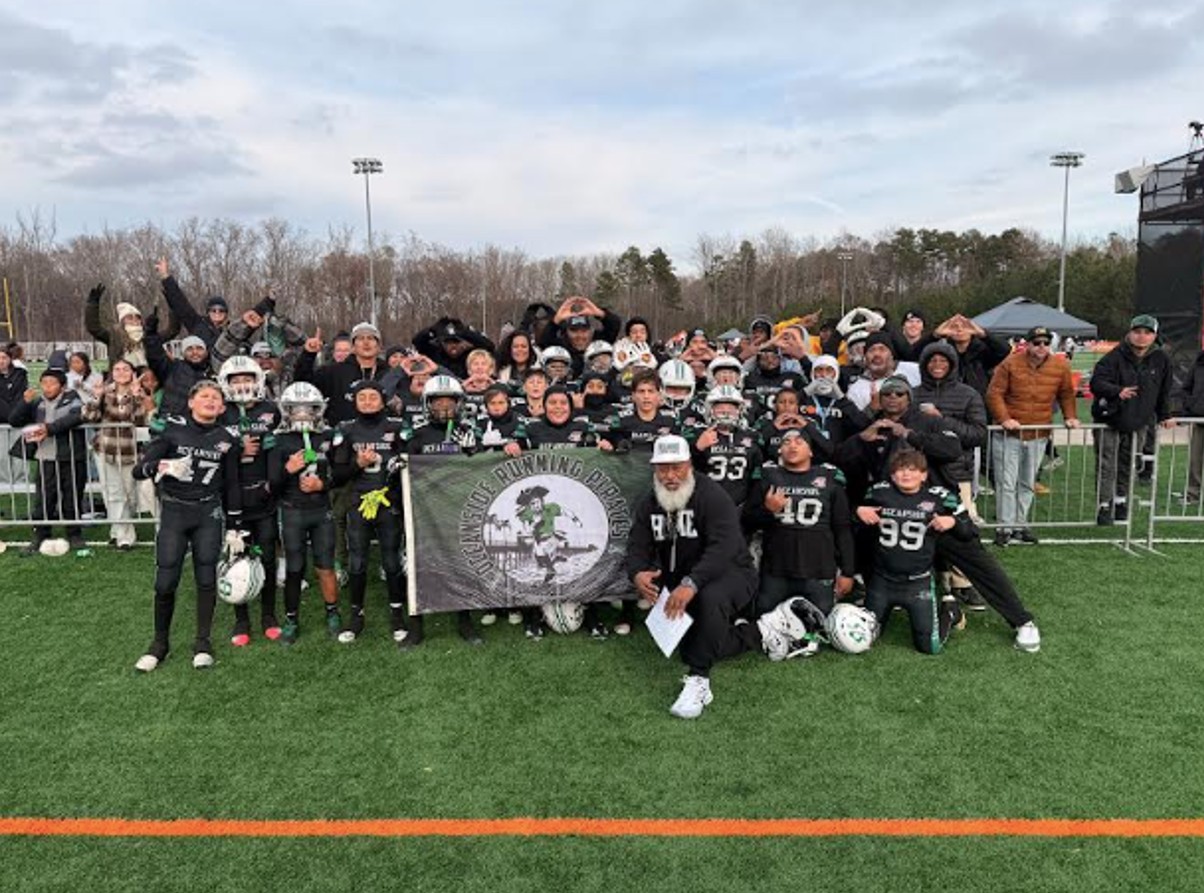



Two months after bringing home two Pop Warner Super Bowl titles – the first since 2002 – Oceanside Pop Warner says the biggest challenge it faces is not competition, but the cost of better field space.
The league serves more than 300 local children across five age levels of football and cheer, yet rising stadium rental fees have forced teams to rely on a single field at Martin Luther King Jr. Middle School, which coaches describe as unsafe and unsuitable for competition.
Josh Galeai, head coach of the 13U Smack City team that won a national title in December, said he told league officials he would rather forgo home games than continue playing there.
“There’s potholes everywhere,” Galeai said. “It’s embarrassing. I think it’s a safety risk. I told them I don’t want any home games,” he said.
Andrew Tapuloa, president of Oceanside Pop Warner, said renting a better district stadium for a full day – typically from 6 a.m. to 6 p.m. to accommodate five games – costs about $7,000 through the Facilitron reservation system used by Oceanside Unified School District. After adding referees, emergency medical technicians and other required game-day expenses, he said the total can rise to roughly $9,000.
“The biggest obstacle is the cost (of) renting the facility,” Tapuloa said. “We don’t have the money to rent out the facility.”
Under the district’s rental structure, the base hourly cost to use the El Camino High School stadium field is $315, according to OUSD Director of Communications Donald Bendz.
Additional hourly charges include $53.67 for campus security, $40 for a campus supervision assistant, and $67.76 for custodial staff, with a two-hour minimum. Use of the press box and public address system is optional and costs approximately $500 per hour. Security and custodial staffing levels are determined by attendance and district contract guidelines.
Bendz said pricing is governed by a Joint Use Agreement between OUSD and the city of Oceanside, and that every organization is charged the same rates. Nonprofit groups receive lower pricing for some items. He added that some fields, like the one at MLK Middle School, are available at no cost under the agreement, and those options have been shared with Pop Warner.
“In 2024 we surveyed what other districts were charging for the use of their facilities and adjusted our pricing to be in line with theirs,” Bendz said. “Fees are necessary to maintain and
upgrade our facilities.”
Bendz said the 2024 review resulted in higher rental rates.
Publicly posted rates on Facilitron show school district stadium rentals across San Diego can be expensive. Torrey Pines High School’s football stadium and the turf fields at San Dieguito
Academy are listed at $500 per hour, while Balboa Stadium at San Diego High School is listed at $267.78 per hour, not including staffing or lighting fees.
By comparison, youth leagues renting city-managed fields generally pay far less, according to posted rates on local municipal websites, including Encinitas and the city of San Diego.
Tapuloa said the league has sought a partnership or set-cost structure that would reduce the overall financial burden. Discussions have occurred, he said, but no agreement has been
reached.
“It’s at a standstill right now,” Tapuloa said. “Nothing has happened.”
Registration this season is about $675 per player, up from roughly $505 to $525 in recent years, Tapuloa said. He attributed the increase to rising operational and facility costs.
“We’ve been trying to hold registration at the same (level), but we have to go up as well,” he said. “We’re already gouging our parents.”
Tapuloa said no Oceanside Pop Warner coaches or board members are paid and that registration revenue goes back into equipment, uniforms, lights, referees and safety supplies, including helmets and shoulder pads. The league offers payment plans and works to ensure no child is turned away for financial reasons.
Galeai said league leaders have raised concerns with city officials and publicly discussed the issue, but no policy changes have followed.
“There has not been change,” he said. “I think that there’s just been more people that have been vocal about it.”
He added that access to quality facilities affects retention, noting that several top players from the 14U championship team are transferring to private schools with upgraded stadiums and additional resources.
“Our kids finally see what else is out there and what we don’t have in Oceanside,” Galeai said.
City officials said they value Oceanside Pop Warner and noted the league recently received a proclamation from the mayor and was celebrated at the Junior Seau Pier Amphitheater.
Terry Gorman Brown, senior management analyst in the Oceanside City Manager’s Office, said the city does not own or control district stadiums and that decisions regarding those facilities rest with the school district.
The city offers alternative free and low-cost youth programs through its Parks and Recreation Department and provides scholarships to families facing financial barriers, Brown said. Scholarship amounts were recently increased to between $300 and $550 per qualifying child.
In recent years, the city has allocated more than $1 million annually from Measure X sales tax revenue to expand youth programming, including $1,045,000 in fiscal year 2026–27, according to Brown. Parks and Recreation is also holding two community meetings to help prioritize $500,000 available for field improvements.
“The city believes every child and teen in Oceanside deserves access to quality recreational programming, regardless of their family’s financial situation,” Brown said.
Tapuloa said he remains hopeful a long-term solution can be reached.
“I believe that the district will do what’s right for their students, because these are their students,” he said. “We’re doing our part in the community to make sure that we keep them off
the streets as well.”