Morning Report: Tijuana, Much of Baja California, at Risk of Losing Colorado River Water Supply
 EM - News Moderator


The Mexican government has taken control of the nation’s waters, including the Colorado River, and Mexicali farmers are not happy about it. The dispute between the farmers and Mexican President Claudia Sheinbaum goes beyond ownership — it also has put northern Mexico’s drinking water at stake.
Contrary to what one might expect, Mexicali farmers don’t all use the water for agricultural purposes. Instead, for generations, they have sold the water to cities, like Tijuana, to support themselves.
Tijuana’s water demand has struggled to keep up with its continuously developing and growing population. The city has depended on farmers as a source for drinking water, but Sheinbaum reforms shift that.
The current situation: Sheinbaum has allowed farmers to keep their water rights, but only for agricultural purposes. All other waters would be property of the government.
In protest, farmers are threatening to actually use their fields, which would then have a domino effect and cut off drinking water to the cities they once supplied to.
Dispatch from Sin City: Colorado River Negotiations Are Stuck in the Mud
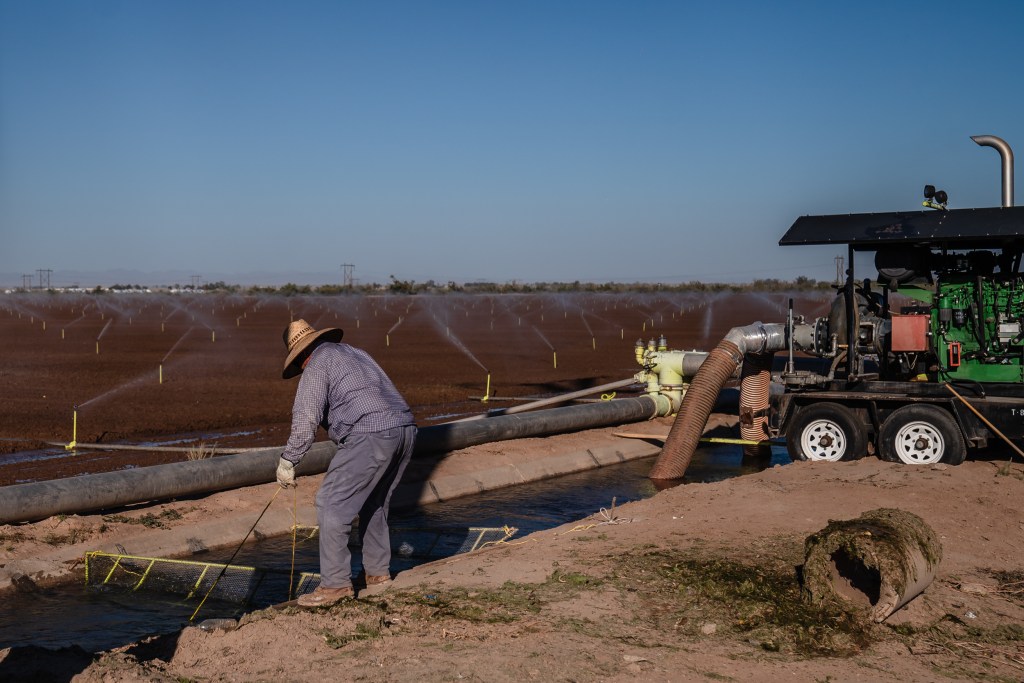
The only thing the users of the dwindling Colorado River agreed upon Tuesday was that the situation is dire.
Representatives from the seven U.S. states and Mexico that drink from or whose industries run on Colorado River water are negotiating in Las Vegas this week – as they have every year since 1945. There is pressure to come to an agreement on how to use less of the climate change-stricken river by the end of the conference on Thursday, but all indications point to that not happening.
One pretty good sign is the fact that the states held divided meetings Tuesday morning, one for states in the northern portion of the river basin (known as the Upper Basin) which includes Colorado, Utah, Wyoming and New Mexico. California held another, though it shares the Lower Basin with Arizona and Nevada.
Each basin claimed to be doing all they can to conserve water – asking farmers to fallow their land, or shoulder water cuts or subsidizing lawn replacements. Each basin also claimed the other wasn’t doing enough.
Voter-Backed Behavioral Health Reforms Forcing Program Cuts
After California voters approved Proposition 1 last year, new bond funds tied to the ballot measure drew the most headlines. Funding reforms it’s also forcing are now getting more attention in San Diego County.
Our Lisa Halverstadt reports that the county recently revealed it’s cancelling 21 contracts, most of which are designed to prevent mental health crises, due to those changes. Impacted programs include phone lines for people seeking mental health support, mental health training for faith leaders and a suicide prevention initiative for middle and high schoolers.
Wait, what? County officials say they were forced to make cuts due to reforms under Proposition 1. The measure reduced counties’ share of a 1 percent income tax of millionaires that’s long been a major source of mental health funding in the state. It also gave counties less discretion over those funds and called for the state – rather than counties – to dole out funds for prevention programs.
Longtime programs now have uncertain futures. Organizations rocked by the county cuts are, in at least some cases, hoping they can find other funds to sustain their programs, including millionaires tax money that the state’s now tasked with divvying up.
In Other News
- Southwestern College in Chula Vista had its highest enrollment of students since the Great Recession this past academic school year. Different school officials are sounding the alarm about this enrollment trend. They say it is a reflection of the country’s uncertain economy and that colleges will need more funding to support a growing student population. (CalMatters)
- The San Diego-Coronado Ferry will be switching its two diesel-powered boats to electric. Flagship Cruises & Events, the company in charge of the ferry service, said that the new boats are planned to be implemented in fall of 2026 and there will be no change to ride costs. (Union-Tribune)
- The San Diego Bay’s territory is expanding to central waters or what is referred to as “the doughnut hole.” The Board of Port Commissioners approved a plan that will add nearly 8,000 water acres and 100 land acres to the bay. The expansion will allow for aquaculture projects and preserve spaces for boating and water activities. (Union-Tribune)
The Morning Report was written by Jenna Ramiscal, Lisa Halverstadt and MacKenzie Elmer. It was edited by Andrea Sanchez-Villafaña.
The post Morning Report: Tijuana, Much of Baja California, at Risk of Losing Colorado River Water Supply appeared first on Voice of San Diego.