How San Diego’s reliance on ‘hostile architecture’ reflects our abandonment of public space
 Dante Ulanday - News Moderator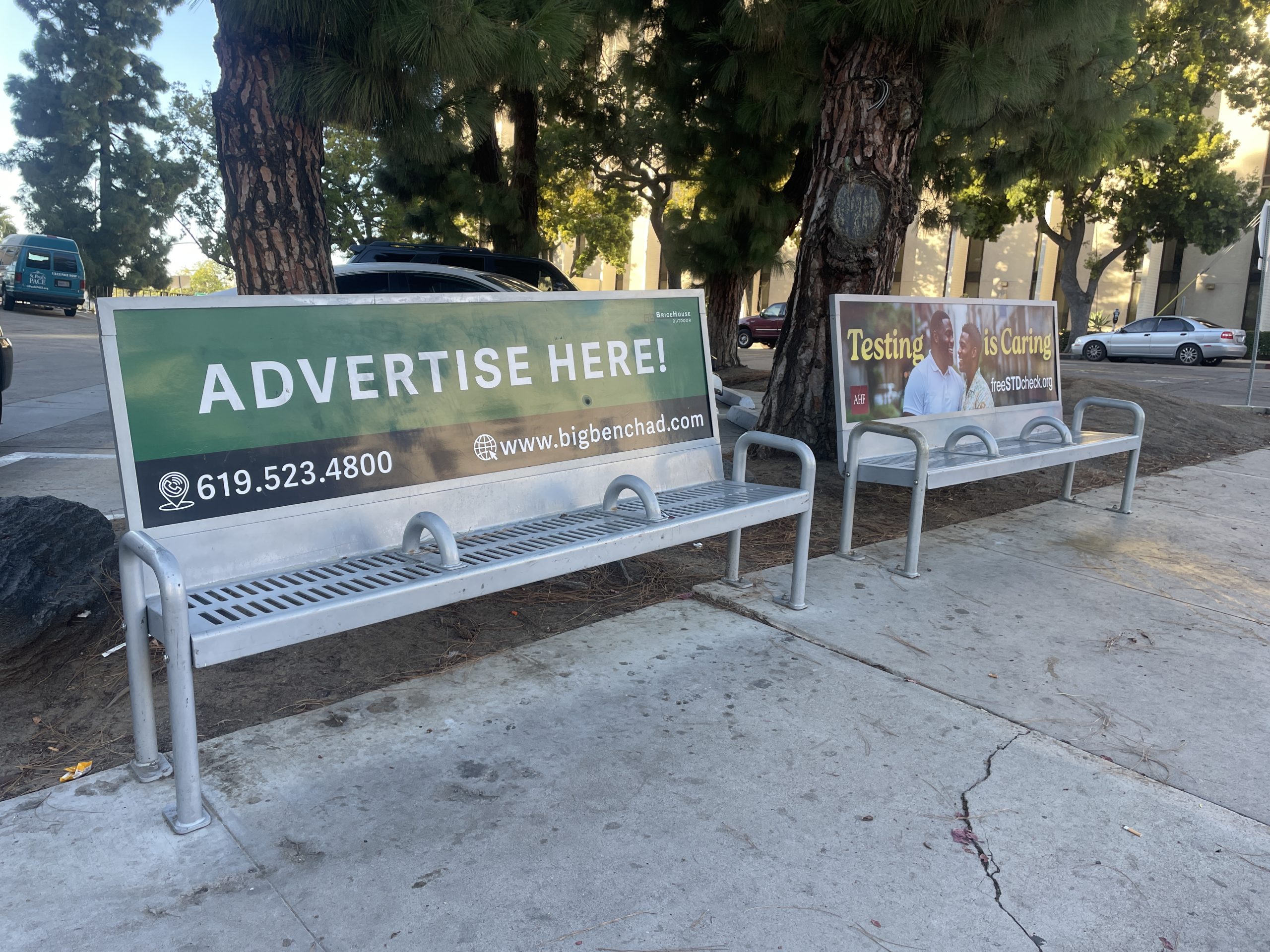



In 2017, the Metropolitan Transit System spent $1.4 million upgrading bus stop benches throughout the county. In addition to improved water drainage and material updates, the new benches came with dividers, which their contractor refers to as “vagrant bars.”
That was a year after the city of San Diego raced to install jagged rocks downtown under Interstate 5 in time for the Major League Baseball All-Star Game at Petco Park, and five years before the Downtown Partnership built a controversial bike rack/bench designed to deter lying down.
These are all examples of what urban designers call “hostile architecture.” Commonly referred to as “anti-homeless architecture” or “defensive design,” the concept is used to describe public infrastructure design intended to subtly (or not so subtly) change behavior.

San Diego-based urban designer Howard Blackson argues that hostile architecture reflects the hostility of human nature.
“[Hostile architecture] makes people feel bad. ‘Oh, gosh, look what we’re doing.’” But then, when you walk down the street and you encounter a person who’s mentally ill and on the streets living, it makes people very, very fearful … And it creates a dialogue within our community about the level of public interaction,” Blackson said.
While common modern-day examples target unhoused populations and intend to prevent sitting, sleeping, lying down or loitering, hostile architecture goes beyond a bus bench – it has a long history.
Moat-surrounded castles. Low-clearance bridges built to block buses traveling from poor New York neighborhoods to Long Island beaches. Victorian-era London designs like urine deflectors. Segregation-era Detroit’s Birwood Wall, used to enforce that separation.
Hostile architecture, however, also can be the lack of infrastructure. Some bus benches in San Diego have been removed. Public bathrooms constantly face closure.
As the term “hostile architecture” has entered the cultural zeitgeist — with New Yorkers making an Instagram account to capture their most creative examples — people have taken notice.
“Of course, it’s the most vulnerable people that is targeted and they don’t have anywhere else to go,” said North Park resident Adam Alas, who relies on MTS buses. “I don’t think it’s personally affected me, but I’m aware of it, and I understand exactly what it is.”
For Irna Jane, another San Diegan reliant on public transportation, the dividers help her feel safe: “They’re really alright. I don’t think I would like it [without them].”

MTS spokesperson Hector Zermeño says the bench dividers are the industry standard and meet all ADA requirements.
“The upgraded seating is more comfortable and better suited for daily transit use,” Zermeño stated. “The updated bench design improves usability by providing defined seating space, added arm support and a layout intended to prioritize availability for customers waiting for transit.”
While MTS is responsible for transit architecture, other hostile architecture examples come from decisions made by city leaders or private developers.

Some, however, are hard to track down. Sometime between 2019 and 2022, spheres were added to a concrete ledge outside Lani Coffee in the Marina District by an unknown source.
Unhoused downtown resident Starr Howen is frustrated by the city’s various methods to prevent sitting and lying. Howen often looks for outdoor seating when waiting for various doctor and government appointments, but often resorts to using her bike seat.
“It’s not fair to me, and clearly it’s not fair to the next person,” Howen said. “… We’re supposed to be able to sit down at a place somewhere if we can’t go inside. Why do we have to go a block away when we’re waiting right here?”
In Blackson’s 36 years of experience designing for cities and private developers, he has watched how downtown infrastructure intentionally obstructs public space access.
“What happens is the streetscapes are devoid of people because the people just don’t touch the ground … We’ve essentially given up on street life. The streets and the parks are where civilization, people, come together. That’s our public space, our common space.”
Many downtown San Diego high-rises, he says, are built with a bottom floor of businesses, middle floors of parking garage and top floors of residential. As a result, the apartments are only accessible via a resident’s car entering the garage and do not have direct street access.
Blackson uses East Village as an example of this design, where a lack of street access and public services discourages walkability and community and reinforces the demand for security.
“[This design] creates the perception of fear and the perception of being isolated,” Blackson said. “… But I think you create that reality because then you have all these gates and all these things, and then any sort of person from the outside becomes an intruder.”
Blackson argues that hostile architecture targeting unhoused populations creates the very narrative it tries to fix, all while harming those it tries to comfort.
“By making public places hostile towards [those] who are unable to rent private space, it makes our common public realm hostile for everyone because we’re all people and we all live public and private lives.”