Haitian community fears deportation, death with immigration program on chopping block
 Dante Ulanday - News Moderator



San Diego’s Haitians, like many migrants, are living under the threat of deportation, growing more and more fearful by the day.
The Trump administration wants to do away with Temporary Protected Status for Haitians, which gives more than one million migrants the legal right to live and work in the United States. A judge in Washington D.C. ruled against the government Thursday; the Department of Homeland Security has until Feb. 19 to submit arguments to the appeals court, according to the Miami Herald.
For many Haitians, though, deportation is seen as a death sentence. Four women deported from Puerto Rico were found decapitated last week. The violence is inescapable, with armed groups controlling most of Haiti.
Guerline Jozef is the founder of the Haitian Bridge Alliance, serving migrants in San Diego and Tijuana. Her fight has gone national, in court cases that paused 350,000 Haitians being declared “illegal.”
“They are either here legally or not,” said Jozef. “They cannot be here legally, then made illegal just so you can deport them.”
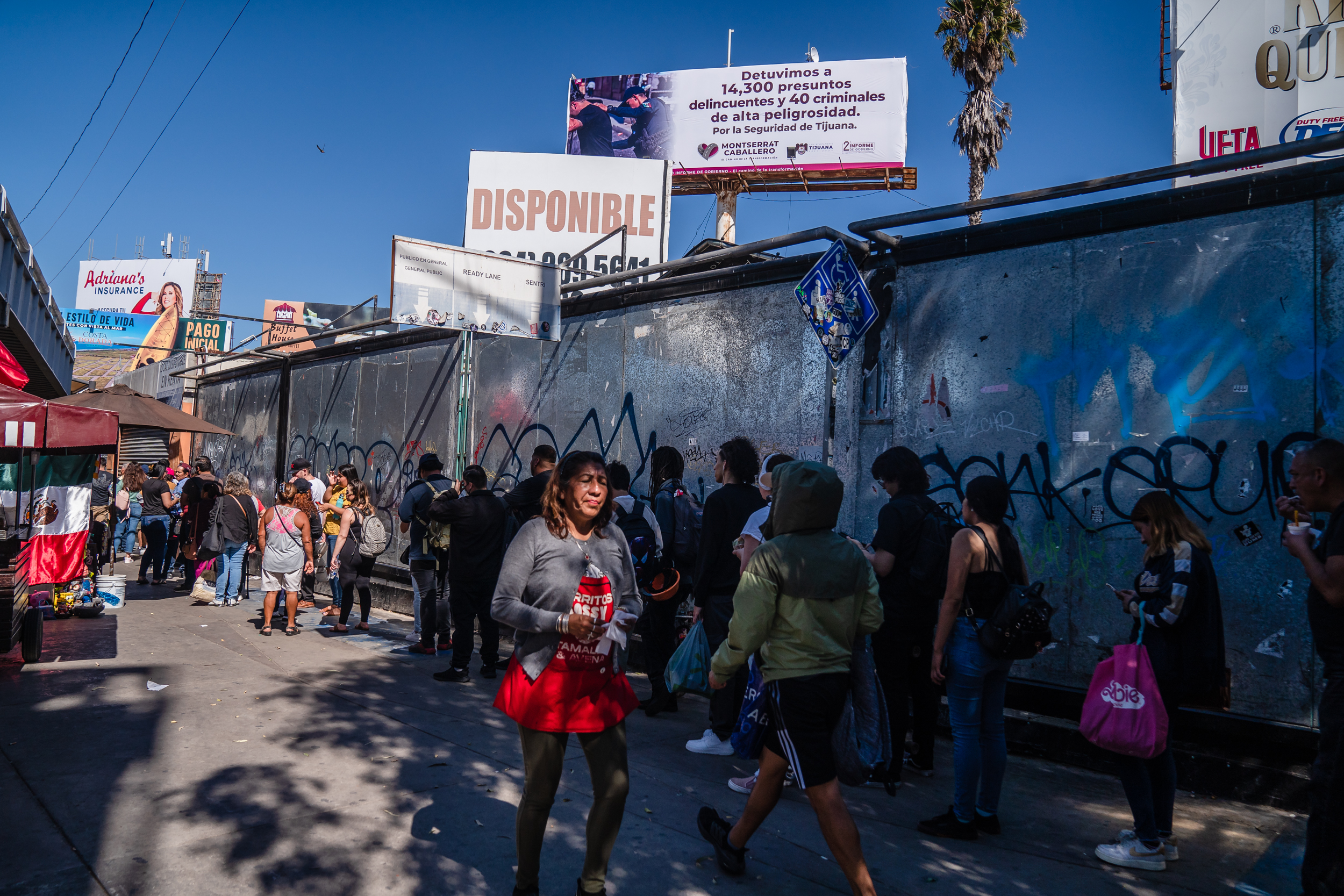
Thousands of refugees arrived in the United States through San Diego — so many that Tijuana gained a bustling Little Haiti, complete with a hand-built school and church.
It’s unclear how many Haitians call San Diego home. Unofficial estimates from HBA say 8,000 to 10,000. According to San Diego County’s Refugee Support Services Plan, more than 2,700 Haitians live in the city of San Diego, making up about 60% of the Central Region’s refugees.
“People are not going to the grocery store, church, or school. They’re not leaving their homes for fear of being taken by ICE,” said Jozef. “The majority have TPS or pending applications, so they shouldn’t be getting taken. (Immigration officials) do not follow due process.”
San Diego’s Haitians may consider returning to Tijuana, but crossing the border risks detainment. “(Outside of ICE arrests) the most people we see who are detained and deported are fleeing to Canada or Mexico,” explains Jozef.
Reports estimate that around 385 deportees have arrived in Haiti since the crackdown began. Crowded cargo planes have flown into Cap-Haïtien International Airport, one of the few operating airports left in the country.
TPS is not the first protected status to be targeted; one has already fallen upon the chopping block, a sponsorship program that reunited displaced families from Cuba, Haiti, Nicaragua and Venezuela.
After the case blocking the program, known as CHNV, was appealed to the Supreme Court, the government received the go-ahead to cut it down.
Many former parolees applied for TPS, but the program’s future leaves their status up in the air. Beyond throwing parolees’ even further into limbo, removing TPS would have ripple effects.
“We are literally destroying the workforce,” says Jozef. “Specifically, health care and farming.”
Among Haitians, 69% contribute to these essential industries. They boast an average income of $72,400, contributing tax dollars and labor to the U.S. economy.
After living in America for so long, it should be no surprise migrants have put down roots. There are more than 34,000 US-born children of Haitian TPS holders, according to the Center for Migration Studies. The case, like the one involving CHNV, could reach the Supreme Court.
“We believe in the justice system,” says Jozef. “We believe that they know the conditions in Haiti are not something that they can send people into.”
“They would literally be sending people to their deaths, which has been proven,” she continued. “We know 19 people have been kidnapped and killed, including the four beheaded women. This is the reality of what will happen to half a million people.”