Del Mar Union School District Hired Private Investigators to Spy on an Elementary Student
 EM - News Moderator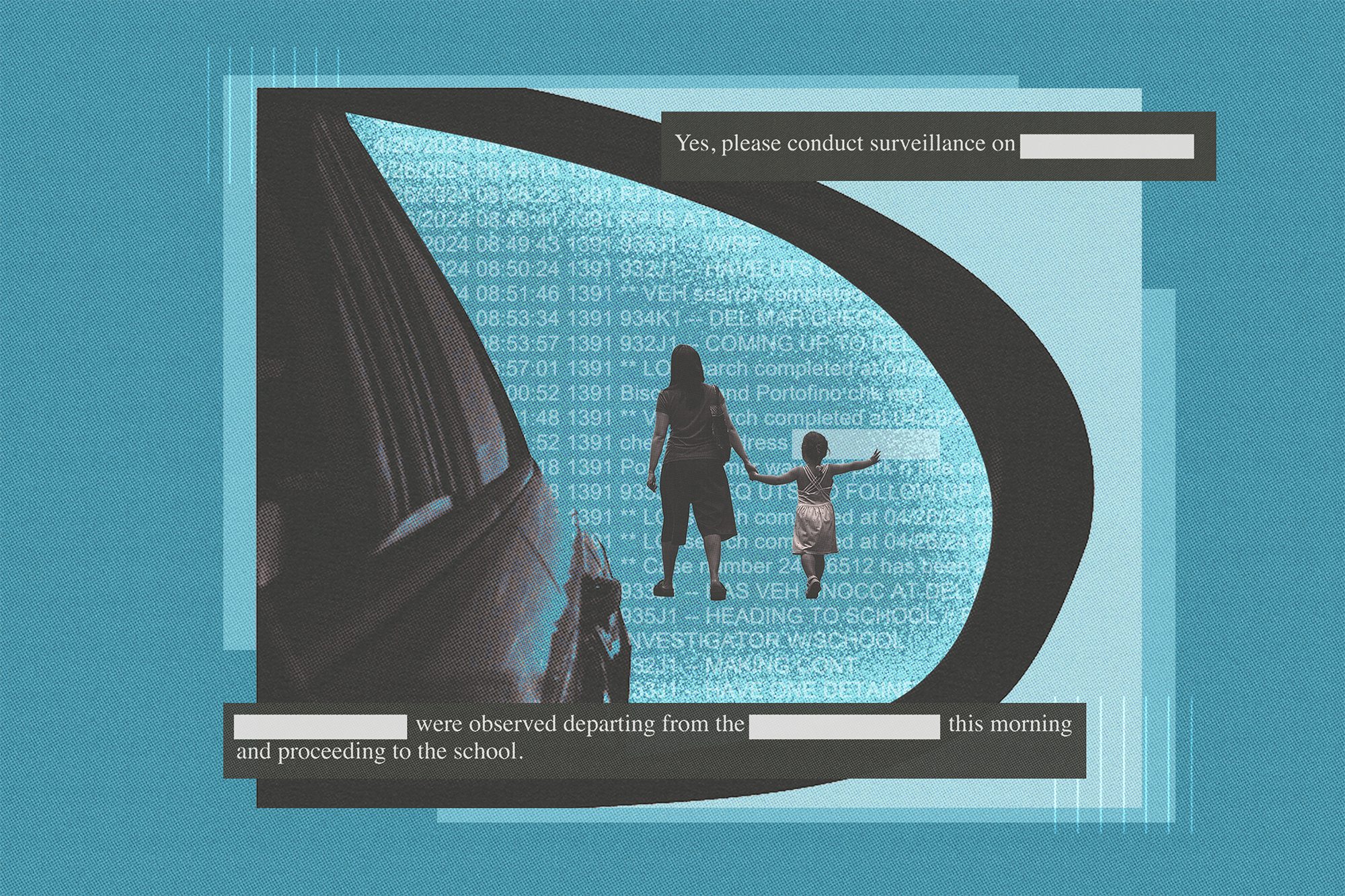


One morning in April 2024, as a mother was driving her child to school, she called the police. Someone was following her.
The driver was in a BMW with tinted windows too dark to make out who was inside. But she recognized the car because she’d seen it outside of her home multiple times. She’d also seen it following her before.
As she neared her child’s elementary school, a 911 dispatcher sent out units. They told her they’d stay on the phone until officers confronted the driver, according to a police call log.
When police ultimately found the man, he was in the parking lot of the child’s school, armed with a gun. He turned out to be a private investigator hired by Del Mar Union School District to surveil the family.
That incident wasn’t the first time the district had hired private investigators to surveil a family. In fact, this was the second time they had the family followed. Investigators took photos and videos, some of which they sent to the district.
It also wouldn’t be the last time district officials turned to private investigators.
The practice, which is meant to combat residency fraud, can save districts money by disenrolling students who don’t live within district boundaries. And while it’s not unprecedented, it is controversial, raising concerns about family privacy and trust in the district.
…
On April 26, 2024, San Diego Police officers responded to a “stalking” call.
As a dispatcher spoke to the parent of the Del Mar Union student who made the call, she told them she was going to stop at her mother’s home, according to a department call log. The dispatcher instead instructed the parent to stop at a 7-Eleven a block away from the elementary school the parent’s child attended. The call logs show the vehicle continued to follow the woman, but when police arrived, they circled the area and couldn’t find the vehicle.
Thirty minutes later, however, police found the man in his car in the parking lot of Del Mar Hills Academy, an elementary school a block away from the 7-Eleven. When they detained him, he revealed he had a gun. Despite his having a concealed carry weapon permit, carrying a gun on school property is illegal.
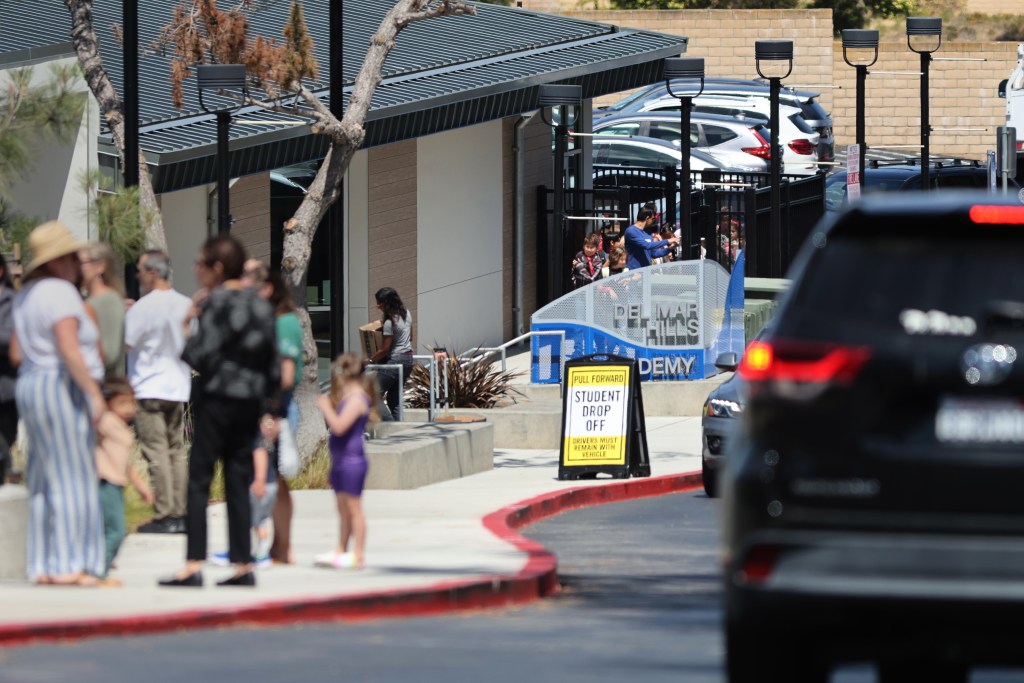
In calls with a dispatcher, the parent, whose name is redacted in documents, said she “believes [the vehicle] may be a private investigator [with the] school.”
She was right.
The man was a PI working for Bradley Investigative Services, a company the district hired to spy on the family, according to documents obtained by Voice of San Diego.
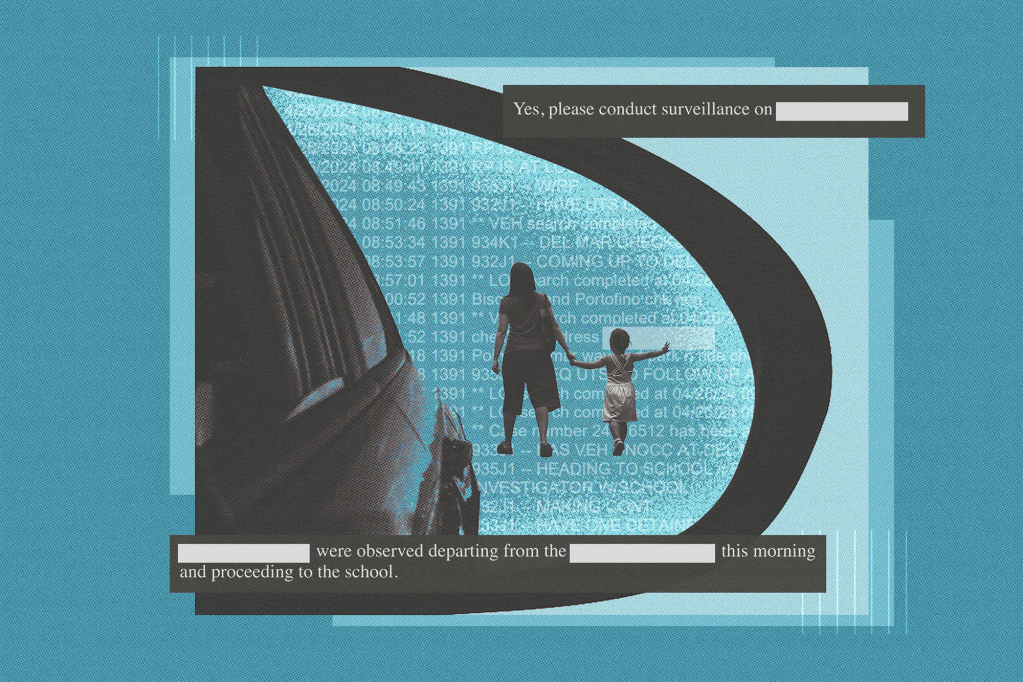
Emails between the district and Nick Bradley, the owner of the firm, show officials arranging for the surveillance of the family, and Bradley reporting back. In one email, for example, he writes “[redacted] was observed departing from the [redacted] and proceeding to the school.”
By all accounts, that April surveillance went poorly. So poorly, in fact, that the district stopped hiring Bradley Investigative Services to spy on families. In a letter sent to Bradley, Leslie Montero, Del Mar Union’s executive director of business services chastised the firm.
The letter came a week after the district received a police report from the April incident, Montero wrote, that showed the investigator had visited and parked at the school on “multiple occasions.” She wrote that the district hadn’t authorized investigators to enter school property. District officials also weren’t aware that Bradley Investigative Services’ agents carried guns, Montero claimed, and did not authorize them to do so in this investigation.
“The BIS agent clearly violated the law and acted in excess of the contract between BIS and the district, which is now expired,” she wrote.
District officials would not say whether the investigation found the family was living outside of the district’s boundaries.
Prior to the April incident, Del Mar wasn’t a stranger to the tactic. The district’s relationship with Bradley Investigative Services dated back as far back as 2021, according to district purchase orders. The purchase order doesn’t make clear exactly what the district hired the firm to do.
Between that April surveillance and the letter sent to the firm, officials continued to hire Bradley Investigative Services. All told, the district paid the private investigators more than $9,000 between March and June of 2024. While one purchase order indicates the firm was hired for “residency verification,” others do not specify what services were provided.
It also wasn’t the first time the district had hired Bradley Investigative Services to surveil this particular family.
One month earlier, Justine Stacy, the district’s executive assistant of student services, provided Bradley with the name of the family and two addresses. One address was where the family said they resided. The other was where district officials believed they were actually living.
After surveilling the family’s home for the contractually required four-hour minimum, and at a rush price of $200 an hour, Bradley reported back to the district. His report is mostly redacted, but he provided the district with photos.
“Let me know if you need the video,” he added
The district’s own policies and the state’s education code “prohibit the surreptitious photographing or videorecording of students who are being investigated.”
The district did not explicitly say the agency had done anything improper, but in later emails arranging further surveillance of the family officials explained the policy to Bradley and asked he not to take photos or video. Montero also referenced the prohibition in her letter chastising the agency.
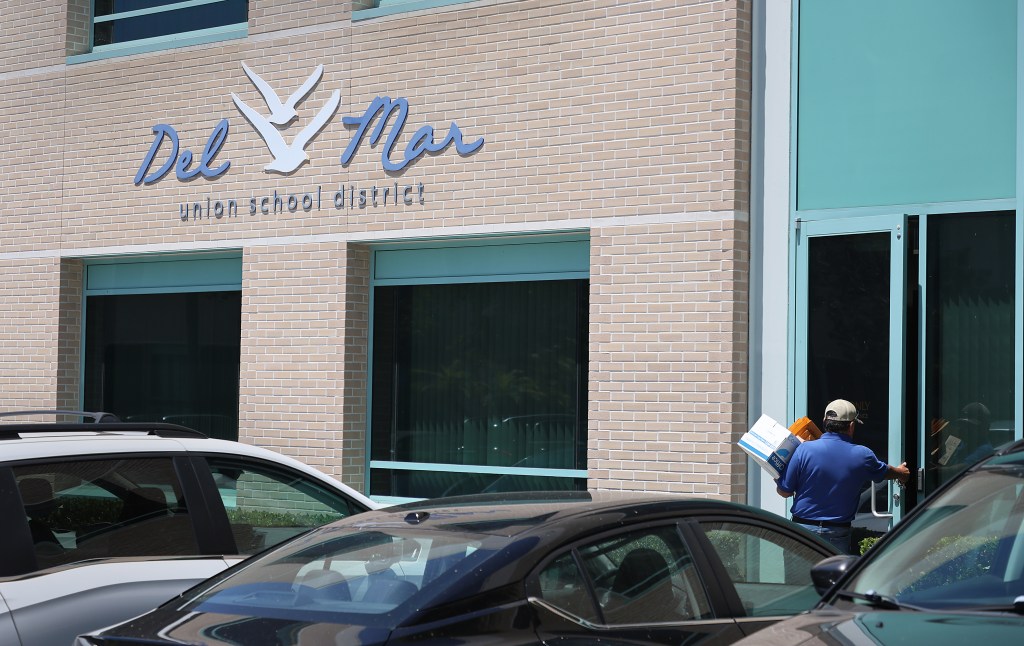
In an email to Voice of San Diego, Montero denied that the district had violated the education code. She did not directly comment on whether the agency had.
For his part, Bradley said the whole April incident was an accident. He claims his investigator was inadvertently funneled into the school’s drop-off zone and was confronted by police before he could leave. In any case, he stopped working with the PI afterwards.
“The incident is unfortunate. It’s something that should have never happened. It was not good for Del Mar. It was not good for my company,” Bradley said. “We do not conduct surveillance on school properties.”
But it’s common for school districts to hire private investigators, Bradley said.
“If school districts have a problem they need to deal with, and this is how they see best fit to deal with it, they’ll hire investigative agencies. Some people may not like it or agree with it,” he said.
Bradley’s right.
The practice of school districts hiring private investigators to surveil families is legal in California. One of the most frequent causes for surveillance, as was the case in Del Mar, is to perform residency verifications.
That’s particularly true for wealthier, high-performing districts that families are eager to get their kids into, and where cases of so-called residency fraud are more common. That’s when families lie about where they live to qualify their child for a school district, a crime in California.
For some districts, particularly basic aid districts like Del Mar, removing kids can be a cost-saving measure. That’s because unlike most school districts in the state, which are funded based on student enrollment, Del Mar Union is funded the old-fashioned way – by property taxes.
The funding system is a carve-out from the Local Control Funding formula, which sought to create a more equitable funding picture for school districts. But it would have taken away money from districts in wealthier areas, which get more from property taxes than they would have from the new formula. Hence, the carve out.
Still, school districts’ hiring of private investigators to police residency has been a lightning rod.
In one case that gained national attention, a school district in the wealthy East Bay enclave of Orinda hired investigators to surveil a 7-year-old. The outrage from that case inspired new legislation, putting safeguards on how districts could use private investigators. One of those safeguards was the prohibition of surreptitious photography and video recording.
Yusef Miller, the executive director of the North County Equity and Justice Coalition, said this tactic feels extreme. Yes, it’s legal, but districts need to consider if the human and fiscal cost of hiring private investigators to tail families is worth the benefit, Miller said.
The group is a coalition of activist organizations focused on advocating for progressive stances on a large swath of issues like civil rights and criminal justice.
“While they can stand behind saying they’re saving the taxpayers money and upholding the law, they could be terrifying people in the process,” Miller said. “I imagine the point before law enforcement engagement, and the moment when she realized she was being followed and her house was being staked out, will traumatize her for many years to come.”
Beyond the impact on families, he’s also concerned about the process leading up to the hiring of investigators. California’s education code requires districts to “make reasonable efforts,” to determine if a student lives in the district. Emails show district officials did take some steps before hiring investigators, but Miller wondered how they decided to launch an investigation in the first place.
“What is the actual trigger for a district to say that a person doesn’t belong there? Because when it comes to surveillance, there is often a racial component,” Miller said.
That’s been especially true when it comes to districts’ hiring private investigators to surveil families. Reporting has found that districts disproportionately investigate and disenroll students of color.
In an email to Voice of San Diego, Montero wrote that the district began conducting all residency verification investigations in-house in August 2024.
“Del Mar Union School District is committed to ensuring that students residing within district boundaries are appropriately enrolled and that district residency policies are applied consistently and fairly in service of resident families and responsible stewardship of public resources,” Montero wrote.
Still, in 2025, the district began contracting with private investigation firm Nicole Miller and Associates. That year, they paid the company $15,875 for “independent investigative services.”
Officials would not explain what the firm was paid to do. But in an email, Montero wrote that “depending on the circumstances, the district may use outside professionals to assist with fact-finding and to ensure an impartial review process.”
That’s not necessarily enough for advocates like Miller.
“Even if this practice is in the past, I think there’s a question of whether or not harm was done to citizens of Del Mar. We should find that out,” Miller said.
To him, more oversight may be necessary to get to the bottom of how the district comes to its decisions, and how the money is being spent.
The post Del Mar Union School District Hired Private Investigators to Spy on an Elementary Student appeared first on Voice of San Diego.