Border Report: This Year We Learned Immigration Officials Expanded Their Power
 EM - News Moderator



State violence is nothing new in the border region.
Many of those leading transborder lives in San Diego and Tijuana have witnessed or even experienced the increased power and, sometimes, impunity, that Customs and Border Protection officials wield within range of the border. This year, that authority — and violence — expanded to the interior of the United States.
In 2010, border officials killed an undocumented immigrant in the process of deporting him at the San Ysidro Port of Entry. Since then, the widow of Anastasio Hernández Rojas has fought to preserve his memory and to get some kind of justice for his death. His case, she told me earlier this year, is not just about him, but about all of the families who have lost loved ones to U.S. border officials’ violence.
In May of this year, the Inter-American Commission on Human Rights, a tribunal within the Organization of American States, found that what those officials did to Hernández Rojas amounted to torture, and that the U.S. government worked to cover up what happened. His widow Maria Puga said she will keep pushing until the people involved are in jail.
“This fight that had so much help from organizations, the community, people who saw me in the street and said, ‘That’s good, ma’am. You will succeed,’ it keeps going,” Puga said in Spanish.
The person who was in charge of the San Diego Sector of Border Patrol at the time of Hernández Rojas’ death is now running Custom and Border Protection for the Trump administration.
Even before President Donald Trump took office, in January, we saw El Centro Border Patrol agents make mass arrests in Bakersfield, far from their normal area of operation in El Centro, Calexico and Imperial. Since then, Border Patrol agents, under the leadership of Commander Gregory Bovino — a promotion from his previous position running the El Centro Sector — have gone from city to city, conducting raids and often violent arrests.
Violent arrests have also happened in the border region itself.
For example, in late January, immigration officials showed up at the door of a Croatian woman in San Diego. Their interaction left her visibly bruised. Months later, officials detained her until an attorney was able to get her out using a writ of habeas corpus petition, a federal court filing that argues the government has someone in custody unlawfully.
Though the Supreme Court has long given border officials the ability to conduct warrant-less searches at the border in certain contexts, it expanded their power this year in a decision after attorneys and advocates challenged Border Patrol agents’ use of racial profiling as they roamed Los Angeles and other parts of California. When that decision came down, Pedro Rios, director of the American Friends Service Committee’s U.S./Mexico Border Program, predicted in an opinion piece for CalMatters that the state violence that had long been in the border region would only keep growing on the interior of the country.
We’ve seen U.S. citizens who document immigration raids as they are happening arrested by federal officials, as in the case in Linda Vista in July when several were charged with assaulting a federal agent and held overnight at the San Ysidro Port of Entry. Charges against the immigrant who was initially arrested and against one of the U.S. citizens have been dropped. The other two cases are still pending.
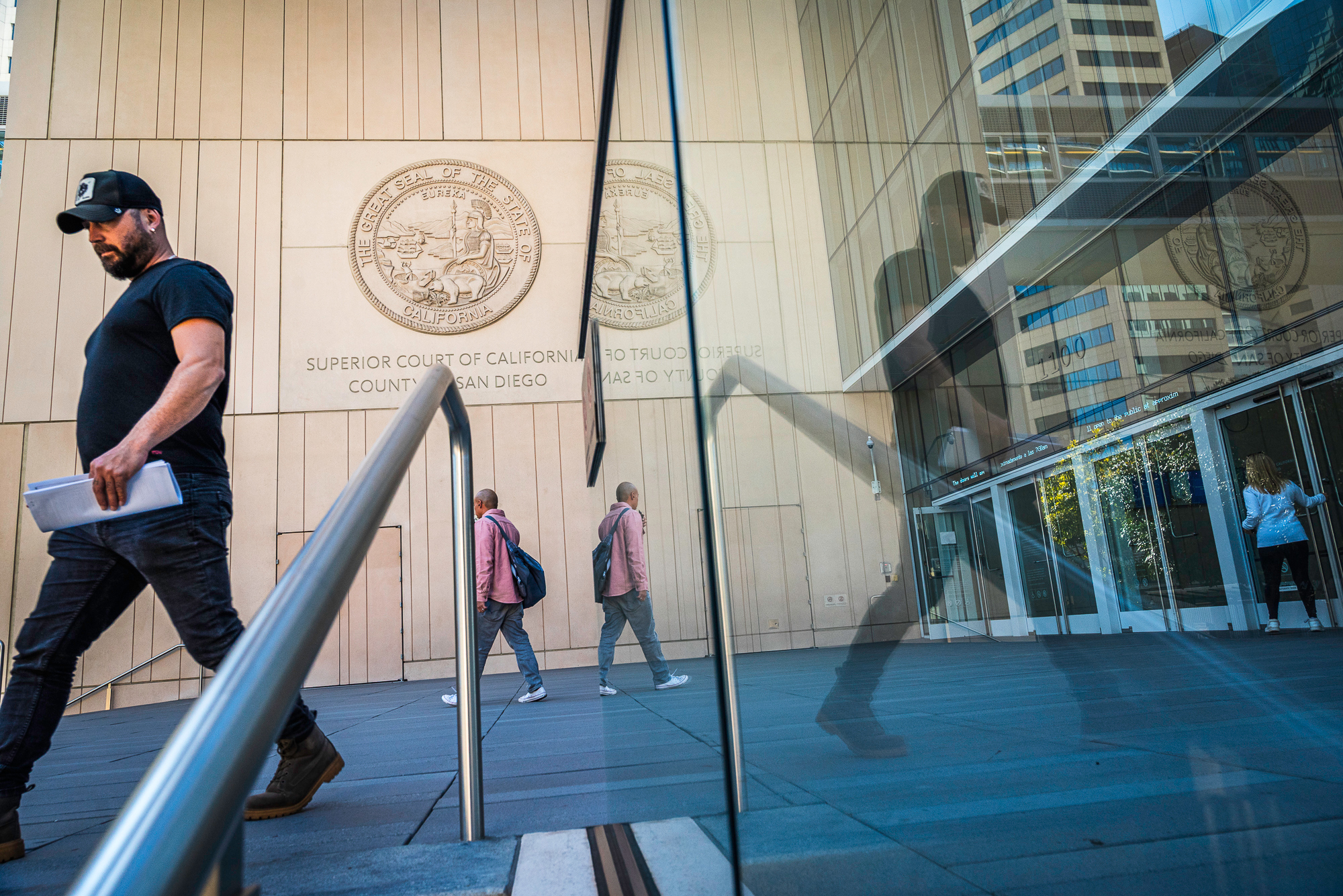
In San Diego in particular, immigration officials have methodically expanded their reach in official spaces — from court hallways to green card appointments.
Since a reporting trip to Nicaragua in 2019, I’ve thought a lot about my peers there who have had to navigate covering an increasingly hostile authoritarian regime. Most, if not all, Nicaraguan journalists have had to flee, but they continue to cover what’s happening in their country as they live in exile.
This year, human rights groups and journalists have turned to their Latin American peers to have conversations about how to navigate their work as state violence increases. The Washington Office on Latin America hosted a panel in April about enforced disappearances after the Trump administration sent more than 200 Venezuelan men to El Salvador, where they were imprisoned.
“If there’s one thing we have learned in Latin America, the consequences, the impact of enforced disappearances are profoundly human,” said Carolina Jiménez Sandoval, president of WOLA, during the panel. “Sadly when a person or a group of people disappear, their relatives, their families, the community, the society to which the disappeared person belongs to suffers greatly. In Latin America, we know this feeling of agony. Unfortunately we know it too well.”
In November, the Knight Center for Journalism at University of Texas at Austin hosted a conversation with journalists living in exile.
“When all freedoms have been eliminated, when there is no freedom of reunion, freedom of mobilization, electoral freedom, religious freedom, the last reserve of freedom is journalism in exile,” said Carlos Fernando Chamorro, founder of Nicaraguan outlet Confidencial, during the panel.
As we look ahead to 2026, I know I will be keeping these conversations in mind as I continue to document how state violence plays out in the border region and beyond.
The post Border Report: This Year We Learned Immigration Officials Expanded Their Power appeared first on Voice of San Diego.