Border Report: Student Fast Pass Coming to San Ysidro and Otay Mesa Ports of Entry
 EM - News Moderator


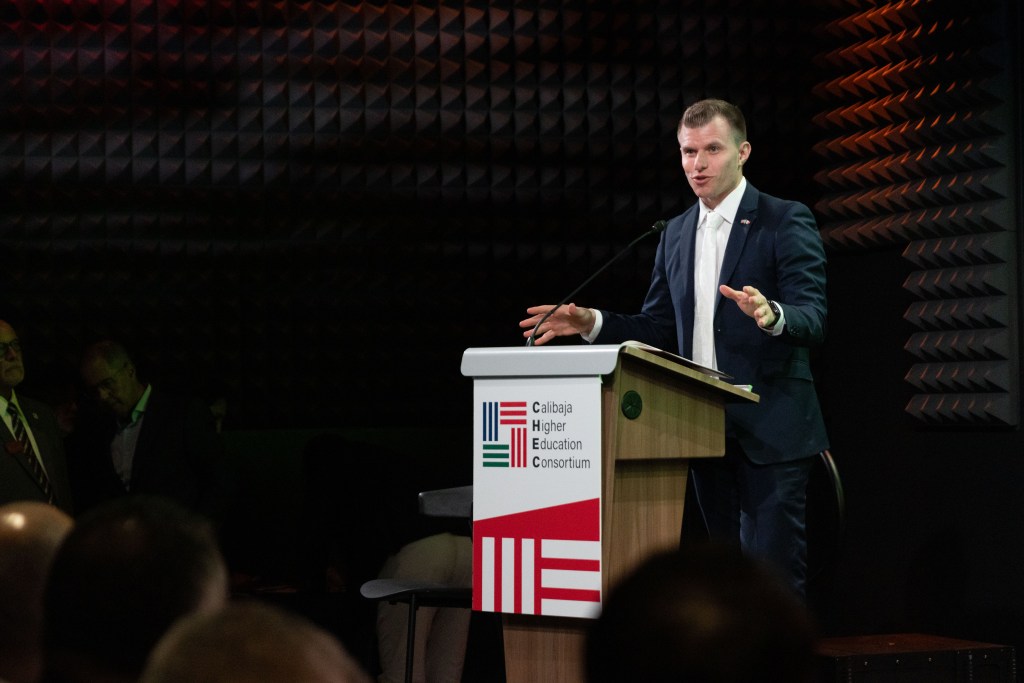
College students will soon be able to cross the border from Tijuana to San Diego faster using a dedicated pedestrian line.
Universities, government leaders and private groups signed a memorandum of understanding on Friday to create the CaliBaja Higher Education Consortium. As part of the signing ceremony, Nicholas Pierce, the assistant director for border security at the Customs and Border Protection San Diego Field Office, announced a pilot program that will allow students to register in late January for a fast pass into the United States.
“The goal of this group of universities and community colleges is very simple and yet very complex — to empower our region by preparing the next generation of leaders and skilled professionals,” said Rafael Fernández de Castro, director of the Center for U.S.-Mexican Studies at University of California San Diego.
Though the Trump administration has worked to limit foreign students’ ability to stay in the U.S., the newly formed local consortium hopes to encourage collaboration among universities on both sides of the border. Consortium leaders suggested the possibility of dual degree programs among San Diego and Tijuana universities as a way to build on research collaborations already happening among them.
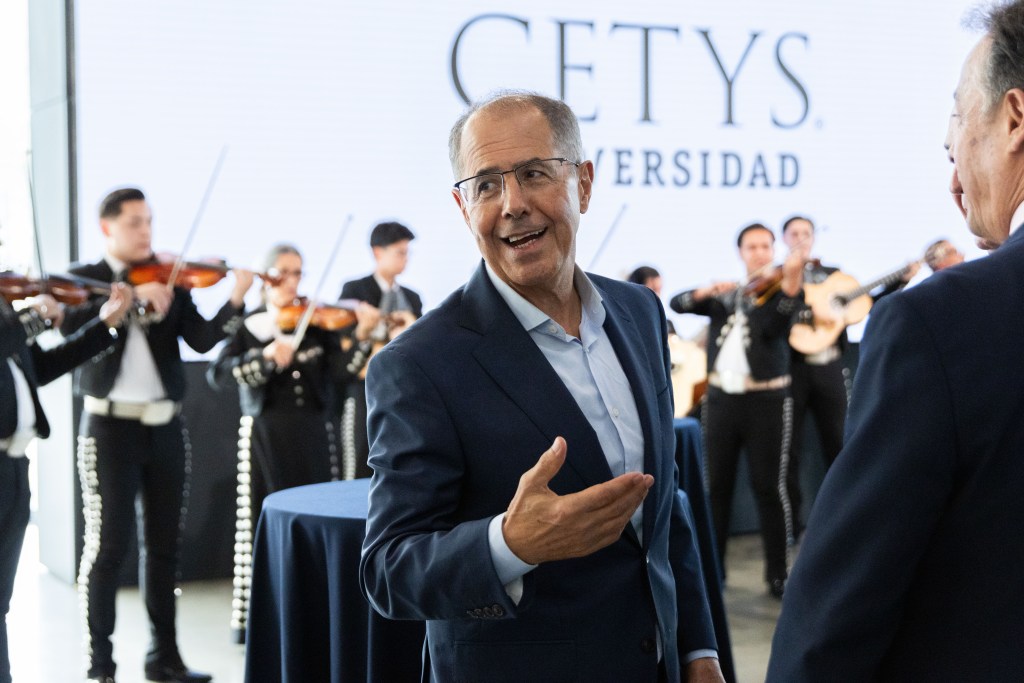
“My biggest aspiration is, I’m going to summarize it in one single phrase, making life easier for our students,” said Luis Enrique Palafox, president of Universidad Autónoma de Baja California. “I think we all have this huge responsibility of let them focus on academics. Let them not worry about the issues that they go through on a daily basis, such as border wait times, visa issues, and all other surrounding challenges that they face. We need to work together on generating a better scenario for them to thrive.”
Christopher Teal, consul general for the United States. in Tijuana, said the State Department recently opened an EducationUSA office in Tijuana to help guide Mexican students interested in studying in the United States. He said his staff at the consulate already prioritizes processing student visas ahead of other visa categories.
Teal, who stepped into his position in Tijuana in August 2024, has been one of the leaders spearheading the consortium initiative.
“We’re going to create this deep and lasting and borderless education system that, as we’ve all said before, is going to develop that workforce we need in the future,” Teal said. “So how can we achieve some of these goals? Well, we’re going to facilitate these transborder students.”
Representatives from 17 entities, including from four U.S.-based schools — University of California San Diego, San Diego State University, University of San Diego and Southwestern Community College District — and from five Mexico-based schools — CETYS University, El Colegio de la Frontera Norte, Universidad Autónima de Baja California, Universidad Iberoamericana Tijuana and Universidad Tecnológica de Tijuana — signed the agreement. Leaders from the Smart Border Coalition, Tijuana Innovadora and the U.S.-Mexico Border Philanthropy Partnership also signed.

Teal, the consul general of Mexico in San Diego, the secretariat of education for Baja California, State Assemblymember David Alvarez and the project coordinator at Universidad Nacional Autónima de México signed as honorary witnesses.
Adela de la Torre, president of San Diego State University, said that one issue the consortium will have to navigate is limitations on state funding being used abroad.
“But we’re not abroad,” she said. “We’re a binational region.”
The idea of formalizing a collaborative agreement among higher education institutions on both sides of the border has been around for decades, according to Arturo Cherbowski of Santander Universidades.
He said he hopes that this time, the conversation will result in more than just talk.
“I’m very proud to be here because I think there’s a chance,” Cherbowski said. “This is a project that fills me with hope.”
He said that as soon as the consortium has put together projects that need funding, the bank where he works is ready to help.
“Please do take the word consortium seriously,” he urged. “I’m hopeful that the institutions who are signing to be part of a consortium understand what the heavy lifting is. But I think it can be done.”
Thank you for reading. I’m open for tips, suggestions and feedback on Instagram @katemorrisseyjournalist and on X/Twitter and Bluesky @bgirledukate.
In Other News
Border military base: The U.S. Navy has now taken over land at the U.S. Mexico border in San Diego and Imperial counties, Victoria Bekiempis reported for The Guardian. Alexandra Mendoza reported for The San Diego Union-Tribune that two Trump administration border officials visited San Diego on Saturday but offered little insight into details of the new operation.
Green card arrests: Immigration and Customs Enforcement officers detained and then released a Ukrainian woman married to a U.S. citizen who had gone for her green card interview, Kori Suzuki reported for KPBS.
Trolley station confrontation: For Times of San Diego, Roberto Camacho detailed how immigration officials targeted a U.S. citizen who documents their activities on TikTok.
Targeting everyone: More than half of the people arrested by ICE in San Diego and Imperial counties have no criminal records, Jake Kincaid and Sofía Mejías-Pascoe reported for inewsource.
A blow to environmental activism: Through legislation championed by President Claudia Sheinbaum, Mexico has restricted use of a tool that helped environmental activists stop government projects that would cause lasting harm, Caroline Tracey reported in Foreign Policy.
San Diego clergy: For The Nation, Sasha Abramsky wrote about local faith leaders who have organized to accompany immigrants to court hearings and check-in appointments at the federal building.
The post Border Report: Student Fast Pass Coming to San Ysidro and Otay Mesa Ports of Entry appeared first on Voice of San Diego.